

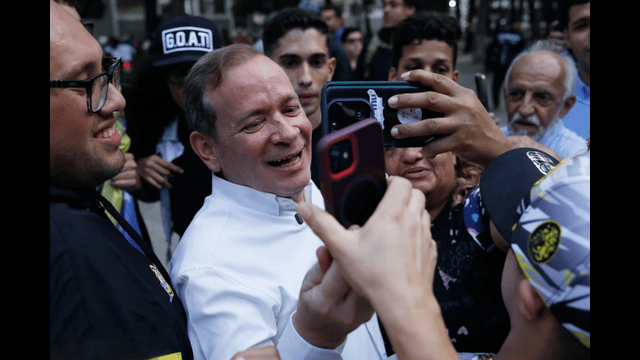
Opposition leader Juan Pablo Guanipa records a video message to supporters after his imprisonment in Caracas.
Venezuelan opposition leader María Corina Machado has raised alarm over the reported kidnapping of a close political ally, only hours after his release from prison.
The incident has intensified concerns about the safety of opposition figures amid Venezuela’s fragile political transition.
Machado said the episode unfolded late Sunday night in Caracas.
Her claims came shortly after the government announced the release of several detained opposition members.
Those releases were widely seen as a response to international and domestic pressure.
According to Machado, the events reveal deep contradictions within the government’s stated reconciliation efforts.
Nighttime Abduction Sparks Outrage
Machado said her ally, Juan Pablo Guanipa, was taken around midnight.
She described a sudden operation carried out in a residential neighborhood of the capital.
Heavily armed men, dressed in civilian clothing, allegedly arrived in four vehicles.
Machado said the group forcibly removed Guanipa and drove away.
She called the incident a kidnapping and demanded his immediate release.
Her statement was shared widely on social media, drawing swift reactions.
Guanipa had been freed earlier that same day after months in detention.
His disappearance quickly overshadowed the government’s announcement of prisoner releases.
A Fragile Moment for Political Dialogue
The releases followed growing pressure on Venezuela’s interim leadership.
Human rights groups have long called for the freedom of political detainees.
International scrutiny increased after a visit by representatives of the U.N. High Commissioner for Human Rights.
The government of acting President Delcy Rodríguez has framed the releases as goodwill gestures.
However, the reported kidnapping has raised doubts about those intentions.
Critics say the episode undermines trust during a sensitive political moment.
Government officials did not immediately respond to requests for comment.
From Celebration to Fear
Earlier on Sunday, scenes outside prisons reflected cautious hope.
Families gathered, waiting anxiously for relatives to walk free.
Some former detainees joined supporters in short marches nearby.
Chants of “We are not afraid” echoed briefly through the streets.
For many, the moment symbolized a possible turning point.
That optimism faded quickly after reports of Guanipa’s disappearance.
Hours before the incident, Guanipa spoke publicly about Venezuela’s future.
He said the country had changed and called for unity in rebuilding democracy.
Background of Detention and Accusations
Guanipa, a former governor, had spent more than eight months in custody.
Authorities detained him in late May.
Officials accused him of involvement in a plot to disrupt legislative elections.
Interior Minister Diosdado Cabello linked Guanipa to an alleged terrorist group.
His family and colleagues rejected the accusation.
They said the arrest was aimed at silencing dissent.
His brother previously described him as a prisoner of conscience.
That label has resurfaced following the reported abduction.
Growing Concern From Rights Groups
Prisoners’ rights organization Foro Penal confirmed multiple releases on Sunday.
The group said at least 30 detainees were freed.
Several members of Machado’s political movement were among them.
Foro Penal president Alfredo Romero expressed serious concern.
He said there was no clear information about who took Guanipa.
Romero urged authorities to clarify his whereabouts immediately.
Guanipa’s son also spoke publicly, demanding proof of life.
He described a group of unidentified individuals intercepting his father.
Uncertain Path Ahead
Rodríguez’s government announced plans to free hundreds of prisoners.
Families and rights groups have criticized the slow pace of action.
An amnesty bill is now under debate in the National Assembly.
Lawmakers say the bill could lead to broader releases soon.
Opposition groups have welcomed the discussion with cautious optimism.
They are also demanding transparency and guarantees of safety.
For Venezuelan opposition leader Machado, the alleged kidnapping has shifted focus.
She says true reconciliation cannot exist without accountability.
As uncertainty grows, Venezuela faces renewed questions about its political future.













