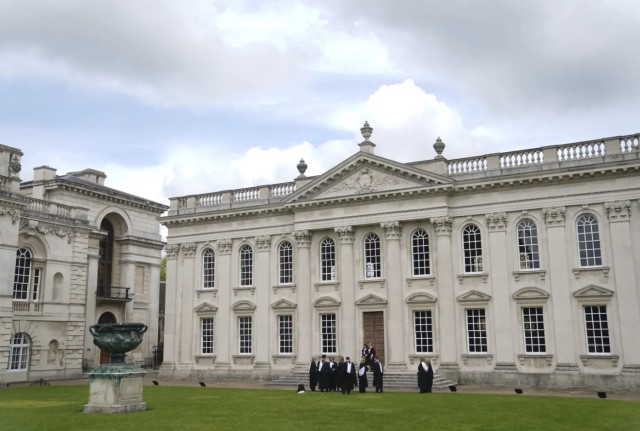
Graduating Students taking photos outside Senate House at Cambridge University, May 17, 2025.
As the US tightens rules around international student visas, many foreign students are looking elsewhere. Long delays in visa interviews and stricter immigration scrutiny under President Trump’s administration have made the US a less attractive option for global talent.
This has opened doors for universities in the UK, Asia, and the UAE. These destinations are seizing the opportunity to welcome students who once viewed the US as their top choice.
International Students Face Visa Roadblocks in the US
In recent months, the Trump administration has pressured colleges to cut down on international admissions. Foreign students have faced tougher scrutiny, including social media screening.
Some were even targeted for deportation due to minor infractions or political activism. Visa processing delays continue, leaving many uncertain about their academic future in the US.
As a result, new international enrollment could fall by up to 40% this fall, according to NAFSA. This could cost the US economy nearly $7 billion in lost spending and significantly impact university budgets, especially as international students usually pay full tuition.
UK Emerges as a Leading Alternative
While the US faces backlash, the UK is gaining ground. It remains the second-most popular destination for international students.
Despite the UK government’s plan to reduce migration, applications for undergraduate study there rose by 2.2% this year.
China led the surge with a 10% rise in applications. Even US-based students applied in record numbers — nearly 8,000, marking a 14% increase and the highest in two decades.
Postgraduate programs also saw growth, especially in business and management. Data from UniQuest revealed a 10% spike in international graduate admissions in the UK.
Experts say the UK continues to be the most welcoming among the big four English-speaking countries — the US, UK, Canada, and Australia.
Asian Universities Gain Ground
Hong Kong, Singapore, and Malaysia are also rising in popularity. These regions offer offshore campuses of top global universities, making education more affordable.
Will Kwong of AAS Education noted that Asian families are now choosing to stay closer to home. The shift began post-COVID and has accelerated due to political instability and visa uncertainty in the US.
Hong Kong, in particular, is preparing to welcome students who are denied US entry. It now allows international students to work part-time and has received hundreds of transfer inquiries from US-based students.
The Hong Kong University of Science and Technology saw a 40% increase in international undergraduate applications this year.
UAE’s Education Ambitions Take Shape
The United Arab Emirates is positioning itself as a global education hub. By hosting international branch campuses, it offers an alternative to students wary of the US visa process.
Dubai now hosts dozens of such campuses. In 2024-2025, international enrollment there surged by one-third.
Lisa Johnson of Dubai’s American Academy for Girls said her students are beginning to favor local and regional options over traditional US institutions.
“Harvard is still a dream,” she said, “but more students are choosing to stay closer to home.”
Kazakhstan Joins the Race
Kazakhstan is also stepping into the spotlight. US universities like Illinois Tech and the University of Arizona have set up programs there, mainly attracting students from China and Russia.
Daniel Palm, who assists US colleges in opening overseas campuses, believes this global expansion is vital. “Students still want a US degree,” he said. “But they’re finding new ways to get it without stepping foot in America.”
The Global Education Map Is Changing
The US crackdown on student visas is reshaping the global higher education landscape. Countries once overlooked are now thriving as students search for stability, affordability, and openness.
If the US doesn't ease its stance soon, it risks losing not just students—but its long-held influence in global education.