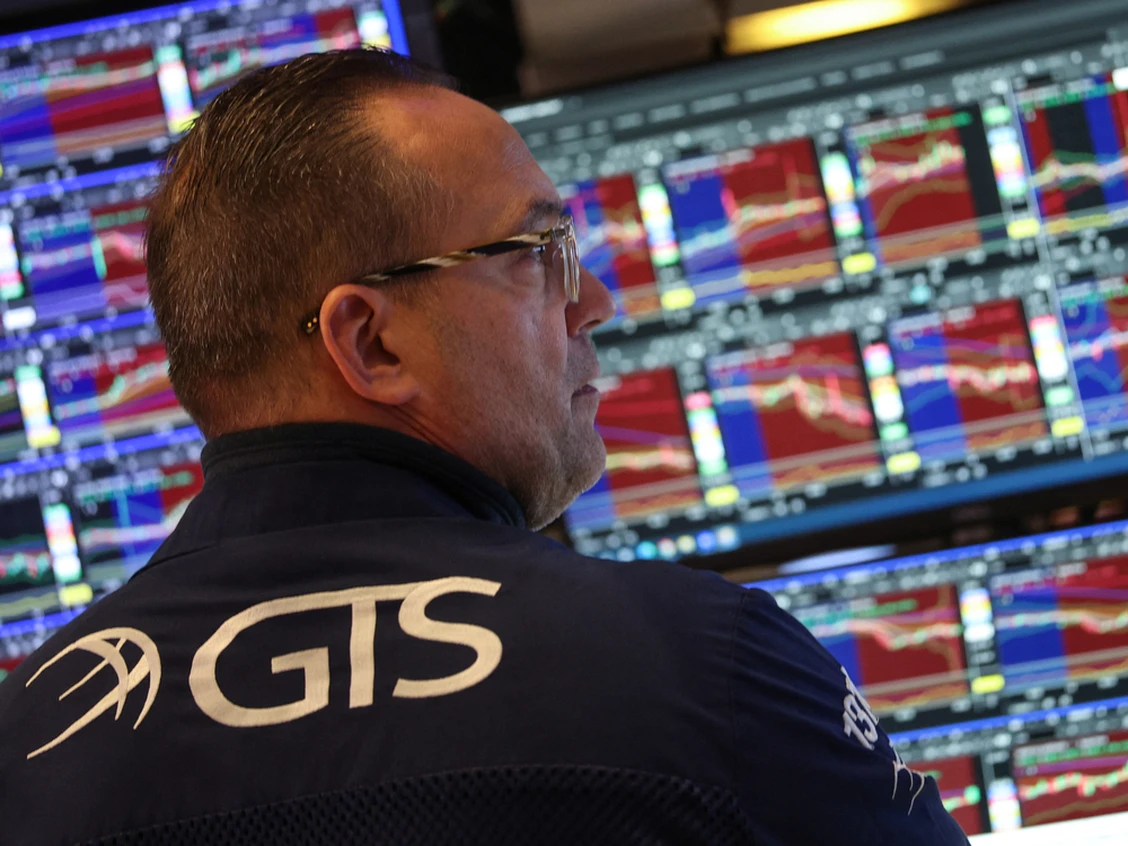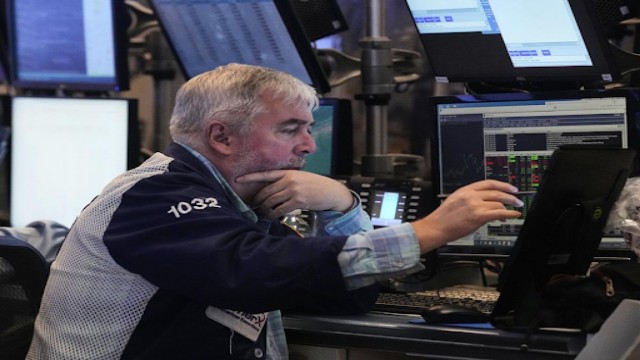
Edward McCarthy, a trader, works on the floor of the New York Stock Exchange on Tuesday, May 6, 2025. (Photo by Richard Drew, AP)
U.S. stock markets bounced back on Wednesday after a shaky session, closing higher following the Federal Reserve’s decision to leave interest rates unchanged. While investors had expected this move, the central bank’s warning about increasing threats to the economy grabbed attention.
The S&P 500 rose by 0.4%, recovering from a two-day slump that had paused its nine-day winning streak. The Dow Jones Industrial Average gained 0.7%, while the tech-heavy Nasdaq inched up by 0.3%.
Fed Chair Jerome Powell explained that the central bank has room to wait before adjusting interest rates again. However, he voiced concerns about the ongoing tariff tensions, especially those targeting China. According to Powell, keeping these tariffs in place could damage economic growth and lead to rising prices.
Earlier in the day, markets showed signs of hope. The Dow briefly surged 400 points amid reports that the U.S. and China were planning high-level trade talks in Switzerland this weekend. Investors took it as a sign that both countries might be stepping back from a prolonged trade war.
But optimism quickly faded after President Donald Trump clarified that he has no plans to reduce the 145% tariffs on Chinese goods, a key demand from China. Beijing had made it clear that easing tariffs was a necessary condition for any trade negotiation.
This back-and-forth has left businesses and investors on edge. The uncertainty around tariffs has already caused unusual shifts in the economy—such as a spike in imports earlier this year as companies tried to avoid potential new taxes. Surveys now show that U.S. households are growing more uneasy about the future.
Despite these worries, the Fed still sees the economy running “at a solid pace” for now. Powell said the central bank would take a cautious approach and wait to see how the trade situation unfolds.
The concern is that if tariffs continue or even increase, they could lead to a troubling economic scenario called stagflation—where inflation rises while the economy slows and job losses increase. In such a case, the Fed would have no easy solution. Lowering interest rates could make inflation worse, while raising them would hurt the economy more.
Meanwhile, some major U.S. companies are performing well despite the uncertainty. Walt Disney Co. posted better-than-expected earnings, raised its outlook, and added over a million new streaming subscribers, sending its shares up 10.4%.
On the other hand, some firms are sounding alarms. Super Micro Computer dropped 3.3% after lowering its revenue forecast. Marvell Technology tumbled 9.4% after delaying its investor event due to economic unpredictability.
In the bond market, yields slipped following the Fed’s decision. The 10-year Treasury yield dipped to 4.27% from 4.30% the previous day.
Globally, Asian markets saw gains thanks to stimulus efforts from China, including interest rate cuts. European markets, however, mostly declined.