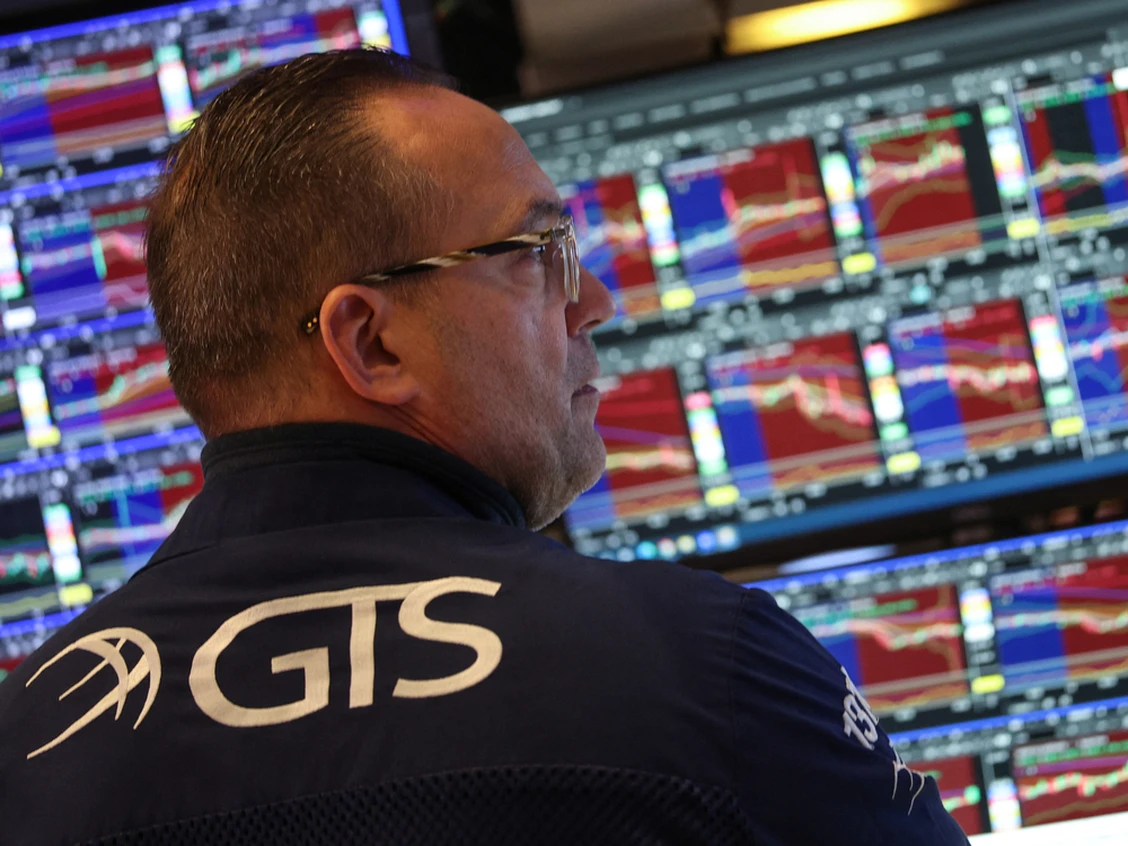
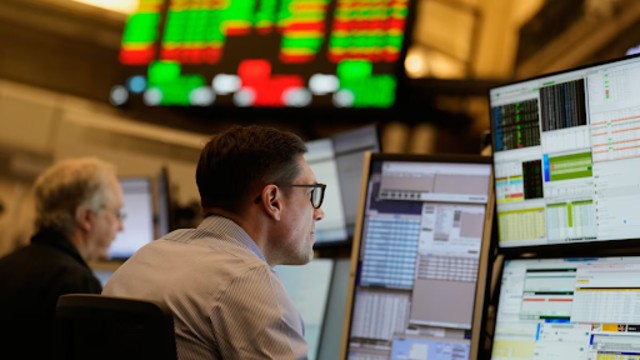
Traders are seen in action inside the New York Stock Exchange, captured in a moment of busy market activity in New York. (Photo: AP/Seth Wenig)
Wall Street took a breather on Friday as major U.S. stock indexes dipped slightly after reaching record highs earlier in the week. The S&P 500 dropped 0.3% following a new all-time high just the day before. The Dow Jones fell by 0.6%, and the Nasdaq composite gave up 0.2% after wavering between gains and losses during the day.
It marked a modest pullback for markets that have surged for weeks, but investor concerns are now shifting toward rising trade tensions and the upcoming wave of corporate earnings reports.
U.S.-Canada Trade Tension Escalates
One of the main causes of the market unease: President Donald Trump’s announcement of new tariffs. On Thursday, Trump stated he would raise import taxes on many Canadian goods to 35%, increasing from the previous 25% rate introduced in March. This move has further strained relations between the neighbouring countries.
The White House had initially given trading partners a deadline to negotiate new deals by Wednesday or face these steep tariffs. With only two trade deals secured—one with the UK and another with Vietnam—that deadline has now been extended to August 1.
Trump also hinted at even higher tariffs on other products, including 200% on pharmaceuticals and 50% on copper, mirroring the taxes already applied to steel and aluminum.
Markets Adjust, But Uncertainty Remains
While previous tariff threats sent shockwaves through global markets, investors now appear more accustomed to Trump’s unpredictable trade policies. Still, some experts remain cautious.
Paul Ashworth of Capital Economics noted that the markets have reacted less strongly than expected, possibly assuming that Trump will reverse course as he has in the past. “We are not so sure,” Ashworth warned.
Eric Teal, chief investment officer at Comerica Wealth Management, believes Wall Street has priced in at least a 10% baseline tariff rate and won’t be easily rattled unless the situation escalates further.
Corporate Earnings in Focus
With trade tensions brewing, Wall Street is now turning its attention to corporate earnings reports expected in the coming weeks. Investors hope strong company performance will help steady the market.
Levi Strauss was a standout on Friday, with its stock soaring over 11% after the company beat expectations and raised its full-year outlook. PriceSmart also climbed 5.3% after a strong quarter and announced interest in expanding into Chile.
Next week, big banks like JPMorgan Chase, Citigroup, and Wells Fargo are scheduled to report, kicking off the earnings season in full swing.
Airlines, Tech, and Telecom Feel the Pressure
Not all companies fared well. Health care and financial stocks dragged down the broader indexes. Visa lost 2.2%, while Gilead Sciences dropped 4.3%.
Airline stocks gave up gains from Thursday’s rally, sparked by Delta’s positive earnings. Delta slid 0.2%, United Airlines fell 4.3%, and American Airlines plunged 5.6%.
In the telecom space, T-Mobile’s shares slipped 0.2% after the Justice Department cleared its $4.4 billion purchase of U.S. Cellular. Despite the drop, U.S. Cellular shares rose 3.6%.
Drone Stocks and Bitcoin Soar
Among Friday’s biggest winners was Red Cat Holdings, an aviation company whose stock jumped 26.4%. The surge followed new orders from Defence Secretary Pete Hegseth to ramp up drone production.
Meanwhile, Bitcoin reached a new milestone, briefly crossing $118,000 before settling near $117,901. The rally came alongside Nvidia’s market cap crossing $4 trillion and ahead of the U.S. Congress’ “Crypto Week,” where lawmakers will discuss key digital asset regulations.
Final Market Numbers
- S&P 500: Fell 20.71 points to 6,259.75
- Dow Jones: Dropped 279.13 points to 44,371.51
- Nasdaq: Lost 45.14 points to close at 20,585.53
- 10-year Treasury Yield: Rose to 4.42% from 4.34%
- Bitcoin: Peaked above $118,000 before settling at ~$117,901
Stock markets in Europe and most of Asia ended the day in the red, reflecting global uncertainty as trade tensions and earnings season unfold.