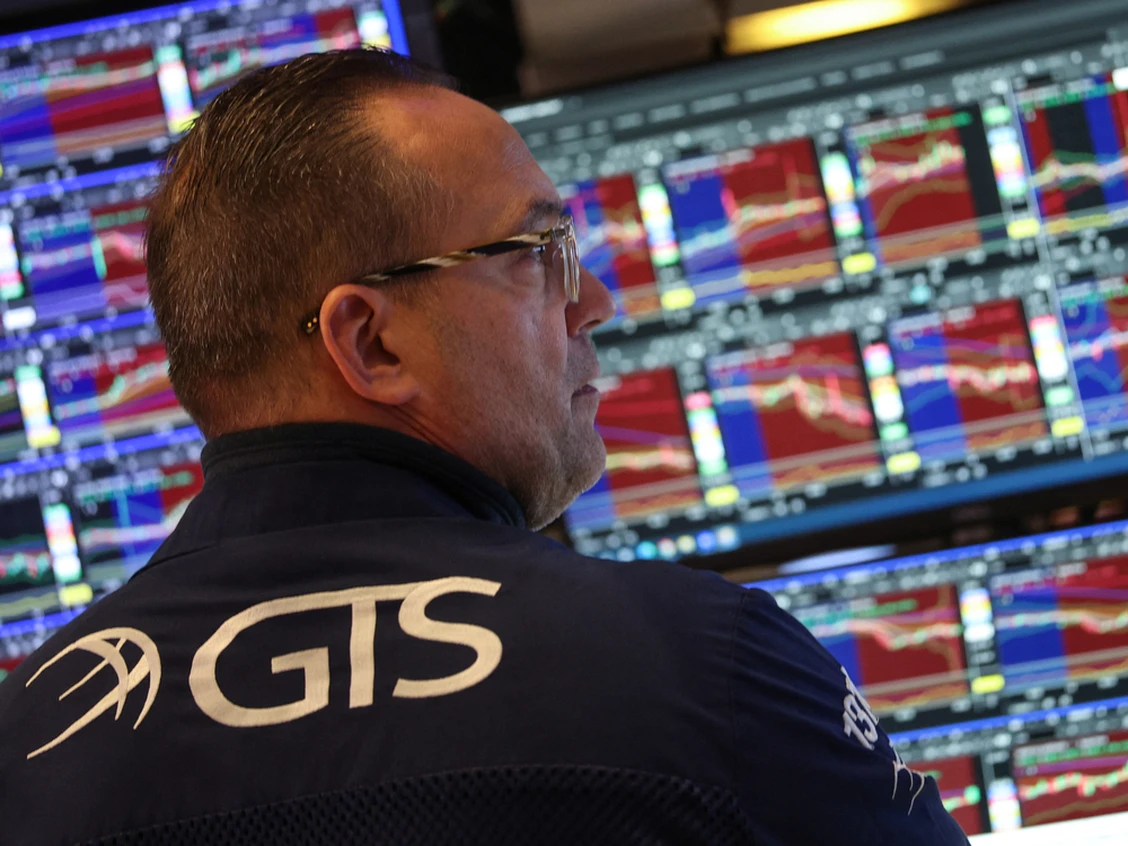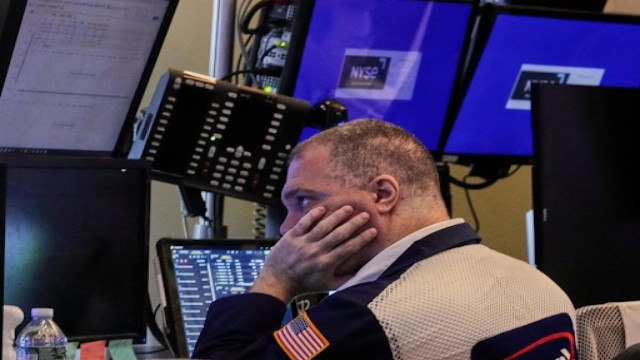
Robert Gasparino, a trader, was seen working on the floor of the New York Stock Exchange on Tuesday, June 10, 2025. (Photo credit: Richard Drew, AP)
Wall Street ended a quiet Wednesday with minor changes as investors processed the Federal Reserve’s latest signal—it may still lower interest rates twice this year, but nothing is guaranteed.
The S&P 500 stayed almost unchanged, showing no clear direction. The Dow Jones slipped slightly by 0.1%, while the Nasdaq managed a modest 0.1% gain. These tiny movements came as Fed Chair Jerome Powell addressed the uncertainty hanging over the economy—especially due to rising tariffs and global tensions.
Powell said the Fed is still watching how trade issues, especially former President Donald Trump’s proposed tariffs, will affect inflation and the broader economy. He described the outlook as “foggy” and stressed that decisions on rate cuts will take time.
Despite the cautious stance, the Fed’s projections still suggest that two interest rate cuts may come by year-end. This matched the expectations from three months ago and brought some calm to nervous investors.
Why does this matter? If the Fed cuts rates, loans like mortgages and credit cards may become cheaper, which can encourage more spending by households and businesses. But on the flip side, it could push inflation higher—something the Fed is trying to avoid.
At the moment, inflation appears to be near the Fed’s target of 2%. But global events—especially the ongoing conflict between Israel and Iran—have pushed oil prices up, which could eventually lead to higher prices for everyday goods.
On that note, oil prices bounced again on Wednesday. U.S. crude rose 0.4% to $75.14 per barrel after falling below $72 earlier in the day. Brent crude, the global benchmark, climbed 0.3% to $76.70. The price swings come as markets remain uneasy about possible disruptions to oil supply. Iran plays a major role in oil production and controls the key Strait of Hormuz, through which a large chunk of the world’s oil flows.
Adding more suspense, Trump claimed Iran has reached out to him over its nuclear program. But when asked if the U.S. would launch military action, he gave a vague answer: “I may do it. I may not do it.”
Back on Wall Street, green energy stocks saw a slight rebound. Enphase Energy, which had been hit hard earlier in the week over fears of solar tax credit cuts, rose 3.7%. Nucor, a steelmaker, jumped 3.8% after reporting improved profit projections, helped by stronger pricing in key areas.
Bond markets remained steady. The yield on the 10-year Treasury dipped slightly to 4.38%, while the 2-year yield inched down to 3.93%. These movements reflect ongoing uncertainty about how aggressively the Fed will adjust its policies.
Two new economic reports gave a mixed picture. Jobless claims dropped, which could suggest fewer layoffs. But construction of new homes fell more than expected, showing that high mortgage rates are putting pressure on the housing market.
Outside the U.S., global markets showed no consistent trend. Japan’s Nikkei rose nearly 1%, while Hong Kong’s Hang Seng Index dropped more than 1%.
As investors continue to watch interest rates, inflation, and international tensions, one thing is clear—uncertainty is still driving the markets.