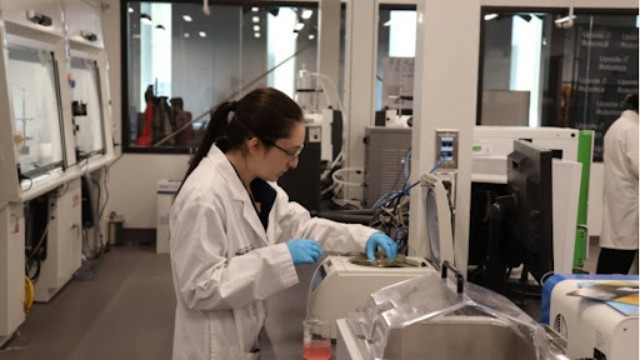
CT Murphy is testing a new way to spot HPV — a key cause of cervical cancer — using menstrual pads made with tiny materials. These pads could help detect the virus without any invasive tests. (Image courtesy: CELLECT Laboratories Inc.)
A groundbreaking innovation from two researchers in Waterloo, Ontario, could change how women are screened for cervical cancer. Instead of enduring invasive Pap tests, women may soon use something they already rely on every month — menstrual pads — to screen for signs of cervical cancer.
CT Murphy and Ibukun Elebute, co-founders of CELLECT Laboratories, are the minds behind this powerful idea. They’ve developed a way to embed special nanomaterials in menstrual pads to detect human papillomavirus (HPV) — the virus that causes most cervical cancers.
From Discomfort to Discovery
Murphy says her own unpleasant experience with a Pap test sparked the idea during her final year of studying nanotechnology at the University of Waterloo.
“I found the process outdated and uncomfortable,” she said in a phone interview. “I couldn’t believe how little attention was given to managing pain.”
Teaming up with Elebute — who has a background in engineering and business — the pair launched CELLECT Laboratories. Their work has already earned more than $150,000 in global pitch competitions. For them, it’s about more than innovation; it’s about giving women a safe, comfortable, and trustworthy option to stay healthy.
“We’re not just inventing,” Murphy said. “We’re responding to a real need. Women deserve health care made with them in mind.”
Why This Matters in Canada
Cervical cancer rates in Canada have been on the rise — up 3.7% per year since 2015. Many experts believe this increase could be reversed with better, more approachable screening methods.

Ibukun Elebute and CT Murphy pictured together.(Photo credit: CELLECT Laboratories Inc.)
“Many women avoid Pap tests due to discomfort or stigma,” Murphy said. “But if screening felt safer and easier, more women might actually go through with it — and earlier detection can save lives.”
How Canada’s Health System Is Adapting
Some provinces, like British Columbia and Ontario, are moving toward HPV testing, which is more accurate and less frequent than Pap smears. B.C. even allows residents to self-test at home. But many experts argue Canada’s national screening guidelines are far behind.
Dr. Anna Wilkinson from The Ottawa Hospital notes that current federal guidelines are outdated by more than a decade and don’t recommend HPV testing — even though it’s proven to work better than older methods.
“We have the tools,” she said. “But we’re not using them properly. Cervical cancer is largely preventable. We must act now.”
A Pad That Can Change Lives
Despite improvements, Murphy and Elebute point out that current HPV self-testing kits still involve swabs — which many women find uncomfortable or triggering. This is especially true for sexual assault survivors or those experiencing gender dysphoria.
Their innovation — using a familiar menstrual product — offers a noninvasive option that may encourage more women to get tested without fear or pain.
Still, in cases where abnormal cells are found, more traditional exams like biopsies or colposcopies may still be needed.
Not a Replacement — a Companion
Murphy and Elebute aren’t trying to replace other methods. Their goal is to work alongside what already exists and make early detection more accessible and user-friendly.
“Our pads could help women collect high-quality samples right from home — without stepping into a clinic or facing discomfort,” Elebute said.
She also believes menstrual blood holds potential beyond HPV detection. It could help diagnose a wide range of gynecological conditions, offering a huge leap forward in how women's health is monitored.
“It’s one of the most underused samples in medicine,” she added. “We bleed every month — it’s time we start using it to protect our health.”