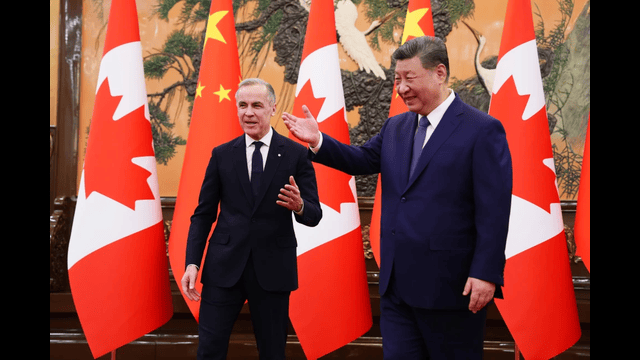
Canadian Prime Minister Mark Carney, left, meets with the President of China Xi Jinping at the Great Hall of the People in Beijing, China, on Friday, Jan 16, 2026.
Western leaders are quietly reworking their China strategy.
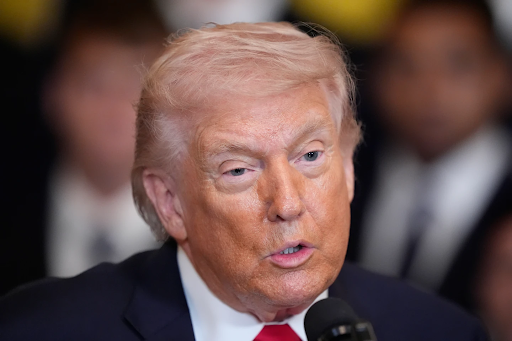
The shift comes as President Donald Trump ramps up tariffs and confrontational demands.
Instead of forming a united front, U.S. allies are reopening doors to Beijing.
The global balance between Washington and Beijing is beginning to change.
Xi Welcomes a New Wave of Western Leaders
Chinese President Xi Jinping has hosted several Western leaders in recent weeks.
Each visit signals warmer ties with the world’s second-largest economy.
Canada, the U.K., Germany, and Nordic nations are all engaging China again.
Canadian Prime Minister Mark Carney led the shift.
He struck a trade deal cutting tariffs on Chinese electric vehicles.
In return, China reduced barriers on Canadian canola oil.
U.K. Prime Minister Keir Starmer followed soon after.
He traveled to Beijing to repair years of strained relations.
German Chancellor Friedrich Merz is expected to visit next month.
Trump’s Policies Push Allies Toward Beijing
This diplomatic reset follows renewed clashes with Trump.
U.S. allies have faced tariff threats and sharp rhetoric.
Trump even floated taking control of Greenland from Denmark.
These actions unsettled traditional partners.
Many are now hedging their bets by engaging China.
The move risks angering Washington but offers economic stability.
Carney defended the approach in Davos last week.
He said nations must deal with the world as it exists.
Waiting for ideal conditions, he argued, is not an option.
Washington Voices Alarm Over the Shift
U.S. lawmakers have openly criticized the trend.
Senator Jeanne Shaheen warned allies are being pushed toward China.
She said Washington risks losing influence over close partners.
Trump also voiced concern.
He called Starmer’s China visit “very dangerous.”
He warned Canada against deepening business ties with Beijing.
Yet Trump himself is expected to visit China in April.
That irony has not gone unnoticed among allies.
Europe Rethinks Its Strategic Playbook
European leaders say the reset is not a China pivot.
They describe it as protecting Europe’s own interests.
Economic pressure from both superpowers has forced reassessment.
EU foreign policy chief Kaja Kallas acknowledged China’s coercive practices.
Still, she urged Europe to diversify partnerships globally.
Engagement, she said, does not mean blind trust.
Analysts note Beijing’s targeted approach.
China prefers direct ties with national capitals.
This strategy weakens a unified EU stance.
Two Superpowers, Shared Pressure
Experts argue Europe now faces pressure from both sides.
Trump’s Greenland comments alarmed European capitals.
China’s rare earth export controls added to concerns.
Both moves reinforced fears of economic bullying.
Europe increasingly sees Washington and Beijing as similar risks.
That perception is driving the diplomatic reset.
Canada’s Trade Reset Sets the Tone
Canada’s shift has drawn the most attention.
Under former Prime Minister Justin Trudeau, Canada mirrored U.S. tariffs.
Chinese electric vehicles faced a 100% duty.
Carney reversed course during his Beijing visit.
He reduced tariffs and secured farm export relief.
He called China ties “more predictable,” contrasting Trump’s threats.
Trump responded by threatening new tariffs on Canada.
Carney dismissed the remarks as political bluster.
He later warned against coercion by great powers.
Europe Follows With Caution
Starmer’s visit marked a turning point for Britain.
The two nations agreed to rebuild strategic cooperation.
Climate change and global stability topped the agenda.
The trip produced concrete outcomes.
China eased tariffs on Scotch whisky.
British travelers gained visa-free entry for short stays.
Finland also moved forward.
Prime Minister Petteri Orpo signed cooperation deals in Beijing.
He raised Ukraine, trade imbalances, and human rights concerns.
France, Ireland, South Korea, and others have visited as well.
Germany’s upcoming trip could prove pivotal.
Berlin wants fairer trade and reduced reliance on Chinese minerals.
A Divided West Emerges
As U.S. allies reset relations with China, divisions deepen.
Some analysts warn unity against Beijing may fracture.
Coordinated pressure could become impossible.
For now, allies are choosing pragmatism over alignment.
The world’s power dynamics are shifting again.
And China is steadily gaining diplomatic ground.