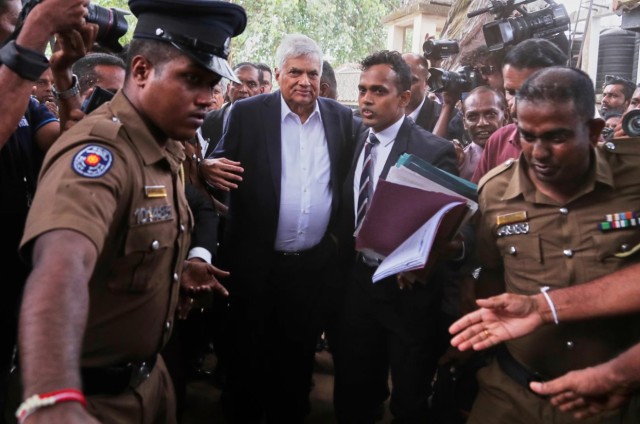
Former Sri Lankan President Ranil Wickremesinghe, center, is produced in a court by the police in Colombo, Sri Lanka, Friday, Aug. 22, 2025.
Former Sri Lankan President Ranil Wickremesinghe was arrested on Friday in Colombo. Police claim he misused public funds during his presidency between 2022 and 2024.
Allegations of Misusing Public Money
Authorities allege Wickremesinghe diverted state funds for personal use. Police spokesman Fredrick Wootler stated the money was used for attending his wife’s graduation in London. The trip reportedly took place after an official visit to the United States.
Wickremesinghe appeared before a magistrate court in Colombo for a lengthy hearing. He was ordered to remain in custody until August 26. The former president did not speak during the hearing, and his office has not issued a statement.
Supporters Rally Against Arrest
A large group of Wickremesinghe’s supporters gathered outside the courthouse. They protested against the arrest and chanted slogans demanding his release. For many of them, the detention of the former president is politically motivated.
This arrest marks a significant moment in Sri Lankan politics. Wickremesinghe is the first former head of state in the country to face such action.
Anti-Corruption Drive Under New Leadership
The arrest is part of President Anura Kumara Dissanayake’s anti-corruption campaign. Dissanayake, who came to power in 2024, built his election campaign on promises of accountability.
He won the presidential election in September after public frustration with the old political order. Months later, his party secured a decisive parliamentary victory. The strong mandate allowed him to pursue a crackdown on alleged corruption among political elites.
So far, more than a dozen former officials and senior politicians are under investigation. Wickremesinghe, given his status, is the most prominent figure to be charged.
A Career of Highs and Lows
Wickremesinghe rose to the presidency in 2022 after Sri Lanka’s economic meltdown forced Gotabaya Rajapaksa to resign. At the time, the nation faced its worst financial crisis in decades.
His leadership initially restored stability. Inflation dropped, foreign reserves increased, and the Sri Lankan rupee gained strength. The progress earned him some credit at home and abroad.
Public Anger Over Tough Reforms
Despite economic improvements, Wickremesinghe’s tenure was far from smooth. Citizens widely criticized his austerity-driven governance.
His government imposed steep tax hikes and higher utility charges. These measures were tied to an International Monetary Fund bailout package. While they helped stabilize the economy, they fueled anger among ordinary Sri Lankans already burdened by rising living costs.
The discontent weakened his popularity, setting the stage for Dissanayake’s political rise.
A Defining Moment for Sri Lanka
The arrest of Ranil Wickremesinghe signals a turning point in Sri Lanka’s political history. Never before has a former president been taken into custody over corruption charges.
The case will test the credibility of President Dissanayake’s anti-corruption drive. It will also measure how far Sri Lanka’s new leadership can go in holding powerful figures accountable.
For now, Wickremesinghe’s future remains uncertain. His supporters continue to call the charges unfair, while critics argue the move reflects overdue justice. The coming weeks will reveal whether the case is a landmark in reform or another chapter of political rivalry.