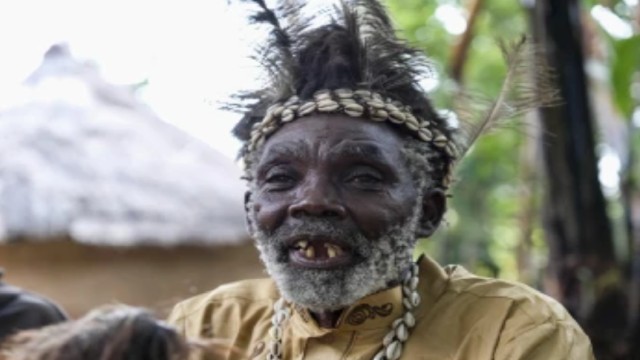
Politicians in Uganda are turning to witch doctors to get a competitive advantage over their opponents. This spiritual political warfare is part of a wider struggle of faith in the majority Christian country.
In the heart of African politics, where elections are often high-stakes and deeply personal, a hidden force lingers: the fear — and use — of witchcraft. While public campaigns may dazzle with processions, speeches, and gifts, behind the scenes, many politicians turn to spiritual warfare.
This unspoken phenomenon plays out vividly in Uganda, where belief in the supernatural collides with modern governance. For many, witchcraft is not just folklore — it’s a political tool.
Witchcraft Fears Shake Up Political Etiquette
Wilson Watira, a Ugandan parliamentary hopeful, recently experienced this firsthand. At a funeral, he approached a rival for a handshake — a simple, respectful gesture. But instead of extending his hand, the rival folded a piece of paper from the funeral program and used it to “greet” him from a distance.
Watira wasn’t shocked. “He’s afraid of me because I am not afraid of him,” he said. To Watira, it’s clear: witchcraft and superstition influence how candidates behave and how voters perceive them. “Once your mind is pushed to that level, everything becomes suspicious,” he added.
Faith and Fear in East Africa’s Political Arena
Though Christianity dominates Uganda’s religious landscape, many secretly seek power through traditional rituals. The contradiction confounds church leaders, who condemn mixing Christian faith with occult practices.
Yet, traditional healers remain influential. Across Uganda, posters promise magical solutions — from catching thieves to helping candidates win the 2026 elections.
“Politicians rely heavily on witch doctors,” said Steven Masiga, a cultural leader from Mbale. “Witch doctors are now part of the campaign budget. There’s even a fixed share set aside for them.”
He recalls one candidate who skinned a goat alive, as instructed by a healer, and later won the election.
From Shrines to Statehouses: Witchcraft Beyond Uganda
This belief in mystical forces isn’t unique to Uganda. In South Sudan, Vice President Riek Machar is believed to be the fulfillment of a century-old prophecy — a gapped-tooth, left-handed man destined to unite the country. Many believe that prophecy fuels his political ambitions.
In Kenya, some anti-government protesters claimed to feel disoriented near the presidential residence. The reason? A suspected “evil spell” cast to protect President William Ruto. His decision to build a church inside the State House has also sparked accusations of occultism.
And in Zambia, two men are on trial for allegedly using charms to harm President Hakainde Hichilema. Ironically, Hichilema was once accused of using witchcraft himself by former President Michael Sata.
Witch Doctors: Spiritual Advisers in Disguise
In Uganda’s Mbale region, traditional healer Rose Mukite continues to see a steady stream of political clients. Her shrine, a dome-shaped hut with a tiny entrance, forces visitors to bow.
Inside, she casts cowrie shells and blows tobacco smoke to divine the future.
“I give some of them tree bark to chew,” she said, claiming it can protect politicians from imprisonment or scandal. “If it didn’t work, I wouldn’t still be in business.”
Leaders and Legacy: Embracing Traditional Power
Even Uganda’s long-standing president, Yoweri Museveni, acknowledges the influence of traditional beliefs. He has publicly spoken about rituals he performed before gaining power in 1986.
“The traditional religion is very strong,” he said, urging churches not to antagonize its followers. “We had a good relationship with them.”
Other top officials, like former parliamentary speaker Rebecca Kadaga, have been photographed entering ancestral shrines.
When criticized by religious leaders, Kadaga defended her actions. “Those are my roots,” she said.
Not Everyone Bows to Tradition
While many politicians embrace these practices, some resist.
Peace Khalayi, a Catholic running for Parliament, refuses to perform rituals or sacrifices. Though she sometimes pretends to agree when urged by supporters, she never shows up at the shrines.
Still, she admits to feeling vulnerable. “The fear is real,” she said. “You want to be open with your opponent, but deep down, you can’t.”
The Real Power Behind the Curtain
As Uganda gears up for its 2026 elections, the spotlight remains on rallies, speeches, and promises. But in the shadows, rituals, charms, and traditional healers continue to shape the fate of candidates.
In African politics, the belief in witchcraft isn’t just superstition. For many, it’s strategy and power.