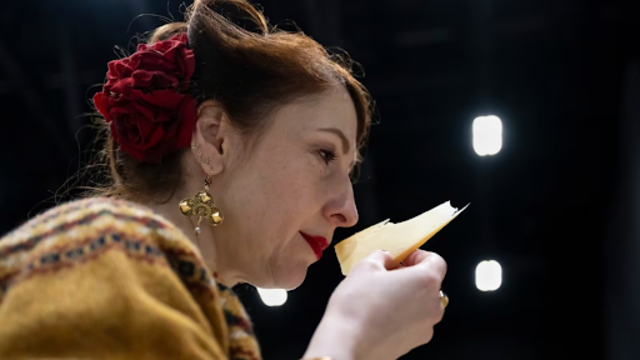
A judge studies and samples cheeses from many countries during the 37th World Cheese Awards at the Festhalle in Bern, Switzerland, on Thursday, Nov. 13, 2025. AP Photo
The World Cheese Awards opened in Switzerland on Thursday with a wave of strong smells that greeted every visitor at the door. The three-day gathering marked the 37th year of the event, which blends a global contest with a celebration of cheese from every corner of the world. Many guests walked in with smiles, but some took a step back as the sharp scents rolled across the hall.
A Festival for All Senses
Cheese experts, chefs, and curious guests filled the large venue in Bern. The host country brought the most entries, but producers from 46 nations joined the event — the highest number yet. More than 5,200 cheeses competed, creating a powerful mix of aromas in one place. Once guests moved past the first shock of mixed smells, they found rows of cheeses full of rich colours, deep flavours, and unique textures.
Visitors spotted every kind of cheese, from famous names like Stinking Bishop to rare creations made with camel milk. John Farrand, managing director of the event’s organizing group, encouraged people to be open to variety. “I get so many people say to me just impulsively ‘I don’t like blue cheese’ and that’s impossible really,” he said. He explained that blue cheeses range widely in strength and taste, offering something for nearly everyone.
He described one moment that stood out to him. Teams rolled in a huge 120-kilogram wheel of Emmentaler and cut into it for the first time. “The aroma of this Emmentaler just hit me,” he said, smiling. The scent filled the air and drew a crowd of eager tasters.
Cheese for the Bold and the Brave
Many people avoid bold cheeses like Limburger, Taleggio, or Époisses de Bourgogne — a French cheese so smelly that stories claim it once faced transport bans. Others hesitate at goat, donkey, or buffalo cheeses, or anything unpasteurized or gooey. But this event attracts adventurous tasters who look for the most daring flavours they can find.
Judging with Care and Precision
The competition area held long tables covered with numbered cheeses. Judges in yellow aprons followed strict rules as they inspected each entry. They checked shapes, sliced wedges, pressed samples to their noses, and tasted each cheese with careful attention. Journalists could watch but could not taste.
Judges worked blind with all labels removed. They focused on smell, texture, body, flavour, and overall feel. Only the very best cheeses earned gold, silver, or bronze awards, and a smaller group received the “Super Gold” title. These finalists moved on to the final round decided by the Super Jury.
One judge, cheesemaker Paul Thomas, tasted a blue cheese mixed with cherries and designed to hint at a Manhattan cocktail. He enjoyed most of it but noted “a slightly off flavor toward the back of the tongue.”
Switzerland Celebrates a Win
This year’s champion came from Switzerland. A special Gruyere from a small mountain dairy near Bern took the top prize with 85 points. The makers drained it overnight, salted it by hand, and aged it for more than 18 months. A creamy French Basque cheese took second place, followed by a strong Swiss Appenzeller. Finalists also came from Japan, Britain, Slovakia, the Netherlands, and the United States.
Many other cheeses earned honours for being the best from their country or category. The event, often called the biggest cheese-only competition in the world, continues to travel around Europe each year.
Charlie Turnbull from the Academy of Cheese sampled one very smelly cheese and laughed as he compared its scent to teenage boys’ sneakers. But after tasting it, he praised its layers of fruit, savoury notes, and a hint of ham stock. “At the end of the day, taste trumps everything,” he said.