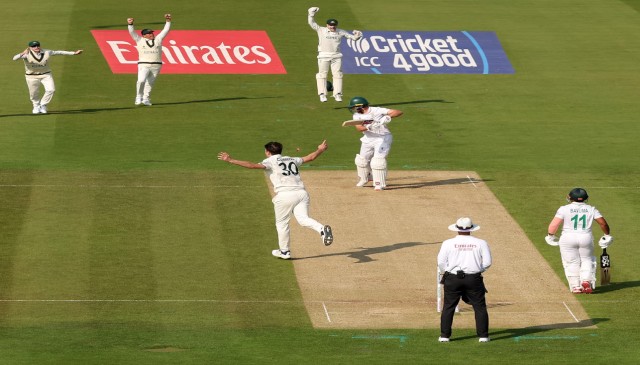
Pat Cummins of Australia celebrates taking the wicket Wiann Malder of South Africa at Lord’s.
The much-anticipated World Test Championship (WTC) final has finally arrived at the spiritual home of cricket—Lord’s. After two missed chances to host it, cricket’s oldest venue welcomed over 26,000 fans on a sunny London morning, delivering the kind of high-stakes action fans had hoped for. Any doubts over the tournament’s relevance were quickly dismissed as the world’s top teams, South Africa and Australia, clashed in a fiery opening day of Test cricket.
Test Cricket Returns Home in Style
The scene was electric. Crowds filled St John’s Wood Road long before the 10:30 AM start, eager to witness Test cricket at its finest. The historic setting added gravitas to the occasion, signaling the true arrival of the World Test Championship as a legitimate global event. Lord’s, with its charm and tradition, seemed the perfect stage to host cricket’s top contenders.
Politics and Power Play Behind the Scenes
Despite the stunning on-field spectacle, off-field politics continue to swirl. The Board of Control for Cricket in India (BCCI) reportedly plans to host the next final in Ahmedabad. With India’s past finals held in England ending in disappointment, the move appears to be more about control than cricket.
Critics argue that neutral fans won’t turn up in droves to watch two non-Indian teams play in a cavernous stadium with poor local engagement.
England’s position isn’t much nobler. The nation failed to qualify for the final yet remains critical of the format. While complaints about scheduling and imbalance are valid, they ignore the core issue: performance. If England wants home advantage, they need to make it to the final first.
South African Pace Unleashes Fireworks
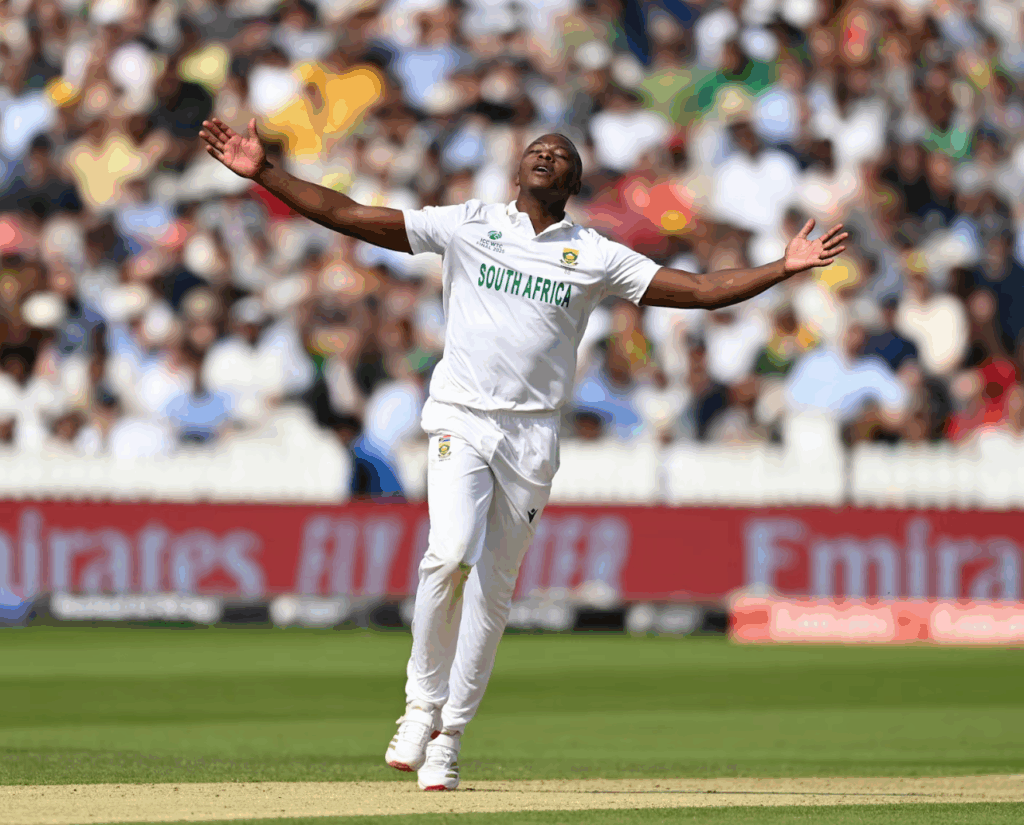
South Africa’s bowlers made the early impact. Opting to field after winning the toss, Kagiso Rabada and Marco Jansen unleashed a brutal opening spell. With pinpoint aggression and relentless pressure, they reduced Australia to 67 for 4 by lunch.
The cracks in Australia’s batting were evident. Marnus Labuschagne struggled as an opener, while Cameron Green’s promotion to number three didn’t yield results. Usman Khawaja, unsettled by pace, edged behind. Labuschagne and Head followed soon after, undone by old technical flaws.
Steve Smith Anchors the Ship
Amid the early chaos, Steve Smith brought calm. After a three-month break, he returned to the crease with clinical precision. His 66 may seem modest, but in the context of the match, it felt like a century. Smith’s familiarity with English conditions, especially at Lord’s, was on full display. Though his stay was under two hours, it stabilized Australia just enough.
Beau Webster played a supporting role, but the duo couldn’t fully revive the innings. Australia were bowled out for 212, but their score proved valuable given what followed.
Australian Quick Bowlers Turn the Tide
If South Africa’s bowling was fierce, Australia’s was ruthless. South Africa’s fragile batting lineup—filled with white-ball stars and makeshift Test players—crumbled quickly. By stumps, they were tottering at 43 for 4.
Ryan Rickelton and Tristan Stubbs, successful in domestic circuits, found the going tough against world-class fast bowling. Wiaan Mulder, pushed to number three, looked uncertain. Even Aiden Markram, arguably their most gifted batter, fell cheaply. Sharp bounce and relentless pace proved too much to handle.
A Crucial Day Awaits
South Africa now looks to Temba Bavuma and David Bedingham for a rescue act. Their response will determine the tone of the match—and perhaps the perception of South Africa’s place in the WTC.
If the pair can replicate the grit shown by Smith and Webster, fans may be treated to another riveting day. But if they fall early, questions about the WTC's qualifying criteria will intensify, despite the reality that even top-tier teams can collapse under pressure.
A Global Stage with Global Stakes
Day one of the World Test Championship final at Lord’s delivered drama, intensity, and skill—everything Test cricket stands for. While off-field power dynamics and uneven qualification processes remain concerns, the on-field action proved one thing: Test cricket still thrills. The WTC is a concept worth building on. Now, it just needs consistent support—and maybe fewer politics.