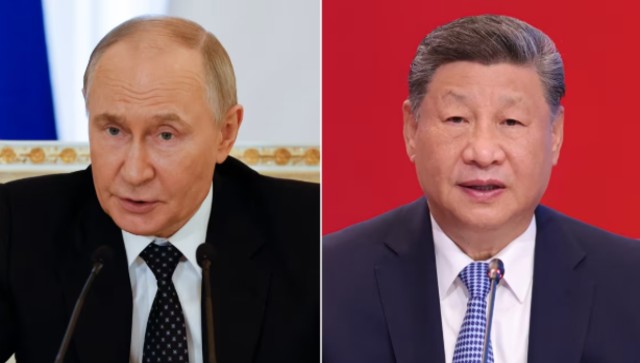
Vladimir Putin and Xi Jinping.
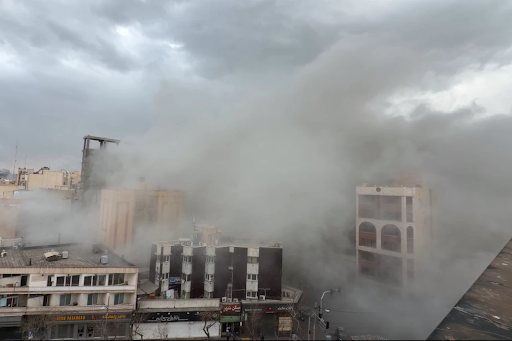
In a rapidly intensifying Middle East crisis, Chinese President Xi Jinping and Russian President Vladimir Putin have joined forces to urge calm. The two leaders, during a recent phone call, expressed concern over the ongoing Israel-Iran tensions and projected themselves as responsible global voices calling for de-escalation — especially as the United States under President Donald Trump considers military involvement.
Their conversation, held against the backdrop of global anxiety over a potential new war, showcased a united China-Russia front challenging U.S. influence. Both powers emphasized diplomacy and restraint, in sharp contrast to Washington’s aggressive posturing.
China and Russia Call for Calm Amid Rising Middle East Tensions
In its official statement, the Kremlin criticized Israel’s actions, labeling them a violation of international law and the United Nations Charter. Putin’s sharp condemnation aligned with Moscow’s broader anti-Western stance, despite its own controversial military activity in Ukraine.
China’s tone was more restrained. While avoiding direct condemnation of Israel, Xi Jinping stressed the need for an immediate ceasefire, especially from Israel, to prevent further regional chaos. He subtly warned major powers, without naming the U.S., to act responsibly and avoid intensifying the conflict.
Subtle Swipe at Trump’s Foreign Policy
Xi’s message, though diplomatic, appeared to target Trump’s unpredictable and confrontational approach. By highlighting the role of "major powers" in cooling tensions, Xi sent a veiled rebuke to Washington’s militaristic leanings under Trump's renewed presidency.
Chinese scholars, too, have taken note. Liu Zhongmin, a Middle East expert at Shanghai International Studies University, blamed the current crisis on the uncertainty Trump’s leadership brings. According to Liu, Trump’s erratic Middle East policy has hurt U.S. credibility, alienated allies, and emboldened adversaries.
Fear of Another ‘Forever War’
Many Chinese analysts and online commentators fear that the U.S. may be sleepwalking into another endless war. Trump's administration had promised to pivot focus toward countering China in the Indo-Pacific. Yet, five months into his second term, conflicts in Ukraine, Gaza, and now Iran, dominate America’s foreign agenda.
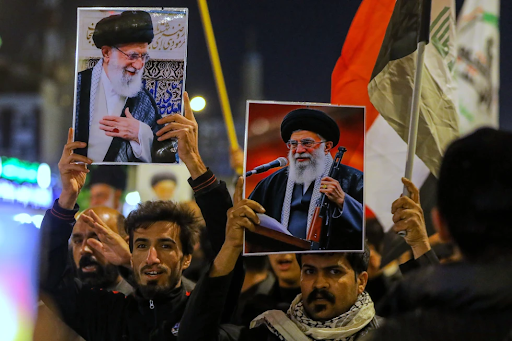
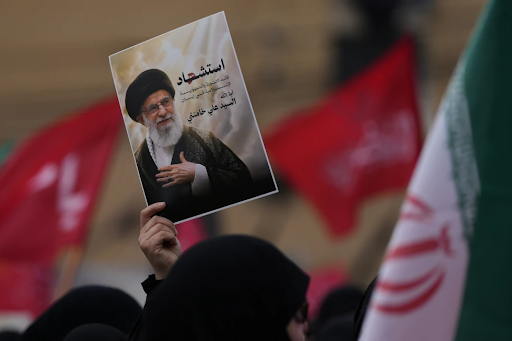
China has no interest in a war that destabilizes Iran — a key regional partner. Under Supreme Leader Ayatollah Khamenei, Iran acts as a strategic counterweight to U.S. influence in the region, much like China seeks to challenge American dominance globally.
China’s Growing Influence in the Middle East
China's support for Iran is no secret. Through oil trade, diplomatic backing at the UN, and joint military drills, the ties between the two have grown stronger. Iran's membership in the Shanghai Cooperation Organization and BRICS — both championed by China and Russia — signals deeper integration into the anti-U.S. camp.
Beijing also views Iran as vital to its Belt and Road Initiative. Iran's geography connects China to key maritime routes via the strategic Strait of Hormuz and the Gwadar port in Pakistan, making it central to China's energy security and regional ambitions.
Peace Talks or Power Play?
Despite offering to mediate the Iran-Israel conflict, China’s track record raises questions. Previous peace overtures, such as in Gaza, resulted in little tangible progress. China’s influence in the Middle East still lacks the political and military depth required for real mediation.
Nevertheless, Xi proposed four points for de-escalation during his call with Putin. These include renewed talks on Iran’s nuclear program, civilian protection, and peaceful diplomacy. Meanwhile, China’s foreign minister, Wang Yi, has been busy with diplomatic outreach, contacting leaders in Iran, Israel, Egypt, and Oman.
Symbolic Victory for Beijing?
Whether China can successfully mediate remains uncertain. However, its attempt to present itself as a peace broker — while the U.S. considers military escalation — may already be paying off in terms of global perception.
For many countries in the Global South, weary of endless American wars, China’s posture of peace and restraint appears refreshing. And in the broader game of geopolitics, even symbolic gestures can shift narratives.
By positioning itself as a rational mediator while the U.S. flirts with war, China continues to challenge Western hegemony, one crisis at a time.