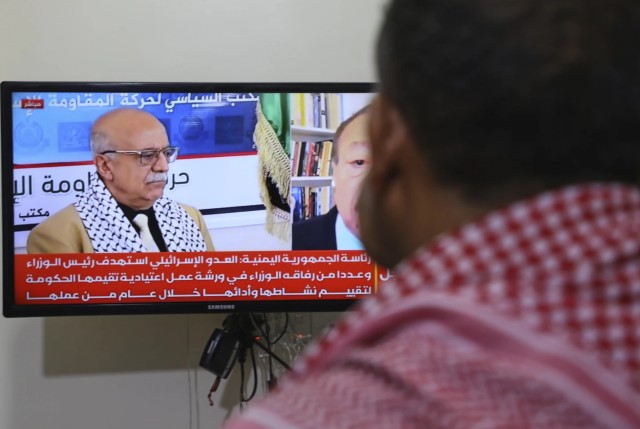
A man watches the news on TV, displaying footage of Ahmed al-Rahawi, the prime minister of the Houthi-controlled government, who was killed, along with others, in Thursday’s Israeli strikes on the capital, in Sanaa, Yemen, Saturday, Aug. 30, 2025.
The conflict in Yemen intensified on Sunday after Iran-backed Houthi rebels raided United Nations offices in Sanaa. At least 11 UN employees were detained, sparking global concern and condemnation. The raids came just days after Israel killed the Houthi prime minister and several Cabinet members in a targeted strike.
Houthis Storm UN Agencies in Sanaa
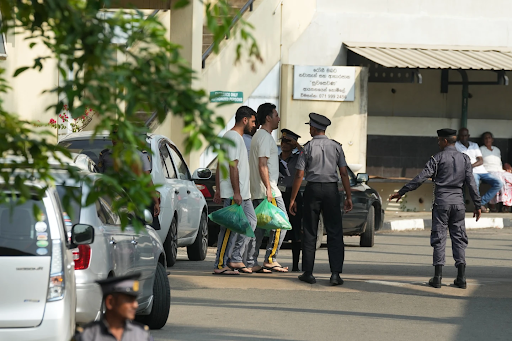
Security forces loyal to the Houthis entered offices of the World Food Programme (WFP), World Health Organization (WHO), and UNICEF in the Houthi-controlled capital. Staff members were detained and questioned outside the premises.
Abeer Etefa, spokesperson for WFP, confirmed that agency offices were forcefully entered. UNICEF’s spokesperson Ammar Ammar also reported that several employees had been taken into custody, though the exact number remains unclear. Both agencies have launched urgent checks to account for staff across rebel-held regions.
UN Chief Demands Immediate Release
UN Secretary-General António Guterres condemned the raids in a strongly worded statement. He criticized the forced entry into UN offices, seizure of property, and detention of staff. Guterres demanded the immediate and unconditional release of all UN personnel, including those previously detained in Yemen.
The crackdown is not new. Over recent years, Houthis have repeatedly targeted UN workers, aid groups, civil society activists, and even former employees of the U.S. Embassy in Sanaa. Earlier this year, the UN suspended operations in Saada after eight staff members were arrested.
Israeli Strike Kills Houthi Leaders
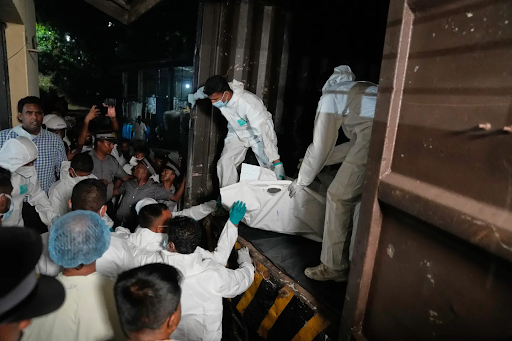
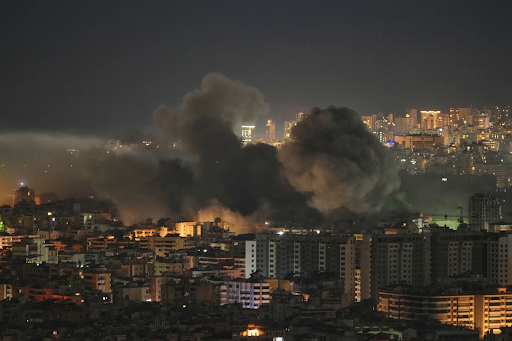
The raids followed the killing of Houthi Prime Minister Ahmed al-Rahawi and five ministers in an Israeli airstrike on Thursday. The attack struck during a government workshop in Sanaa, killing senior figures including Foreign Minister Gamal Amer and Deputy Prime Minister Mohammed al-Medani.
Families confirmed that Information Minister Hashim Sharafuldin, Tourism Minister Ali al-Yafei, and Electricity Minister Ali Seif Hassan were also killed. A senior deputy interior minister, Abdel-Majed al-Murtada, died in the strike as well.
Defense Minister Mohamed Nasser al-Attefi survived, while Abdel-Karim al-Houthi, a powerful figure within the rebel leadership, was not present. A large funeral is scheduled for Monday in Sabeen Square, Sanaa.
Escalation in Yemen’s Conflict
The Israeli strike came after Houthi forces fired a ballistic missile at Israel on August 21. The missile, reportedly carrying cluster munitions, targeted Ben Gurion Airport, prompting air raid sirens in central Israel and Jerusalem. Millions of civilians were forced into shelters.
In July, the Houthis vowed to attack merchant vessels linked to Israeli ports, regardless of their nationality. The group’s leader, Abdul-Malik al-Houthi, reaffirmed their strategy of targeting Israel with drones, missiles, and potential naval blockades. He warned that operations would intensify in response to Israeli actions.
Concerns Over Wider Geopolitical Impact
The UN envoy for Yemen, Hans Grundberg, expressed grave concern over the escalating situation. He warned that Yemen risked becoming a battlefield for wider geopolitical rivalries. “De-escalation is urgent. Yemen cannot afford to be dragged into a larger regional conflict,” he said.
The Houthis’ growing alignment with Iran, combined with their attacks on Israel and Red Sea shipping lanes, has placed Yemen at the center of global tensions. International aid agencies now face shrinking space for operations in rebel-held areas, further threatening civilians already enduring one of the world’s worst humanitarian crises.
A Growing Humanitarian Emergency
With UN staff detained and humanitarian operations disrupted, aid to millions of Yemenis is in jeopardy. WFP and UNICEF play a vital role in delivering food, healthcare, and child support in war-torn regions. Any interruption to these services could worsen hunger, disease, and displacement.
The raids highlight the dangerous intersection of local conflict, regional rivalries, and international humanitarian efforts in Yemen. As tensions mount, the safety of aid workers and the survival of civilians hang in the balance.