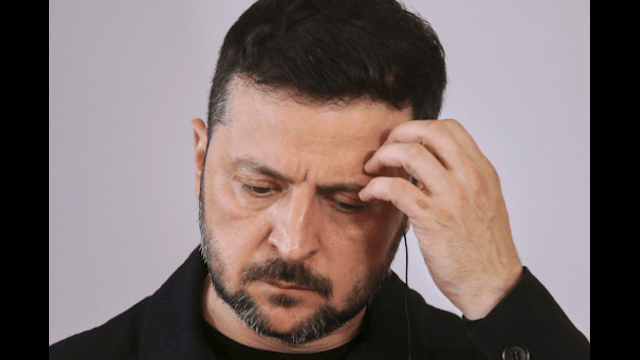
Ukraine’s President Volodymyr Zelenskyy attends a press conference during his visit to Vienna, Austria, June 16, 2025.
Ukrainian President Volodymyr Zelenskyy’s quick reversal of a controversial anti-corruption law has not erased public mistrust. The law, passed in July, would have weakened the country’s anti-corruption watchdogs. Protests erupted nationwide, marking one of the biggest challenges to his leadership since Russia’s full-scale invasion in 2022.
Although the decision was rolled back, public confidence has taken a serious hit. Restoring it will be a difficult task.
Years of Frustration Boiled Over
Discontent over alleged corruption among Zelenskyy’s close allies had been simmering for years. Wartime unity had shielded the president from major public backlash—until now. The fast-track approval of the bill was seen as a step too far.
Polls show the damage. Gallup found only two-thirds of Ukrainians now approve of his performance, down from 84% in 2022. The Kyiv International Institute of Sociology reported similar declines.
The Controversial Law
The bill aimed to reduce the powers of the National Anti-Corruption Bureau (NABU) and the Specialized Anti-Corruption Prosecutor’s Office (SAPO). Zelenskyy claimed it was to eliminate Russian influence, but no proof was offered. Many lawmakers admitted they barely read the bill before voting.
Patience wore thin. Since 2022, Ukrainians had accepted martial law, postponed elections, and tighter presidential control. But weakening anti-corruption agencies crossed a red line.
Protests Demand Accountability
Thousands rallied in Kyiv and other cities, calling for transparency even during wartime. Activists said it wasn’t just one law but a series of events fueling anger. The protests echoed the Euromaidan movement of 2013–14, which toppled pro-Russian President Viktor Yanukovych and cemented zero tolerance for corruption.
Close Allies Under Scrutiny
Much of the suspicion focuses on Andriy Yermak, head of the presidential office, accused by critics of wielding excessive power. Two other close associates added fuel to the fire.
Former Deputy Prime Minister Oleksii Chernyshov was named a suspect in a high-profile land-grab case and linked to a major corruption scheme. Businessman Tymur Mindich, a friend of Zelenskyy involved in drone production, is also under investigation.
Lawmakers Rethink Blind Loyalty
Until now, Zelenskyy-backed bills passed easily. Some lawmakers admitted voting without reading the initial anti-corruption bill simply because it was “the president’s decision.” The backlash changed that.
“We now have a presumption of mistrust,” said lawmaker Oleksandr Merezhko. “Members will be more careful.”
Still, parliament praised Zelenskyy for reversing course. A new bill restoring NABU and SAPO independence passed quickly. “People asked for changes. We responded,” Zelenskyy said.
International Concerns
The initial law also raised alarms abroad. Western allies feared it could weaken Ukraine’s democracy and harm its EU membership bid.
British Prime Minister Keir Starmer discussed the matter with Zelenskyy, stressing the importance of independent anti-corruption institutions. Germany’s Foreign Minister Johann Wadephul welcomed the reversal, calling it “a necessary step toward regaining lost trust.”
Battle for Public Trust Continues
Zelenskyy’s image as a wartime leader remains intact, but his credibility on governance is damaged. Ukrainians still back him in the fight against Russia but are less willing to give him unchecked authority.
The protests were a warning: citizens are watching and will not tolerate moves seen as protecting corruption. In Ukraine’s fragile wartime democracy, the balance between strong leadership and accountability remains under intense public scrutiny.