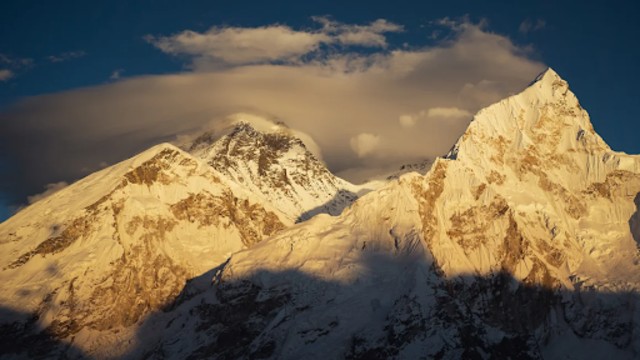
On October 12, 2024, Mount Everest was captured from the Kallapattar viewpoint in Gorakshep, located in the Sagarmatha Region of Nepal. Getty Images
Nepal is set to increase the permit fees for climbing Mount Everest by over 35%, making it costlier for mountaineers to scale the world’s highest peak. This marks the first adjustment in nearly ten years, with the new rates taking effect in September, officials announced on Wednesday.
The climbing permit fee for the iconic 8,849-meter (29,032 feet) Mount Everest will rise from $11,000 to $15,000, as stated by Narayan Prasad Regmi, director general of Nepal’s Department of Tourism. Explaining the rationale behind the decision, Regmi said, “The royalty had not been reviewed for a long time. We have updated them now.”
This change applies to the popular climbing season of April-May, which follows the South East Ridge route—famously used by Sir Edmund Hillary and Tenzing Norgay during their historic 1953 expedition. Fees for the less busy seasons will also increase, with climbers paying $7,500 in September-November and $3,750 in December-February, both reflecting a similar 36% hike.
While the cost adjustment might seem steep, industry insiders believe it won't deter adventurers from pursuing their Everest dreams. Lukas Furtenbach, head of an Austrian expedition company, called the fee hike an “understandable step” by Nepal’s government. “I am sure the additional funds will be somehow used to protect the environment and improve safety on Everest,” he said.
However, Nepalese authorities have not clarified how the additional revenue will be utilized. Mountaineering experts have long criticized the government for overcrowding on Everest and its inadequate efforts to address environmental concerns and climber safety.
Every year, hundreds of climbers from across the globe flock to Nepal to conquer Everest and other Himalayan peaks, contributing significantly to the country’s economy. Beyond the permit fees, these climbers generate substantial revenue by spending on local logistics, hiring guides, and purchasing supplies.
Nepal, home to eight of the world’s 14 tallest mountains, faces mounting pressure to manage the environmental and safety challenges posed by increased climber traffic. Reports from returning climbers describe the mountain becoming drier and rockier, with less snow. Experts attribute this to global warming and other environmental changes, further complicating the challenges on Everest.
Efforts are underway to address these issues, with Regmi highlighting cleaning campaigns and the regular implementation of safety measures such as rope fixing. Despite such measures, Everest’s pristine beauty and fragile environment remain under constant threat.
Mountaineers and environmentalists alike hope the additional revenue will be directed toward conservation and enhanced safety. For now, aspiring Everest climbers will need to prepare for the higher cost while Nepal navigates its path to better managing its precious natural asset.