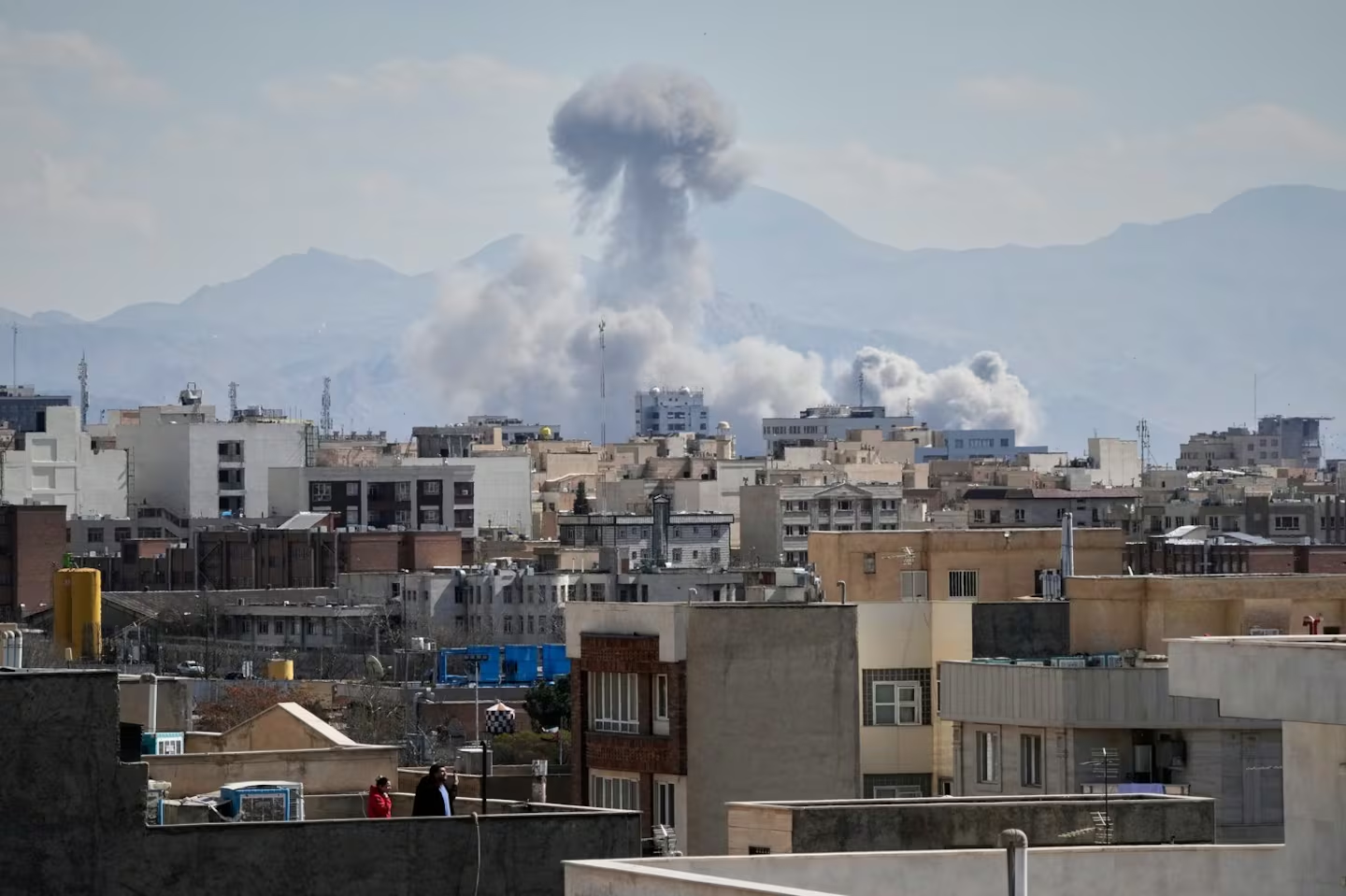
Residents stand on rooftops watching smoke rise into the sky after a strike hit Tehran, Iran, on Sunday, March 1, 2026. (AP Photo)
Canada has urged its citizens to avoid travelling to several countries in the Middle East as tensions continue to grow across the region. Officials say thousands of Canadians currently remain in these areas while the conflict expands.
Global Affairs Canada issued the advisory as violence increased following recent military strikes involving the United States, Israel and Iran. Authorities say more than 85,000 Canadians and permanent residents have registered with the government as being present in the region.
Conflict Expands Across the Region
The latest escalation began on Saturday when the United States and Israel launched strikes on Iran. The attacks targeted the country’s leadership. Officials later confirmed that Iran’s Supreme Leader Ali Khamenei had been killed.
Soon after the strikes, retaliatory attacks spread across the region, raising concerns about a wider conflict.
In response, Canada issued travel warnings and advised its citizens to avoid travel to several countries in the Middle East.
Thousands of Canadians Still in the Region
Government estimates show that thousands of Canadians and permanent residents remain in several Middle Eastern countries.
Officials say 2,932 Canadians currently stay in Iran, while 6,006 remain in Israel.
Other countries where Canadians have registered include:
- Bahrain: 1,438
- Egypt: 7,238
- Iraq: 943
- Jordan: 4,469
- Kuwait: 4,070
- Lebanon: 23,165
- Oman: 793
- Palestine: 438
- Qatar: 8,234
- Saudi Arabia: 10,948
- Syria: 1,484
- United Arab Emirates: 23,064
- Yemen: 227
Authorities explained that these numbers remain estimates because registration with the government remains voluntary. Some Canadians may also have already left the region.
So far, officials say they have not received any reports of Canadians injured or killed during the hostilities.
Canada Condemns Attacks on Civilians
The federal government strongly criticized attacks targeting civilian areas.
“Canada condemns the strikes carried out by Iran on civilian infrastructure,” reads a statement from the federal government.
“These attacks are a dangerous threat to regional stability and civilian safety.”
“They represent an unacceptable escalation and a blatant attempt to further destabilize the region,” the statement continues. “Attacks that endanger civilians and civilian infrastructure are deeply concerning and must cease immediately.”
Diplomatic Efforts Continue
Foreign Affairs Minister Anita Anand has spoken with several international counterparts as tensions rise.
Officials confirmed that Anand has contacted leaders and officials in Kuwait, Israel, Azerbaijan, Armenia, Jordan, the United Arab Emirates and Qatar to discuss the situation.
Canada has also taken steps to protect diplomatic staff in the region. Non-essential personnel working at the Canadian mission in Tel Aviv have been asked to relocate.
Government officials say Canadian diplomatic staff across the region remain safe and accounted for.
Emergency Teams Sent to Assist
Canada has also sent members of its Standing Rapid Deployment Team to several nearby countries. These specialists respond to emergencies involving Canadians abroad.
The team will provide assistance in Armenia, Azerbaijan, Israel, Jordan, Turkmenistan and Türkiye.
Officials say these teams help monitor the situation and support Canadians if conditions worsen.
Canadians Asked to Register and Stay Alert
The government is asking Canadians in the region to register with Global Affairs Canada so they can receive updates and travel alerts.
Officials have also advised citizens to avoid travel to Israel and Iran and to several other countries in the region, including Bahrain, Iraq, Kuwait, Lebanon, Qatar, Syria, the United Arab Emirates and Yemen.
Authorities have also warned against non-essential travel to Jordan, Oman and Saudi Arabia.
Officials say Canadians should prepare their own emergency plans because consular assistance may remain limited during active conflict.