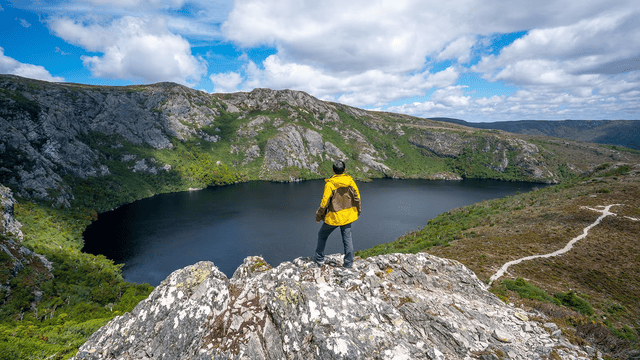
Tasmania, an island state of Australia, is widely known for its scenic natural beauty, including places like the Marions Lookout trail in Cradle Mountain National Park. CNN
An online travel guide led tourists on an unexpected search after an artificial intelligence tool recommended hot springs in northern Tasmania that do not exist. The error appeared in a blog post published on a tour company’s website and described the fictional location as a peaceful retreat surrounded by forest.
The post praised “Weldborough Hot Springs,” calling them a calm escape and a favourite stop for hikers. The site later removed the blog after visitors began questioning the information.
Confusion in a quiet town
Weldborough is a small rural community located about 110 kilometres northeast of Launceston. Residents soon noticed something unusual when travellers began arriving and calling local businesses to ask for directions to the hot springs.
Kristy Probert, who owns the Weldborough Hotel, said she first felt confused when she started receiving phone calls in September. “It was only a couple of calls to start with,” she said, “but then people began turning up in droves.”
She said she received about five calls a day and several visitors arriving in person, all asking the same question. “We’re in a very remote location so it was very random,” she said.
Probert told visitors that no hot springs existed in the area. “If you can find these hot springs, beers are on me,” she said. She added that the local river stays freezing cold and usually attracts only miners searching for minerals. “They wear wetsuits,” she said.
Company admits mistake
Scott Hennessey, who runs the tour business behind the website, admitted the error. “Our AI has messed up completely,” he said. He explained that a third party handled the marketing content and that the post went live while he was overseas.
“We’re trying to compete with the big boys,” he said. “Part of that is you’ve got to keep your content refreshed and new all of the time.”
Hennessey also pushed back against criticism directed at the business. “We’re not a scam,” he said. “We’re a married couple trying to do the right thing by people … We are legit, we are real people, we employ sales staff.”
The company later said the backlash caused serious stress. “The online hate and damage to our business reputation has been absolutely soul-destroying,” it said, adding that it hopes to move on from the incident.
Experts warn about AI travel advice
Tourism expert Anne Hardy said AI now plays a major role in travel planning, with many travellers using it for advice and trip planning. She said people often trust AI more than traditional reviews.
“AI can be extremely helpful,” she said. “It saves time and ultimately money.”
However, she warned that AI can also produce false information. She said research shows most AI-generated travel plans contain errors, which can be risky in remote regions with limited services.
Hardy encouraged travellers to double-check information using guidebooks, travel agents, and local advice.
Locals keep sense of humour
Despite the confusion, Probert said she feels sympathy for the tour operators. “It is hard to keep everything up to date and relevant as a small business,” she said. “They seem like lovely people, and we’ve all made mistakes.”
She added that Weldborough still offers plenty for visitors. “There is plenty to do in Weldborough,” she said. “Just no hot springs.”