Asian markets saw gains today, following a strong performance on Wall Street, where major tech stocks boosted the overall market. (The Canadian Press)
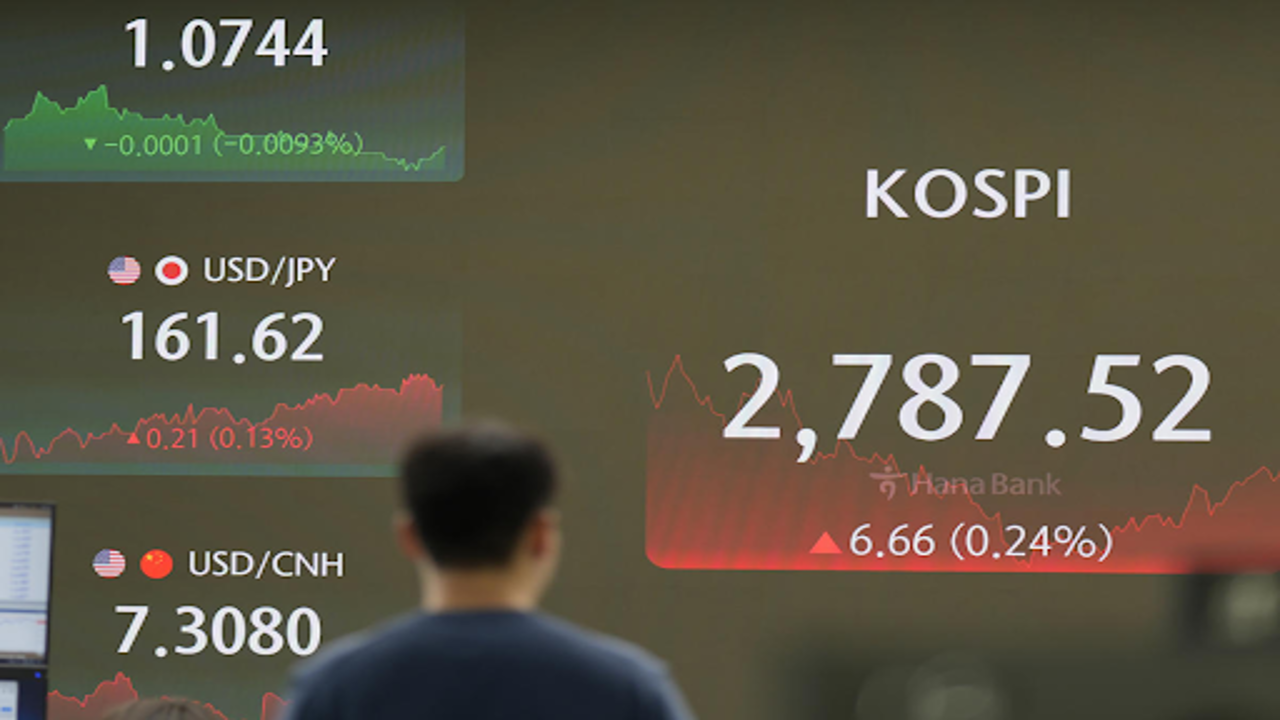
Asian stock markets saw a generally positive trend on Tuesday, following Wall Street’s gains led by Big Tech stocks, which helped offset declines in oil and gas shares. Japan’s Nikkei 225 gained 0.8%, finishing at 38,903.68. Australia’s S&P/ASX 200 was up 0.3%, closing at 8,249.20, and South Korea’s Kospi added 0.2% to reach 2,617.80. In Hong Kong, the Hang Seng rose by 0.2% to 20,648.51, though China’s Shanghai Composite Index dipped by 1.1% to end at 3,286.41.
Japan’s unemployment rate improved slightly to 2.4%, marking the second consecutive month of job growth, with support from the weak yen keeping Japanese stocks stable. The U.S. dollar traded at 153.06 yen, down from 153.23 yen, while the euro shifted marginally, trading at $1.0813.
On Wall Street, the S&P 500 climbed 0.3%, coming off a loss from the previous week but staying near an all-time high. The Dow Jones Industrial Average rose 0.6%, and the Nasdaq gained 0.3%, moving close to its July record high. Tech giants like Apple and Meta Platforms spearheaded this uptrend, with five members of the so-called “Magnificent Seven” preparing to release their earnings reports this week. These influential companies have played a major role in Wall Street’s momentum over recent years, often impacting the S&P 500 index with their market moves.
However, oil and gas stocks showed declines due to lower crude oil prices. Exxon Mobil dropped by 0.5%, while ConocoPhillips lost 1.2%. In Asian energy trading, U.S. crude slid 18 cents to $67.20 per barrel, and Brent crude dipped 16 cents to $71.26 per barrel. This followed Monday’s sharp drops after Israel attacked Iranian military sites over the weekend in response to missile strikes. Although geopolitical tension remains high, investors expressed relief that the response wasn’t as severe as feared, stabilizing oil prices somewhat.
The escalating conflict in the Middle East has generated concerns over potential disruptions in oil supplies, given Iran’s significance as a major oil producer. In early October, these concerns drove Brent crude prices to nearly $81 per barrel, though they have since fallen below $72 as supply fears ease.
Meanwhile, financial markets are navigating heightened volatility in anticipation of the upcoming U.S. presidential election next week. Historically, market instability precedes Election Day but often steadies regardless of the election outcome.
The bond market is also experiencing fluctuations, with U.S. Treasury yields rising further. The yield on the 10-year Treasury note increased to 4.28% from 4.24%, reflecting economic data that consistently shows a stronger-than-expected U.S. economy. While a resilient economy is positive for Wall Street, it has made some investors temper their expectations for how much the Federal Reserve might cut interest rates, given the focus on balancing economic growth and inflation control.
With the Federal Reserve’s interest rate strategy and Big Tech earnings in focus, Friday’s U.S. jobs report is anticipated as a key indicator for the economy’s health. Investors are watching closely to see if hiring remains strong, as this could strengthen hopes for a “soft landing” that avoids a major recession.