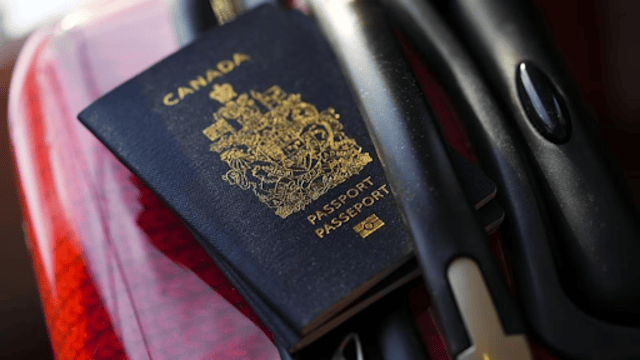
A Canadian passport appears in this photo taken on Friday, August 29, 2025. THE CANADIAN PRESS
The federal government has revised its travel guidance for trips to the United States. Officials now advise First Nations people to carry a valid passport along with their status card when crossing the Canada–U.S. border.
Earlier guidance stated that First Nations people could “freely” enter the United States for work, study, retirement, investment, or immigration. The updated advice changes that wording and outlines new recommendations.
The government website now explains that First Nations travellers “may” be able to cross the border by land or water using a Secure Certificate of Indian Status, also known as a secure status card. However, U.S. officials decide whether to accept the card. The website clearly notes that status cards do not qualify as valid documents for air travel.
Officials strongly urge travellers to carry a passport and a machine-readable secure status card when leaving Canada.
Changes to status cards
The government states that since February 2019, all new and renewed secure status cards include a machine-readable feature. Ottawa began issuing these updated cards in 2009 and gradually phased out older laminated paper or plastic versions.
“While you may have previously crossed the Canada-U.S. border with only a secure status card, (Indigenous Services Canada) now strongly recommends also carrying a valid passport when travelling outside of Canada,” says the Government of Canada website.
The website also notes that individuals registered under the Indian Act who enter the United States for work or to live there may need to show proof of the percentage of Indigenous ancestry required under U.S. law.
Leaders raise concerns
Some Indigenous leaders have criticized the new guidance. Mohawk Council of Kahnawake Grand Chief Cody Diabo, who co-chairs the Jay Treaty Border Alliance and sits in the Iroquois Caucus, says Canada should recognize existing treaty rights instead of issuing new warnings.
The Jay Treaty allows First Nations people born in Canada to enter the United States for employment, study, retirement, investment, and immigration. The United States recognizes the treaty, while Canada does not.
“Before they tell us what we need to cross the border with, they need to recognize that we have the free right by law to cross,” Diabo said.
“Our cards are enough with other documents listed in section 289 of the Immigration Act and upheld by the Jay Treaty.”
Growing travel concerns
The Assembly of First Nations has also advised caution when travelling south of the border. Leaders point to recent immigration enforcement actions in the United States. National Chief Cindy Woodhouse Nepinak confirmed that at least one First Nations person recently experienced a negative encounter with U.S. Immigration and Customs Enforcement and later returned to Canada.
Indigenous Services Canada stated last month that some travellers reported damage or confiscation of status cards in the United States. The department says it can issue emergency replacement cards and speed up requests in urgent cases.
Several First Nations communities, including Mississauga First Nation, Six Nations of the Grand River, and Garden River First Nation, have warned members to ensure they carry proper identification before travelling.
The Jay Treaty Alliance encourages travellers to bring a status card, long-form birth certificate, government-issued photo identification, and documentation confirming family lineage. U.S. tribal members should carry tribal identification, state-issued ID, or a U.S. passport.