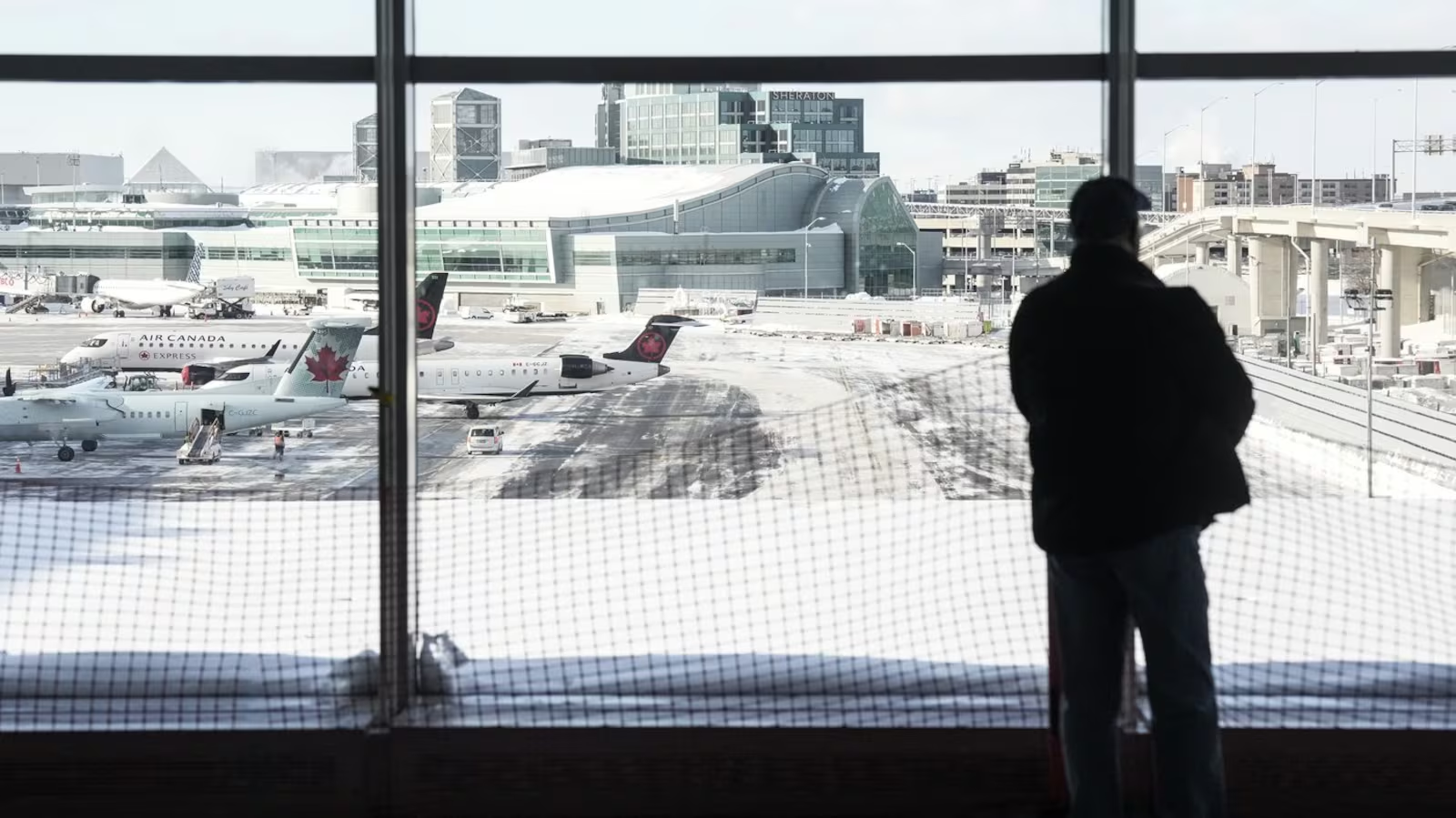
A man watches snow build up around part of Toronto’s Pearson Airport as heavy snowfall blankets the area on Monday, Jan. 26, 2026. THE CANADIAN PRESS
Air travel across Central Canada began to recover on Tuesday as airport crews worked through the final effects of a massive snowstorm. After days of heavy snowfall, workers cleared runways, taxiways, and aircraft to help flights get moving again.
Toronto’s main airport saw a sharp improvement compared to the previous day. By late morning, cancellations dropped to a small share of scheduled flights, a major change from Monday when hundreds of flights never left the ground. Airlines slowly rebuilt schedules as conditions improved.
Record Snowfall Slowed Operations
The storm brought an extraordinary amount of snow to the region. Toronto recorded 46 centimeters of snowfall on Sunday alone. That total pushed January into the record books as the snowiest month the city has seen since tracking began in 1937.
The sheer volume of snow overwhelmed airport operations. Plows ran constantly, while ground crews focused on clearing aircraft and gates. Even with round-the-clock efforts, the scale of the storm forced airlines to cancel large numbers of flights to keep passengers and staff safe.
Other Cities Still Feel the Impact
Elsewhere in eastern Canada, the picture remained mixed. Airports in Quebec City and Halifax cancelled about one in every ten departing flights on Tuesday. Conditions improved compared to earlier in the week, but crews still faced ongoing cleanup.
In St. John’s, Newfoundland and Labrador, snow continued to fall through the morning. More than one-fifth of flights out of the city faced cancellations as strong winds and fresh snow made operations difficult.
U.S. Routes Face Continued Disruptions
Canadian travelers heading to or from several major U.S. cities encountered higher chances of delays and cancellations. Flights connected to Dallas, Boston, New York City, and Washington, D.C., faced particular trouble.
In some of these cities, more than a third of scheduled departures faced disruptions. Snow and ice across parts of eastern North America created ripple effects that extended well beyond Canada’s borders.
Crews Work Against Wind and Ice
Airport teams across the region continued de-icing planes and clearing snow from runways throughout the day. Gusty winds caused drifting snow, forcing crews to repeat cleanup efforts and slowing progress.
These conditions led to shorter delays rather than widespread shutdowns. Airlines warned travelers to expect some waiting, even as overall service improved.
Travelers Urged to Stay Prepared
While the worst of the storm has passed, officials encouraged travelers to check flight status before heading to the airport. Changing weather and aircraft positioning continued to affect schedules.
For many passengers, Tuesday marked a step toward normal travel after days of uncertainty. Even so, airlines and airports remained cautious as winter conditions lingered across the region.