AP Photo/ Ajit Solanki
Hindu nationalism, previously considered marginal, has become widely accepted in India, largely due to Prime Minister Narendra Modi's influence and his ties to the Rashtriya Swayamsevak Sangh (RSS). Modi's political journey, shaped by his upbringing in the RSS, has propelled Hindu nationalism to the forefront of Indian politics.
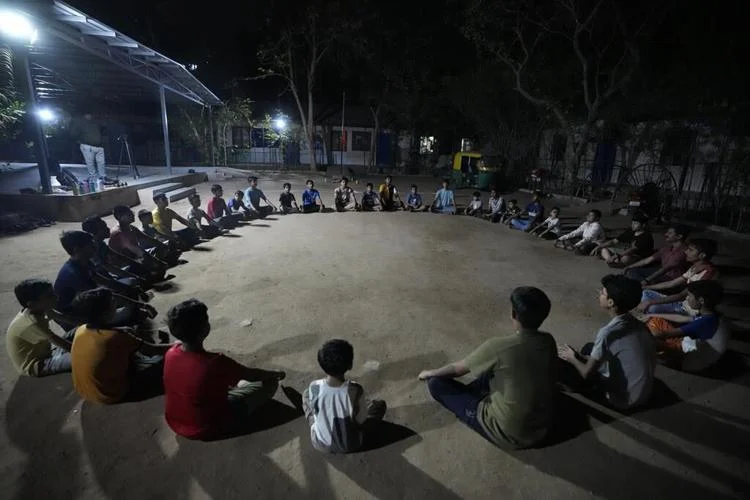
Born in 1950 into a lower-caste family, Modi was introduced to the RSS through its local units, where he participated in religious education and self-defense training. By the 1970s, Modi had become actively involved in RSS campaigns, canvassing neighborhoods to rally support.
The RSS, founded in 1925, initially operated on the fringes of Indian society. Its vision of transforming India into a Hindu nation through force if necessary clashed with Mahatma Gandhi's advocacy for Hindu-Muslim unity. Despite its controversial past, the RSS has grown into a powerful network of affiliated groups, influencing various aspects of Indian society.
Modi's rise to prominence began in 2001 when he became the chief minister of Gujarat. His tenure was marked by the 2002 anti-Muslim riots, which claimed the lives of at least 1,000 people. Although accusations of Modi's involvement were raised, he denied any wrongdoing, and the Indian Supreme Court cleared him of charges due to insufficient evidence. Instead of derailing his political career, the riots bolstered Modi's standing among Hindu nationalists.
Modi capitalized on religious tensions to consolidate power, implementing policies that promoted Hindu nationalism while fostering economic growth. His "Gujarat Model" emphasized development and attracted support from big businesses, which further cemented his political influence.
As prime minister, Modi has continued to champion Hindu nationalism, enacting policies aligned with the RSS's vision. The revocation of Kashmir's special status, the passage of a citizenship law excluding Muslim migrants, and the construction of a temple at a disputed site exemplify his commitment to the Hindu nationalist agenda.
Modi's popularity remains strong, with approval ratings exceeding 70%. He is perceived as a strong leader who prioritizes India's interests, both domestically and internationally. Despite criticism from opponents, Modi's appeal transcends traditional political divides, resonating with a broad spectrum of Hindu voters.
While Modi's brand of politics has sparked controversy and drawn condemnation from some quarters, many ordinary Hindus view him as a symbol of progress and national pride. For them, Modi represents a vision of a rising India rooted in Hindu identity.
In the upcoming election, Modi aims to secure a third term and further solidify his legacy as a transformative leader. His ambition to make India a developed nation by 2047 and his pledge to eradicate poverty reflect his determination to reshape the country in line with Hindu nationalist ideals.
Modi's political journey reflects the growing influence of Hindu nationalism in Indian society and politics. As he seeks to extend his tenure, the legacy of Hindu nationalism under his leadership is likely to endure, shaping India's future trajectory in significant ways.