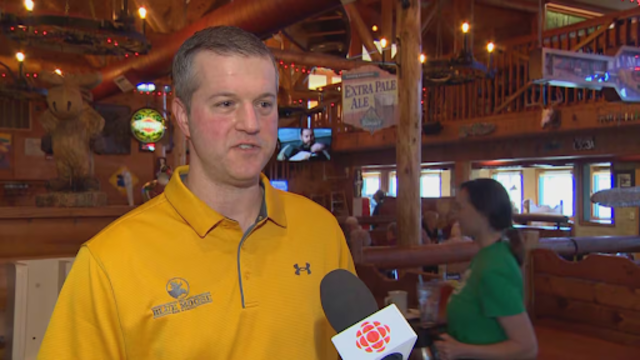
Blue Moose Bar and Grill owner Casey Morin says he’s noticed a big drop in Canadian visitors at his restaurant in East Grand Forks, Minnesota, as well as at other nearby businesses. Radio Canada
Businesses in U.S. border towns are feeling the effects of a steep drop in Canadian visitors. From restaurants to retail stores, owners say they’ve seen a clear decline in traffic from north of the border, and the slowdown is starting to hurt.
At the Blue Moose Bar and Grill in East Grand Forks, Minnesota, owner Casey Morin says Canadian travellers used to make up a large part of his business. That’s no longer the case.
"Yes, we have seen a decline for the last couple of years, and it’s unfortunate," Morin said. "We would love for them to come back."
He added that the drop in visits has taken a toll on local businesses. "I get really excited when we have a Canadian because we haven’t seen them a lot lately," he said. "I always tell them to keep coming and bring their friends."
Travel data shows sharp decline
Recent numbers support what business owners are seeing. Statistics Canada reported that Canadian-resident return trips from the U.S. fell nearly 30 per cent in August compared to the same month last year.
That decline is being felt across Minnesota and North Dakota, where many local economies rely on visitors from Canada.
Experts weigh in on the causes
Lori Wilkinson, a University of Manitoba professor and Canada Research Chair in migration futures, says there are several reasons Canadians aren’t travelling south as much.
Political tensions play a big role, she explained. "A lot of Canadians don’t wish to travel to the United States because they don’t feel as welcome there any longer," Wilkinson said. "They are also very upset about the rhetoric coming from the American government."
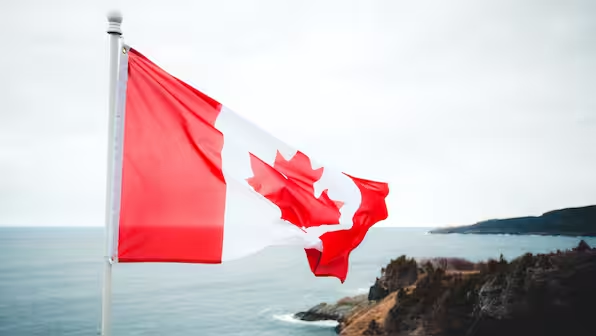
She added that remarks from President Donald Trump have made some Canadians uncomfortable. When Trump suggested Canada should become the 51st U.S. state after his election win, it struck a nerve.
"I think the average Canadian feels disappointed, but also angry," Wilkinson said. "The threat of annexation is not a joke — it’s deeply offensive."
Economic reasons also play a part
Beyond politics, Wilkinson says money is another major factor. The rising cost of living and a weak Canadian dollar make travelling to the U.S. harder for many families.
"The cost of fuel and flights has gone up," she said. "The cost of living right now is pricing people out of travel altogether."
Winnipeg resident Simon Hallick agrees. "It’s more expensive than shopping in Canada now," he said.
Another Winnipegger, Philbert Furere, said he’s stopped visiting the U.S. entirely. "I don’t want to travel there because of their politics," he said. "As a minority, I feel like I could be arrested anytime and disappear."
Border towns hope for a turnaround
For now, business owners like Morin are hoping the trend reverses soon. Until then, restaurants, hotels, and shops that depend on cross-border traffic will continue to feel the pinch.
"We really miss our Canadian visitors," Morin said. "They’ve always been a big part of what keeps us going."