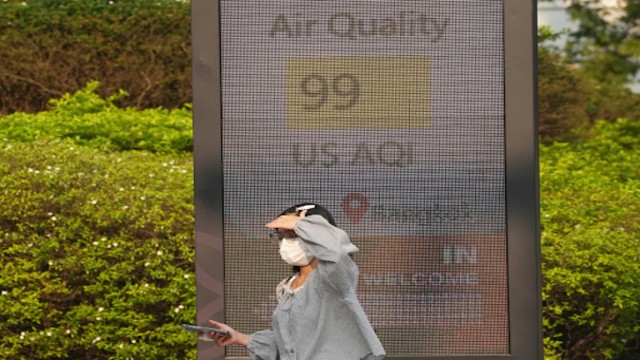
A person wearing a face mask walks past an air quality index sign in Bangkok, Thailand, on February 6, 2025. AP Photo
The US government will no longer share air quality data collected from its embassies and consulates. Scientists and environmental experts warn that this move could significantly impact global air quality monitoring and public health efforts.
The State Department confirmed that data from US embassy air monitors will no longer be transmitted to platforms like the Environmental Protection Agency’s AirNow app. These platforms previously allowed people worldwide to check air quality levels in different cities. Officials cited "funding constraints" as the reason, stating that the network had to be turned off. However, they noted that embassies would keep their monitors running, and data sharing might resume if funding is restored.
Many experts view this decision as a major setback. The US monitors measured PM2.5, a harmful fine particulate matter that can deeply enter the lungs and cause serious health problems. The World Health Organization (WHO) estimates that air pollution leads to about 7 million deaths each year. Scientists say the data helped governments take action to improve air quality and protect people from pollution-related diseases.
A Loss for Global Research
Bhargav Krishna, an air pollution expert in India, called the shutdown “a big blow.” He explained that these monitors were among the few reliable sources in many developing nations. Their data helped verify local readings and ensure accuracy.
Alejandro Piracoca Mayorga, a consultant based in Colombia, said the monitors provided an independent and unbiased source of air quality information. In cities like Lima, São Paulo, and Bogotá, they played a crucial role in tracking pollution levels.
Khalid Khan, an environmental expert in Pakistan, said the monitors in cities like Peshawar provided essential real-time data. The loss of this information, he warned, would leave people without accurate updates on hazardous air conditions. He emphasized that vulnerable communities, who rely on this data the most, will suffer the most.
The shutdown affects air quality monitoring in over a dozen African countries, including Senegal, Nigeria, Chad, and Madagascar. Many of these nations rely heavily on US embassy data because local air monitoring is too expensive or difficult to maintain. The WHO’s air quality database will also be impacted, as many poorer countries do not have independent air monitoring systems.
Monitors Pushed Governments to Act
US air quality data has played a crucial role in pushing governments to acknowledge and address pollution problems. In China, for example, data from the US Embassy in Beijing once exposed higher pollution levels than the government reported. This led to major improvements in China's air quality policies.
Officials in Pakistan’s Punjab province, which often struggles with smog, claim they are not concerned. They say they have their own air monitoring systems and plan to expand them.
Shweta Narayan, an environmental campaigner, said this situation presents both a challenge and an opportunity for India. She believes the government should step up efforts to improve air quality monitoring and transparency. Strengthening its own infrastructure, she said, would build public trust and improve environmental policies.