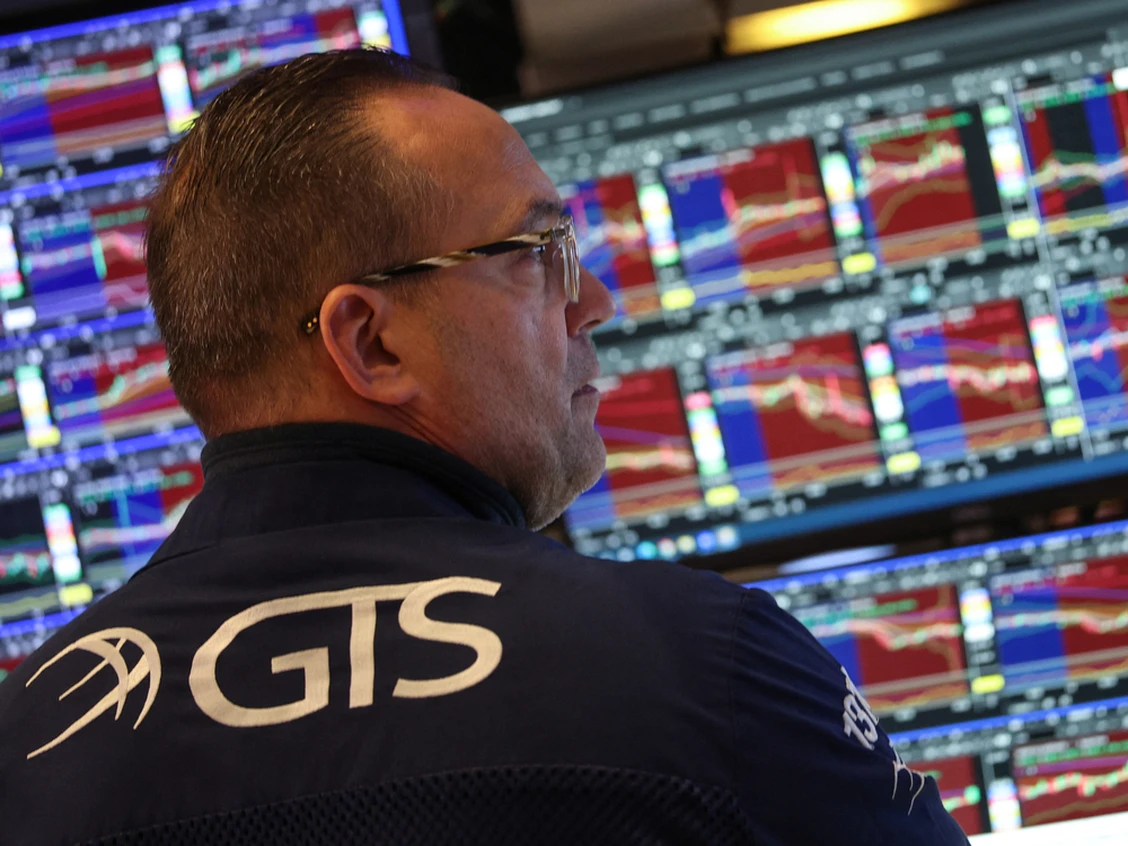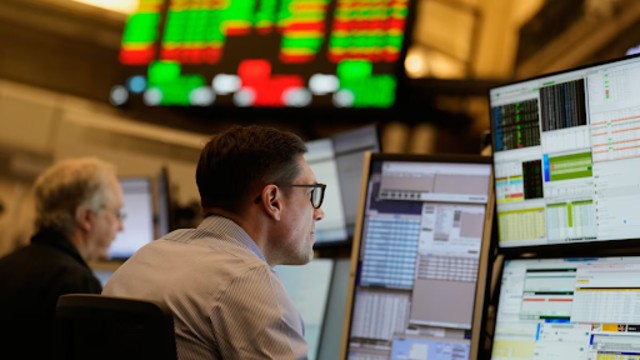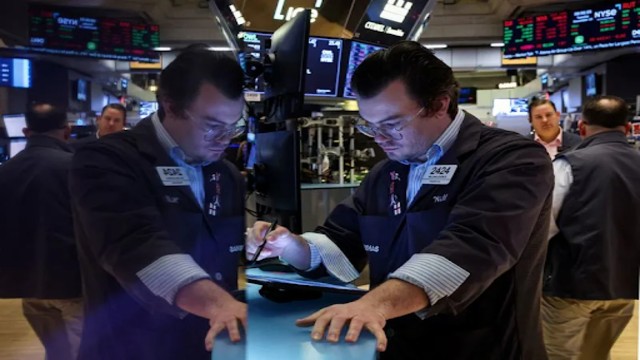
Traders carry out their activities at the New York Stock Exchange in New York City, as captured by Reuters.
The recent plunge in tech stocks has highlighted a critical vulnerability in the U.S. stock market: its heavy reliance on a small group of massive companies. Dubbed the "Magnificent Seven," these tech giants, including Nvidia, have driven much of the market's recent gains, but their volatility now casts a shadow over broader market stability.
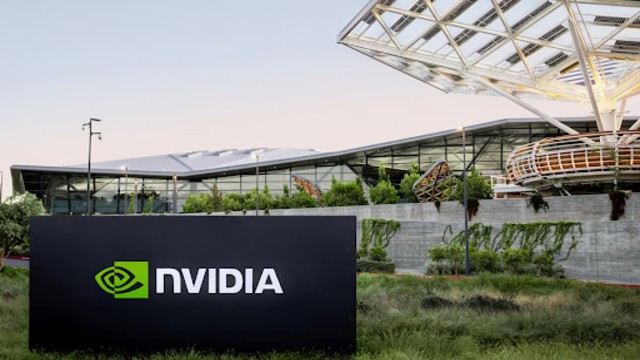
The selloff began after news of a low-cost Chinese AI model, DeepSeek, shook investor confidence in artificial intelligence, a key driver of market performance over the last two years. Shares of Nvidia, a poster child for the AI boom, tumbled by 17% on Monday. This dramatic drop slashed the S&P 500's 2024 gains nearly in half, as the index fell 1.5%, while the Nasdaq 100 sank 3%.
The Magnificent Seven, which collectively accounts for a third of the S&P 500’s weight and nearly half of the Nasdaq 100, are so dominant that even a slight wobble among them significantly impacts market indices. “When concentration is this high, selloffs become inevitable,” noted Chuck Carlson, CEO of Horizon Investment Services.
The arrival of DeepSeek has raised questions about the future of AI investments. While it remains unclear how disruptive DeepSeek might be, the incident has exposed vulnerabilities in the crowded and highly correlated AI trade. "This could signal a shift in sentiment that makes the market more fragile," said Phillip Wool of Rayliant Global Advisors.
Investors like Seth Hickle of Mindset Wealth Management are repositioning defensively, particularly with Nvidia, as its widespread ownership means that its stock price affects millions of American retirement portfolios.
Adding to the uncertainty, just last week, optimism surged after former President Donald Trump announced new private-sector investments in AI infrastructure, briefly lifting tech stocks. However, analysts now warn that if AI advancements require less expensive technology than previously thought, it could diminish the dominance of high-end computing firms like Nvidia, leading to further corrections in the stock market.
Despite Monday’s turbulence, some segments of the tech industry, such as cybersecurity and software companies, experienced gains, hinting at a potential shift in leadership within the sector. Stocks like Palo Alto Networks and ServiceNow rose modestly as investors considered alternatives to megacaps. Tiffany Wade of Columbia Threadneedle Investments suggested that "this could lead to leadership in other areas of tech."
While some see the selloff as an overreaction, others wonder if this marks an inflection point for the market. David Wagner of Aptus Capital Advisors highlighted that although the market relies heavily on megacaps, their operating leverage continues to drive growth. "Dependence on these stocks isn’t always a bad thing," he noted.
The market’s trajectory will become clearer as quarterly results from major players like Apple, Microsoft, Meta, and Tesla roll out later this week. For now, the turbulence has sparked debate about whether the stock market's reliance on megacaps is sustainable or an impending vulnerability.