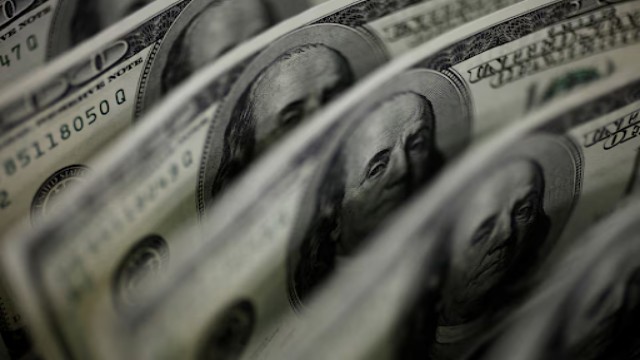
A photograph taken in Tokyo on August 2, 2011, captures a stack of U.S. 100-dollar bills.
Michael Grimes, a renowned tech investment banker who recently left Morgan Stanley for a senior advisory role in the U.S. Commerce Department, is expected to take charge of the newly announced U.S. sovereign wealth fund, sources revealed. The fund, introduced by former President Donald Trump, aims to generate revenue through tariffs and foreign import taxes.
Shaping the Fund’s Future
The discussions regarding Grimes’ leadership are still ongoing, and final decisions have yet to be confirmed. The sovereign wealth fund’s creation marks a significant step in Trump’s economic strategy, but questions remain about its feasibility and execution.
The proposed funding source, the "External Revenue Service," is designed to collect tariff revenues to sustain the fund. However, experts argue that sovereign wealth funds typically rely on budget surpluses, whereas the U.S. currently operates at a deficit. Congressional approval would likely be necessary for the fund’s establishment.
Why Grimes?
Grimes is no stranger to high-stakes financial manoeuvring. At Morgan Stanley, he played a crucial role in some of the biggest tech IPOs, including Meta, Uber, and Airbnb. His unconventional methods, such as moonlighting as an Uber driver to secure the company's IPO, have made him a standout figure on Wall Street. Additionally, he was a key adviser to Elon Musk during his $44 billion Twitter acquisition.
Despite his impressive track record, experts warn that managing the complexities of both Wall Street and government policies will be challenging. Former Treasury and Commerce official Jim Secreto emphasized that while Grimes’ experience is invaluable, he will need both financial and governmental expertise to successfully implement the fund.
Concerns Over Oversight and Strategy
Trump signed an executive order in February mandating the fund’s creation, with a 90-day deadline for the Commerce and Treasury Departments to draft a detailed plan. The fund’s potential investment strategies, governance structure, and oversight mechanisms remain uncertain.
Critics worry about transparency and accountability. Economist Adnan Mazarei raised concerns about the risk of corruption and political influence in investment decisions. The U.S. Customs and Border Protection agency currently collects billions in tariffs and duties, but whether these funds will be redirected effectively remains unclear.
Global Comparisons and Potential Roadblocks
Many Middle Eastern and Asian nations have established sovereign wealth funds, using government funds for direct investments. However, unlike these countries, the U.S. lacks a budget surplus, making this initiative more complex. Additionally, Congress will likely scrutinize the fund’s structure, adding political challenges to its implementation.