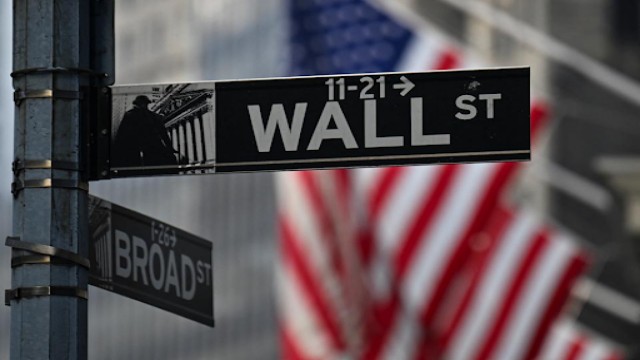
A street sign is visible outside the New York Stock Exchange (NYSE) on Wall Street in New York City on February 3, 2025. The photo was taken by Angela Weiss for AFP and is available via Getty Images.
February proved to be a rocky month for investors, marked by weak consumer confidence, sluggish consumer spending, and a sharp sell-off in stocks that had previously fueled the market’s momentum. These developments have reignited concerns that the U.S. economy might be slowing faster than the Federal Reserve is prepared to respond.
Steve Sosnick, chief strategist at Interactive Brokers, noted in an interview with Yahoo Finance that investors are increasingly worried about an economic downturn. "The fear here among a lot of investors now [has] become that the economy could be slowing down faster than the Fed is willing to react, which is a tough situation," he said.
Stock markets reflected these anxieties, with the tech-heavy Nasdaq Composite (^IXIC) dropping around 4% in February. Meanwhile, the S&P 500 (^GSPC) and the Dow Jones Industrial Average (^DJI) saw declines of 1.4%. Notably, the Dow performed better relative to the S&P 500 and Nasdaq, largely because of its lower exposure to volatile tech and growth stocks.
Investors seeking stability have turned toward defensive stocks, particularly Consumer Staples (XLP), which hold more weight in the Dow. Sosnick suggested that in such an uncertain climate, it might be wise to reduce stock holdings and hold onto cash, as interest rates still offer a 4% return. Alternatively, investors could shift towards low-beta and high-dividend stocks, which offer greater resilience against market volatility.
Is This a Market Rotation or a Growth Scare?
There is ongoing debate over whether the recent market movement signals deeper economic troubles or merely a shift in investor focus. Ed Yardeni and Eric Wallerstein of Yardeni Research believe the market is undergoing a "growth scare," similar to last summer’s episode when weak economic data momentarily rattled investors. Last year’s market dip led the S&P 500 to lose nearly 10% before rebounding to new highs by November.
Neil Dutta, head of economics at Renaissance Macro, also sees signs of a softening economy. He points to the Federal Reserve's decision to maintain high interest rates as a "passive tightening" of monetary policy, which could have significant implications for investors. However, Dutta remains skeptical that the current market trends reflect a genuine recession threat. "If it was a real recession story, you'd expect financial stocks to be underperforming. You wouldn't see Europe outperforming," he said.
Investors Eye Defensive Plays
If the economy continues to weaken, Dutta believes investors will shift toward defensive sectors like Consumer Staples (XLP) and Utilities (XLU), which tend to perform well in economic downturns. Additionally, he expects a stronger demand for U.S. Treasury bonds, as investors anticipate eventual Fed intervention to support economic stability.
While uncertainty looms, experts agree that how investors react in the coming months will be crucial in shaping market trends. As the Fed weighs its next move, Wall Street will be watching closely.