Photo credit: Philippine Satr
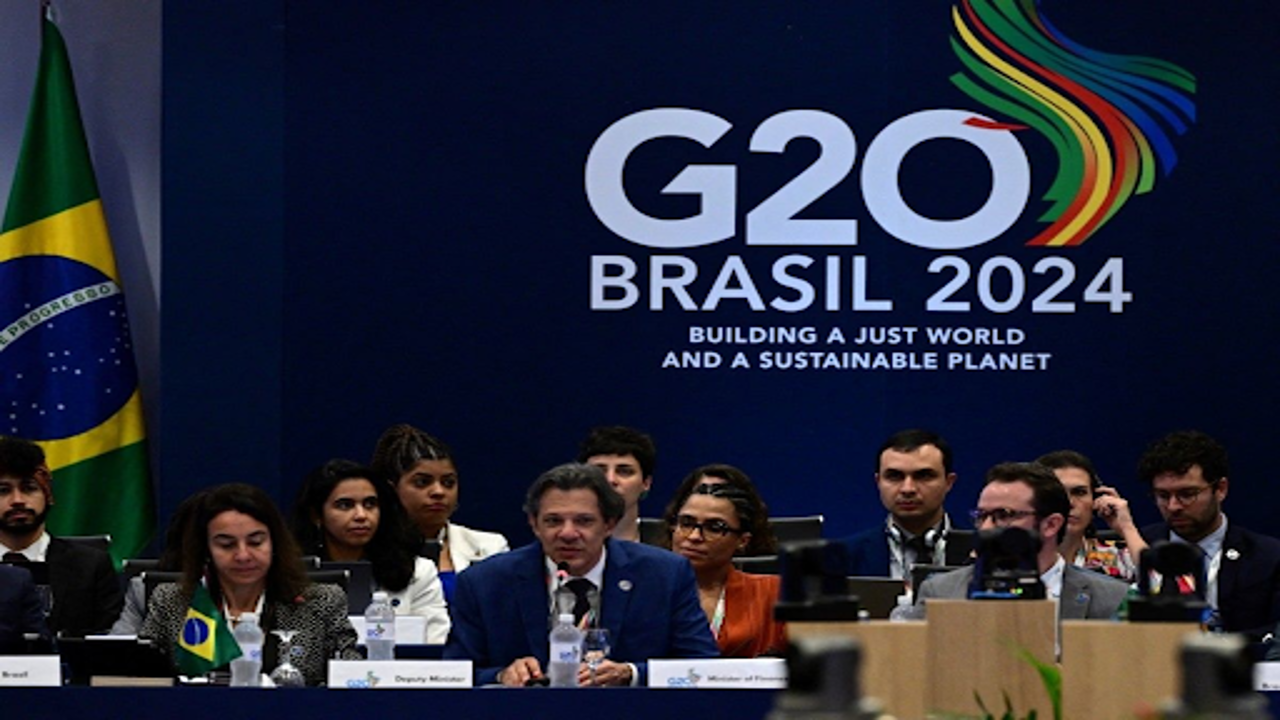
Finance ministers from the world's leading economies agreed on Friday to work towards effectively taxing the super-rich. The joint ministerial declaration, released after a two-day meeting in Rio de Janeiro, emphasized cooperation while respecting each nation's tax sovereignty.
The declaration stated, "With full respect to tax sovereignty, we will seek to engage cooperatively to ensure that ultra-high-net-worth individuals are effectively taxed." This move is part of Brazil's presidency of the Group of 20 (G20), prioritizing the proposal to impose a 2% minimum tax on billionaires ahead of the G20 summit in Rio on November 18-19.
Brazilian Finance Minister Fernando Haddad hailed the declaration as a "significant step forward," exceeding initial expectations. The proposal, however, has sparked division among G20 nations, with France, Spain, and South Africa showing support while the United States opposes it.
U.S. Treasury Secretary Janet Yellen expressed reservations, stating, "Tax policy is very difficult to coordinate globally, and we don’t see a need or really think it’s desirable to try to negotiate a global agreement on that." Concerns have been raised that the super-rich might move their wealth to tax havens if a country adopts such a tax independently. Economist Rogério Studart from the Brazilian Center for International Relations emphasized the need for collective action to prevent losses due to fragmentation.
The richest 1% have accumulated $42 trillion in new wealth over the past decade, nearly 36 times more than the bottom 50% of the world's population, according to an Oxfam analysis. Currently, billionaires pay only 0.3% of their wealth in taxes. A proposed 2% tax could generate $200 billion to $250 billion annually from about 3,000 individuals, funding essential public services like education and healthcare, as well as climate change initiatives.
Gabriel Zucman, director of the Paris-based EU Tax Observatory, celebrated the outcome, stating, "For the first time in history, there is now a consensus among G20 countries that the way we tax the super-rich must be fixed, and a commitment to work together for this. It’s an important step in the right direction."
NGOs welcomed the declaration and called for further action at the G20 summit in November. Camila Jardim from Greenpeace Brazil highlighted the cost of extreme weather events driven by climate change, stating, "It is outrageous to expect that the regular taxpayer should pay for it."
Brazil's G20 presidency focuses on tackling inequality, poverty, and hunger. President Luiz Inácio Lula da Silva advocated for increased taxation of the world's wealthiest and unveiled plans for a global alliance against hunger and poverty.
In addition to the discussions on taxation, Brazil and the U.S. announced a climate partnership. The initiative aims to address environmental challenges and strengthen the green economy, focusing on clean energy supply chains and the effectiveness of the voluntary carbon market.