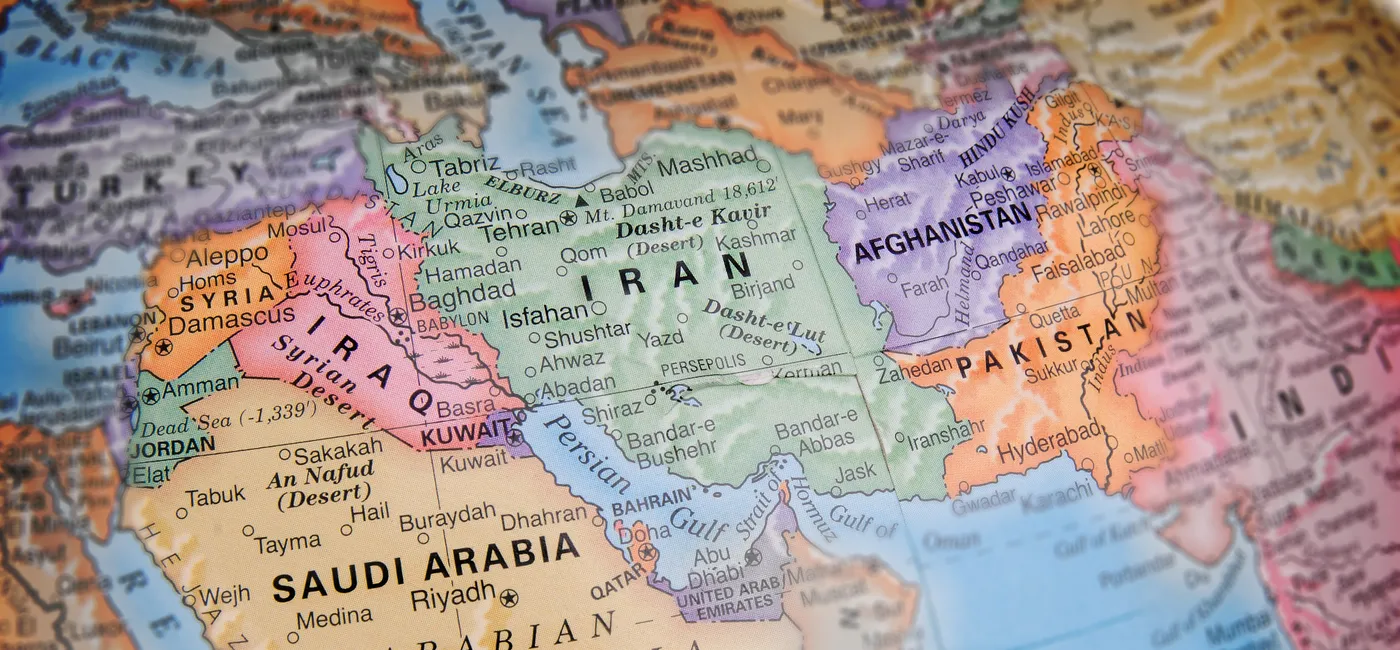
A visual representation of the Middle East, showing its key countries and locations. Travel Pulse Canada
The World Travel & Tourism Council (WTTC) has praised Iran's decision to reopen the Strait of Hormuz to commercial traffic. Gloria Guevara, President & CEO of WTTC, issued a statement calling this move a vital step toward restoring confidence in the global travel and tourism industry. The Strait of Hormuz, a crucial maritime route, plays an essential role not only in energy supply chains but also in aviation, cruise operations, and global connectivity.
“The reopening of the Strait of Hormuz is significant for the entire global economy,” Guevara said. “This critical maritime corridor underpins numerous industries, and its reopening will help stabilize international travel operations and contribute to the growth of the travel sector.”
Boosting Global Travel and Tourism
The reopening of the Strait of Hormuz will ease the pressure on global travel, which has faced many challenges in recent years. Guevara highlighted the importance of reliable international connections to ensure the ongoing recovery and expansion of the travel and tourism industry worldwide. WTTC’s research shows that the tourism sector can recover quickly from disruptions such as airspace closures and periods of uncertainty.
The Strait of Hormuz is not only vital for global shipping but also for air travel, cruise operations, and international trade. With many countries relying on this key route, the closure of the Strait has had widespread economic effects. The reopening will be a relief for many industries that depend on the smooth flow of goods and services across international borders.
The Impact of the U.S.-Israel War on Iran
A recent WTTC report revealed that the ongoing conflict between the U.S. and Israel on one side and Iran on the other has resulted in significant financial losses. The war has been costing the global tourism industry at least $600 million a day in lost international visitor spending. Prior to the conflict, the Middle East was expected to generate around $207 billion in international visitor spending this year.
The region, particularly the Strait of Hormuz, accounts for 14% of global international transit, and its closure has caused several problems, including rising fuel prices. The blockage of this vital shipping route led to a sharp increase in the price of jet fuel, which in turn caused airlines to raise ticket prices. According to data from ARC, economy seat prices increased by 21%, while premium seat fares rose by 17% in March.
The Importance of the Strait for Global Shipping
The Strait of Hormuz is one of the world’s most important shipping lanes, through which a significant amount of the world’s oil supply passes. When this route was temporarily closed, it caused a ripple effect throughout the global economy, impacting not only fuel prices but also the broader travel and tourism sectors.
With the reopening of the Strait, the global travel industry can expect a boost. This crucial maritime corridor helps to stabilize not only the energy sector but also the tourism and airline industries, which are integral to global economic growth.