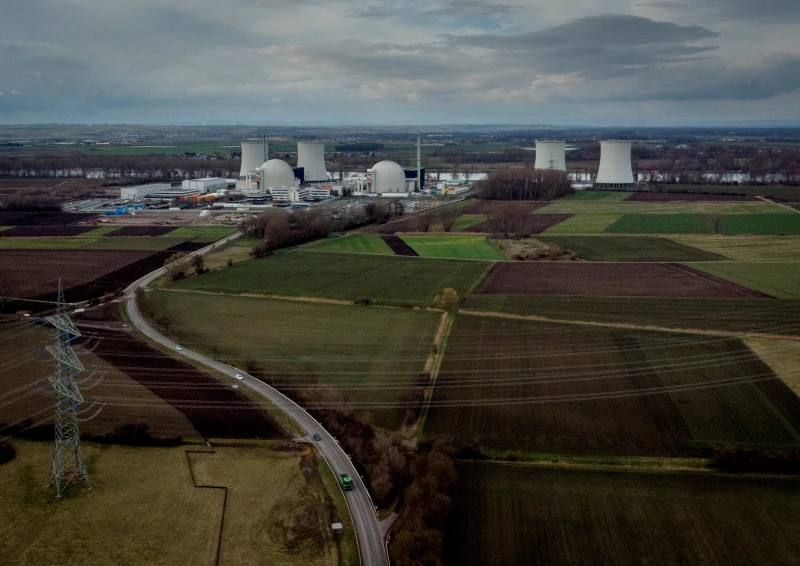
A view of the closed nuclear plant of Biblis, Germany, south of Frankfurt, on March 16, 2021.
Nearly four decades after the Chornobyl disaster reshaped public opinion, nuclear energy is once again gaining support across the world. Governments facing rising electricity demand, climate pressures, and geopolitical instability are increasingly turning to nuclear power as a dependable long-term solution.
The renewed interest marks a dramatic change from the caution that followed major accidents at Chernobyl in 1986 and Fukushima in 2011. Today, energy security concerns and the need for low-carbon power are driving a fresh global push toward nuclear development.
Nuclear Energy Revival Driven by Security and Climate Goals
More than 400 nuclear reactors currently operate in 31 countries, while around 70 additional units are under construction. Together, nuclear facilities generate roughly 10% of global electricity and provide a major share of low-emission power.
Industry leaders say modern reactors are safer, more efficient, and more economical than earlier generations. These improvements, combined with growing demand for reliable electricity, have strengthened the case for expansion.
Energy experts also point to global conflicts, especially in the Middle East and Eastern Europe, as factors accelerating the nuclear energy revival. Nations worried about fuel imports and volatile energy prices now see nuclear power as a strategic asset.
United States and China Expand Nuclear Ambitions
The United States remains the world’s largest producer of nuclear electricity, operating 94 reactors. Washington has announced plans to significantly increase capacity by 2050, citing industrial growth, artificial intelligence, and long-term energy security.
China, meanwhile, is moving quickly to become a dominant nuclear force. It currently operates 61 reactors and has nearly 40 more under construction. Beijing’s expansion program is among the most aggressive in the world.
These parallel efforts by the two largest economies highlight how central nuclear energy has become to future power strategies.
Europe Reconsiders Past Decisions
Europe is also rethinking earlier moves away from nuclear power. The region’s dependence on imported fossil fuels became more visible after the Ukraine conflict and recent turmoil in energy markets.
European Union leaders now describe nuclear energy as an important complement to wind and solar power in meeting climate targets. Several countries are exploring Small Modular Reactors, or SMRs, which are expected to be faster and cheaper to deploy than traditional plants.
France remains Europe’s strongest nuclear supporter, relying on reactors for nearly 70% of its electricity. The French government has committed to building new reactors to strengthen energy independence and reduce emissions.
Belgium has reversed plans to shut reactors, while Sweden and Finland continue backing the technology. Germany, however, remains committed to its phaseout after closing its last reactors in 2023.
Asia and Africa Join the Shift
Japan has restarted 15 reactors after introducing stricter safety reviews following Fukushima. Several more units are seeking approval, signaling a gradual return to nuclear generation.
In Africa, South Africa still operates the continent’s only active nuclear plant, but new projects are emerging elsewhere. Russia is building a reactor in Egypt, while other African nations are studying nuclear options.
Russia Expands Influence Through Exports
Russia continues to play a major role in the international nuclear market. It operates dozens of domestic reactors and is building around 20 more overseas across Europe, Asia, Africa, and the Middle East.
Its export strategy has helped many nations begin nuclear programs while also extending Moscow’s global energy influence.
A New Era for Nuclear Power
The nuclear energy revival reflects a changing global mindset. Countries now face a complex mix of climate commitments, energy shortages, and economic growth needs. In that environment, nuclear power is being viewed less as a risk of the past and more as a practical part of the future.
While safety and waste concerns remain, momentum is clearly building. Forty years after Chernobyl, nuclear energy is returning to the center of the global power conversation.