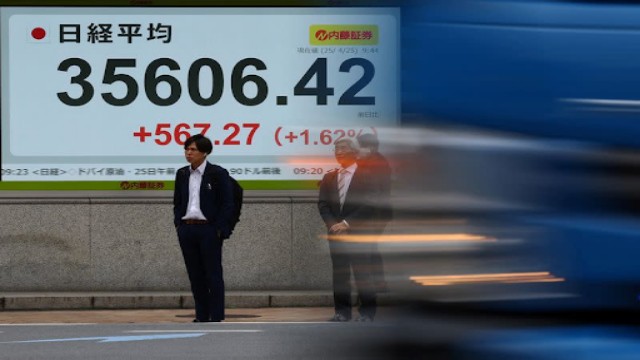
A group of people gathers outside a brokerage in Tokyo, watching Japan’s Nikkei stock index shown on a large screen · Reuters
Global financial markets showed signs of recovery this week as U.S. President Donald Trump backed away from aggressive tariff threats against China. The move brought a wave of optimism across Asia and bolstered the U.S. dollar, which had been struggling in recent weeks.
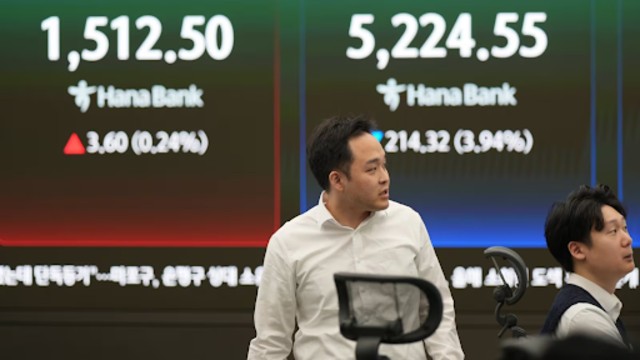
On Friday, Asian stock markets wrapped up their second consecutive week of gains. The Japanese Nikkei index rose 1.4%, erasing the losses it suffered since early April when Trump first announced what would have been the highest U.S. tariffs in a century. Although many of those tariffs have since been rolled back, China still remains a target, facing a 10% baseline tariff.
Technology stocks led the charge. In Japan, electric motor manufacturer Nidec saw its shares leap by 11% after forecasting a record annual profit. Nissan also saw a modest 2% increase as investors speculated that the worst of its financial troubles may be over, despite the company predicting a record net loss.
In Hong Kong, the Hang Seng Index rose by 0.9%. Mainland China’s Shanghai Composite and the CSI300 also edged upward, though gains were more modest.
In the U.S., Alphabet—the parent company of Google—surprised Wall Street with stronger-than-expected profits. The company also confirmed it would continue its heavy investment in artificial intelligence. This news sent Alphabet shares soaring by nearly 5% in after-hours trading and gave a boost to S&P 500 futures, which climbed 0.5%.
The broader U.S. market brushed off mixed earnings reports, with the S&P 500 closing 2% higher overnight.
Meanwhile, the dollar showed renewed strength. It had been losing ground amid the chaos of rapid-fire tariff announcements and political uncertainty, but on Friday, it stood firmer—trading around $1.1350 per euro and 143 Japanese yen. The U.S. dollar index climbed 0.4% for the week to 99.619.
Francesco Pesole, a currency strategist at ING, noted that investors may feel more in control now, believing they can influence Washington’s economic stance. However, many are still waiting for stronger signs before fully committing to U.S. assets again.
Though Trump suggested a shift in tone this week by calling the current trade standoff with China “unsustainable,” China quickly pushed back. Beijing claimed it had not engaged in any new talks with the U.S. and warned other countries against cutting side deals that might hurt its interests.
Christopher Wood of Jefferies pointed out that the rebound in equities was largely due to Trump's apparent reversal, which he saw as proof that the U.S. doesn’t hold all the cards in this trade dispute.
Despite market gains, caution remains. Major U.S. companies like Procter & Gamble, PepsiCo, Chipotle, and American Airlines have all pulled back their financial forecasts, citing uncertain consumer behaviour. At the same time, the U.S. Treasury market is still under pressure, with the 10-year yield reaching 4.3168% after a sell-off sparked by doubts about U.S. economic leadership.
Gold, a traditional safe haven, remained steady at $3,349 per ounce. Analysts in Singapore noted that the gold-to-S&P 500 ratios are now at their highest level since the pandemic-triggered crash in 2020—a signal that not all investors are feeling confident about the market’s direction.
Markets in Australia and New Zealand remained closed for a public holiday.