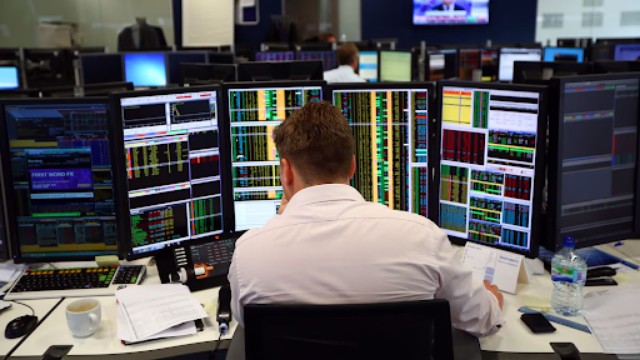
A trader reviews market information at his desk in London. (Photo by Carl Court/Getty Images)
On Tuesday, U.S. stock markets opened with mixed signals. Big-name companies continued to post stronger-than-expected earnings, but the ongoing uncertainty around former President Donald Trump’s trade policies left investors on edge.
The S&P 500 dipped by 0.2% after a five-day streak of gains. The Nasdaq followed suit with a 0.2% loss, while the Dow Jones Industrial Average managed a slight rise of 28 points, or 0.1%, as of 10:30 a.m. Eastern Time.
Shipping giant UPS saw its stock shift between gains and losses after reporting impressive earnings for the first quarter of 2025. As a major player in global logistics, UPS often serves as a barometer for the wider economy. However, the company chose not to revise its forecasts for the year, citing uncertainty in the broader economic landscape. It also announced plans to lay off 20,000 employees and shut down 73 facilities as part of a cost-cutting effort. Its shares were down 0.6% mid-morning.
The real concern for investors, though, lies beyond earnings. Trump’s unpredictable tariff policies are causing worry. Economists warn that if tariffs continue or expand, they could slow down international trade and drive prices up—factors that could push the U.S. closer to a recession. CEOs, while optimistic about current profits, are unsure about future planning due to unclear trade regulations.
Consumer sentiment has taken a hit. According to the Conference Board, Americans’ outlook on income, business conditions, and job opportunities has dropped to its lowest point since 2011—often a red flag for an upcoming economic downturn.
Treasury Secretary Scott Bessent added to the tension, describing Trump’s trade tactics as a kind of “strategic uncertainty” intended to gain leverage in negotiations. But this uncertainty is shaking investor confidence and delaying business decisions.
Automakers, particularly General Motors, are also feeling the pressure. Despite exceeding profit expectations, GM’s stock fell 3.1% after the company delayed its earnings discussion to Thursday due to possible trade policy changes. JetBlue also reported solid profits but pulled back its financial guidance for the rest of the year, citing similar economic concerns.
On the brighter side, some companies outshone. Honeywell International rose 5.1% after exceeding both profit and revenue estimates and raised its full-year earnings forecast. CEO Vimal Kapur acknowledged the challenges ahead but expressed confidence in the company’s adaptability.
Sherwin-Williams gained 3.3% after beating earnings projections, with its CEO noting that the company's local sourcing of raw materials could protect it from rising tariffs. Coca-Cola also reported solid results and said it expects the effects of trade policies on its business to be manageable. Its stock inched up 0.4%.
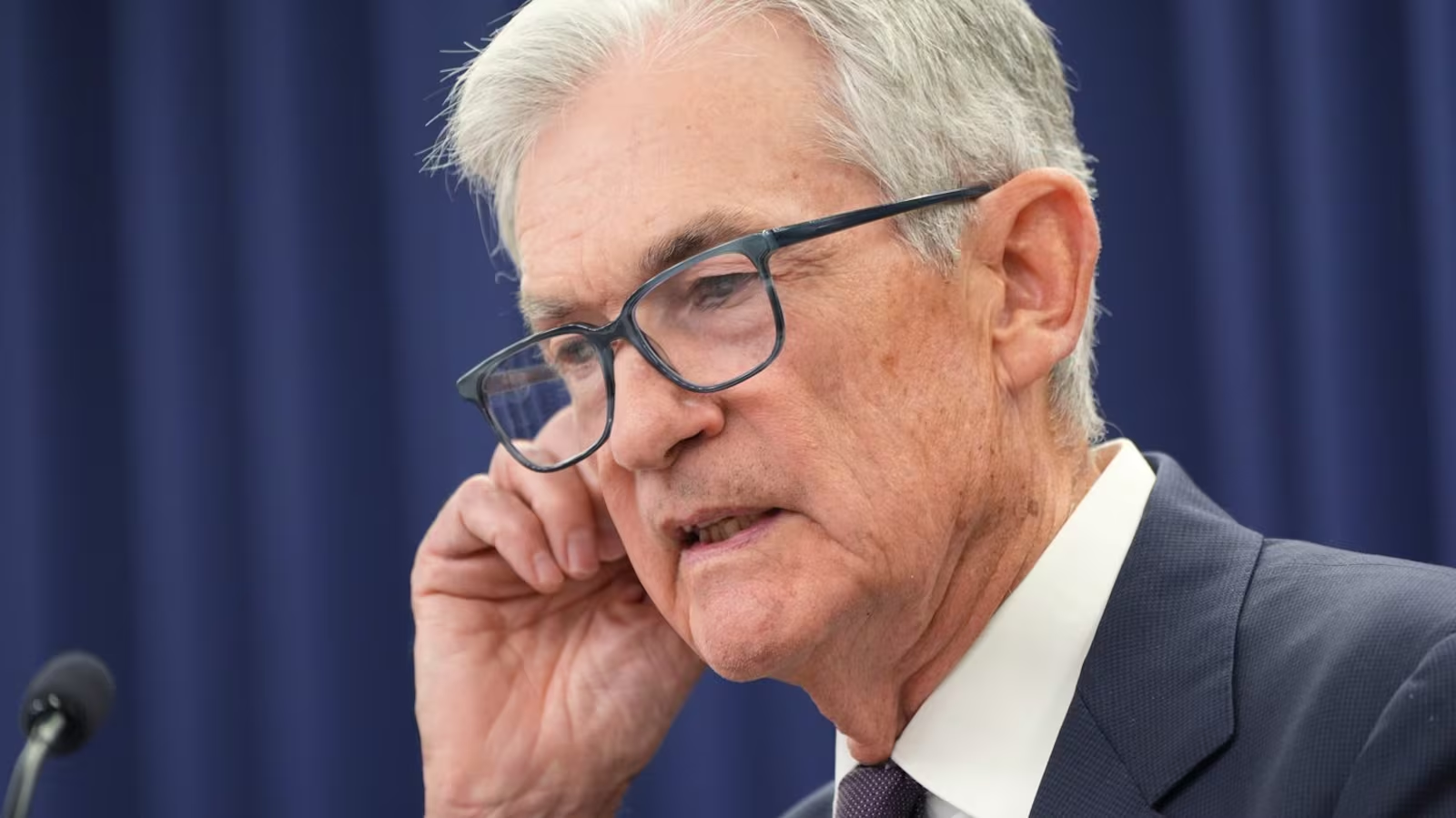
Meanwhile, bond markets saw some relief. The 10-year Treasury yield fell to 4.17% from Monday’s 4.23%. A weak consumer confidence report and fewer job openings at the end of March may nudge the Federal Reserve toward resuming interest rate cuts to stimulate the economy.
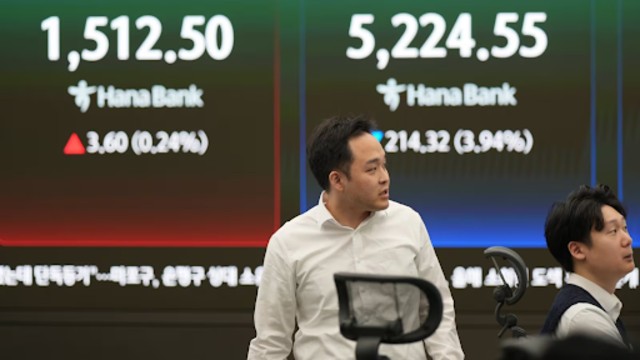
Globally, markets in Europe and Asia were also mixed, reflecting the cautious mood across the board.