The Hudson's Bay store in Calgary, Alberta, on Wednesday, March 18, 2020, during the global COVID-19 outbreak. (Photo: THE CANADIAN PRESS/Jeff McIntosh)
Canada’s stock market moved slightly higher on Friday, while U.S. stocks took a hit after former President Donald Trump threatened steep new tariffs. He proposed a 50% tax on all imports from the European Union and a 25% duty on Apple products—unless iPhones are manufactured in the United States.
The S&P/TSX composite index gained 25.94 points, ending the day at 25,879.95. Meanwhile, American markets dropped sharply. The Dow Jones lost 256.02 points to settle at 41,603.07. The S&P 500 shed 39.19 points to close at 5,802.82, and the Nasdaq tumbled 188.53 points to 18,737.21.
According to Ryan Crowther from Franklin Templeton’s ClearBridge Investments, the trading session started on a rocky note. The drop followed Trump's morning posts on social media, which reignited fears about trade tensions. Later in the day, Trump clarified that his proposed tax would apply to all smartphones made outside the U.S., and could take effect as early as the end of June.
Crowther said that these threats stirred fresh concerns among investors. "When markets react to sudden updates on trade policies, it often leads to uncertainty," he noted. With no clear direction yet, investors are left to weigh the potential impact on global trade and corporate earnings in the months ahead.
Despite the turbulence in the U.S., Canadian stocks found some strength. Prices for gold, copper, and oil climbed higher, boosting the energy and mining sectors.
One standout performer was uranium giant Cameco Corp., whose stock jumped 10% after Trump signed executive orders supporting the nuclear industry. These new orders aim to significantly increase domestic nuclear energy production over the next 25 years. They also shift the power to approve reactor designs from a long-standing independent agency to the U.S. energy secretary—an unusual and controversial move that could fast-track development.
Crowther added that Canadian companies involved in nuclear energy benefited immediately from this news. “Stocks with strong ties to nuclear saw a big bump,” he said.
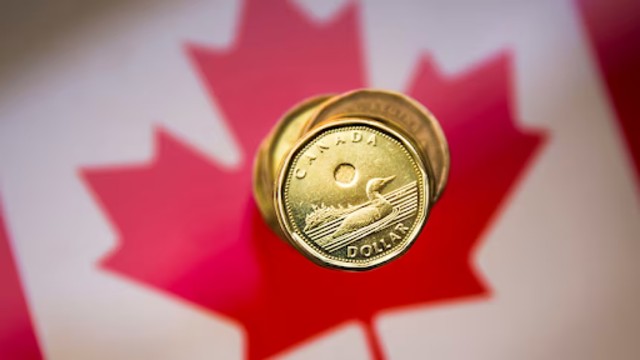
The Canadian dollar also edged up, trading at 72.70 cents US, up from 72.10 cents the previous day.
In commodity markets, oil prices rose by 33 cents to US$61.53 per barrel, and natural gas increased by nine cents to US$3.73 per mmBTU. Gold climbed significantly, jumping US$70.80 to reach US$3,365.80 an ounce, while copper added 16 cents to finish at US$4.84 per pound.
As investors digest the week’s developments, the road ahead may remain volatile, especially with looming uncertainties around trade and policy decisions.