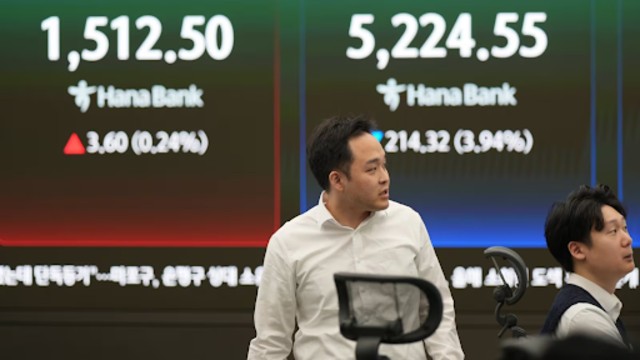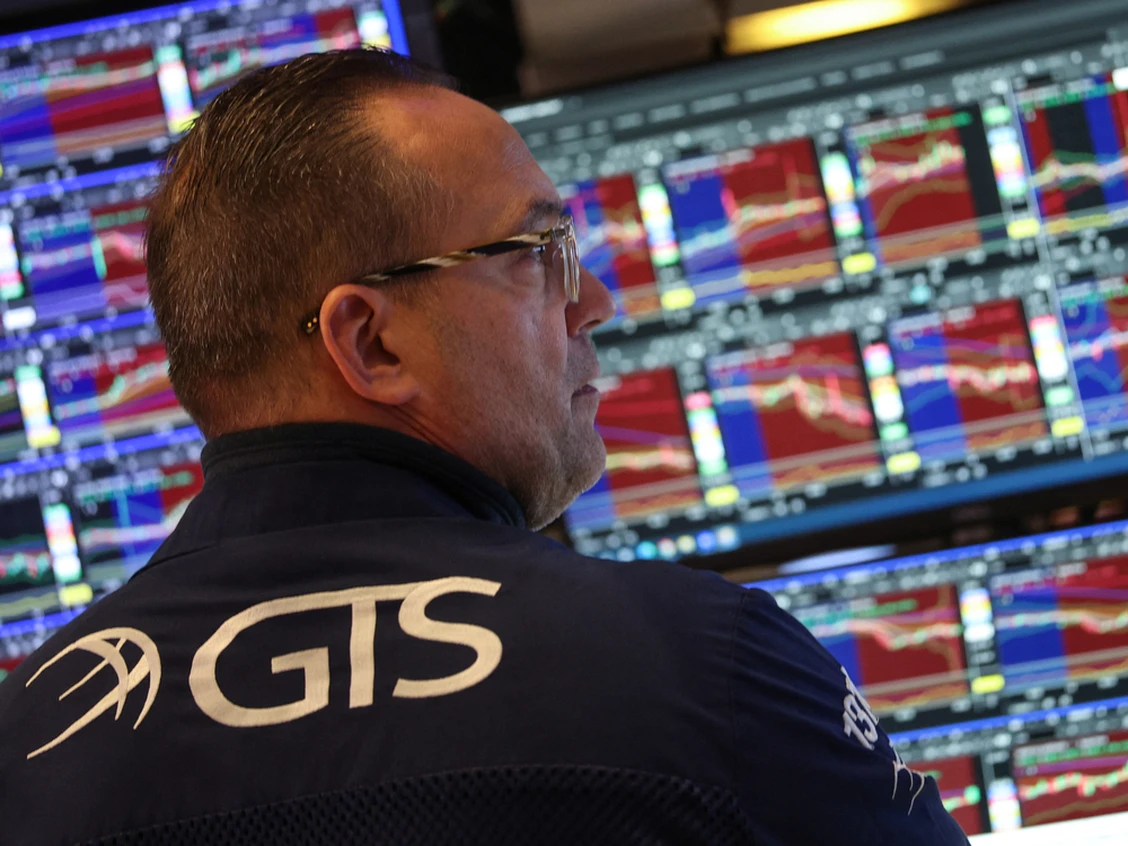
A trader works on the floor at the New York Stock Exchange on April 8. Canadians are putting more of their investment money into exchange-traded funds, according to recent data, even as the U.S.-led trade war rocks global stock markets. CBC News
Canadian investors are pouring more money into exchange-traded funds (ETFs) than ever before. Despite global market jitters from trade tensions and inflation concerns, ETFs are gaining strong traction, especially among retail investors.
A recent CIBC report shows ETFs are outpacing mutual funds in net sales. This signals a major shift in investment behaviour. While mutual funds still dominate overall portfolio value, ETFs are quickly closing the gap.
The Rise of ETFs: Cheaper, Faster, More Attractive
ETFs are investment baskets that can be bought and sold throughout the day. Unlike mutual funds, which trade only once daily, ETFs offer real-time flexibility. They're also generally cheaper and more tax-efficient.
Over the past five years, ETFs have grown three times faster than mutual funds. By 2024, their assets hit a record $518 billion in Canada. That's nearly seven times more than a decade ago.
Retail investors are driving this growth. Many are choosing to manage their own portfolios, bypassing high advisory fees. Some experts believe this trend is driven by dissatisfaction with mutual fund performance and a growing focus on cost.
“People are paying more attention to the fees,” said Dan Hallett, VP of research at Highview Financial Group. “And the ETF model is more appealing—especially to individual investors.”
The Appeal of Index Investing
Another key reason behind the ETF boom is the growing popularity of passive investing. Instead of trying to beat the market, many are opting to match it. Vanguard’s S&P 500 ETF (VOO), for instance, bundles top-performing U.S. stocks. It's become one of the world's best-selling ETFs.
Vanguard Canada's version, trading under the VFV ticker on the Toronto Stock Exchange, delivered impressive returns—35.24% in 2022 and 23.3% in 2023. However, it's showing a year-to-date loss of -3.07% amid current market volatility.
Still, experts say ETFs are well-suited for uncertain times. "They offer immediate liquidity," said Sal D’Angelo, head of product at Vanguard Canada. “That’s a big advantage in volatile markets.”
Gameification and Risk: A Double-Edged Sword
While ETFs offer flexibility, concerns are growing around the behaviour of novice investors. Many now trade using apps, responding instantly to price swings and notifications. This trend is reshaping how people engage with markets—often like a game.
University of Calgary finance professor Marius Zoican warns of impulsive trading. "If the market moves 5% in a day, people react emotionally," he said. “They sell based on past performance, which may not be wise.”
The ease of trading, paired with real-time alerts, can lead to rash decisions. And during periods of heavy selling, ETF prices can deviate from the actual value of their underlying assets.
A Surge in Automated Trading
The trend isn’t just about speed. Automation is also changing the game. Tradeweb, a trading platform, reported an 83% increase in retail users deploying automated trading tools in April compared to last year.
These tools let investors set rules in advance—like selling when a price drops. “We’re seeing more clients turn to automation to react faster,” said Adam Gould, global head of equities at Tradeweb.
But speed comes with risk. In highly volatile conditions, many trying to sell at once could flood the market. That can create pricing gaps between ETF shares and their actual basket of stocks—another potential pitfall for the unprepared.
Experts Urge Caution
As ETFs continue to grow, experts urge discipline and education. South Korea, for example, now mandates one-hour training for new retail investors using leveraged ETFs.
Hallett warns that the same frustration investors once had with mutual funds could repeat with ETFs. “Too many choices can confuse undisciplined investors,” he said. “Without proper guidance, performance may disappoint.”
For seasoned investors, ETFs offer low-cost, flexible access to diverse markets. But for new investors navigating a volatile landscape, caution, patience, and knowledge remain essential.
The ETF boom may mark a new chapter in investing—but it's not without its risks.