Stock markets across Asia showed mixed movement today while oil prices moved higher. This shift comes as the ongoing conflict between Israel and Iran grows more intense, raising concerns among global investors.
Asian stock markets showed a mixed response on Monday, while oil prices climbed once again amid mounting concerns that rising tensions between Israel and Iran could disrupt the global oil supply chain.
U.S. crude futures went up by 20 cents, settling at $73.18 per barrel. Meanwhile, Brent Crude—the international benchmark—rose by 95 cents to hit $75.18 per barrel. The gains reflect fears that worsening geopolitical tensions could choke oil supply routes, especially from Iran.
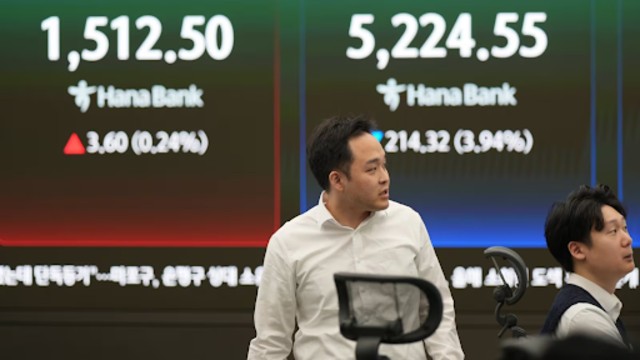
In regional share trading, Tokyo’s Nikkei 225 gained ground with a 1.3% rise, closing at 38,307.74. South Korea’s Kospi also advanced, climbing 0.9% to 2,920.57. However, Chinese markets presented a more subdued picture. Consumer spending in China showed improvement in May, with retail sales rising 6.1% compared to the same time last year. Despite this, growth in industrial output remained below expectations, up just 5.8%, which dragged on overall investor sentiment.
Hong Kong’s Hang Seng Index slipped slightly by 0.1% to 23,864.20, while Shanghai’s Composite Index edged up by less than 0.1%, closing at 3,378.78. Australia’s S&P/ASX 200 also dipped by 0.2%, ending the day at 8,547.40.
The volatile oil market reflected investor anxiety following Friday's news that Israel launched strikes targeting Iran’s nuclear and military infrastructure. This caused a sharp jump in oil prices—by more than 7%—and prompted global markets to recoil.
U.S. stocks took a significant hit. The S&P 500 dropped 1.1% to 5,976.97, the Dow Jones Industrial Average fell 1.8% to 42,197.79, and the Nasdaq composite slid 1.3% to 19,406.83.
Iran, a key oil-producing country, has already been subject to Western sanctions, limiting its oil exports. A broader conflict could further tighten supply. Additionally, analysts raised alarms about the potential for disruption in the Strait of Hormuz—a narrow but critical sea route near Iran that handles a substantial share of the world’s oil shipping traffic.
The fear of supply bottlenecks sent airline and travel company stocks tumbling. Carnival Corporation saw its shares drop by 4.9%, United Airlines lost 4.4%, and Norwegian Cruise Line Holdings fell 5%. Rising fuel costs and reduced consumer travel confidence were the key concerns dragging these stocks down.
However, energy producers and defense contractors saw gains. Exxon Mobil shares jumped 2.2%, while ConocoPhillips rose 2.4%. As oil prices climbed, these companies stood to benefit from improved profit margins. Weapons manufacturers like Lockheed Martin, Northrop Grumman, and RTX all posted gains above 3%, reflecting investor interest in defense stocks amid geopolitical instability.
Gold, often seen as a safe investment during uncertainty, rose 1.4% on Friday and remained stable into Monday trading. In contrast, U.S. Treasury bonds fell, pushing their yields higher, partly due to concerns that higher oil prices could stoke inflation.
Despite recent stable inflation rates close to the Federal Reserve’s 2% target, market watchers remain uneasy. Friday’s positive consumer sentiment report from the University of Michigan offered some reassurance. It showed optimism growing for the first time in half a year, helped by the temporary pause in former President Donald Trump’s tariff plans and softening expectations for inflation.
In company news, Adobe disappointed investors despite posting better-than-expected profits. Its stock fell 5.3%, as analysts speculated that traders were hoping for more aggressive growth forecasts.
Meanwhile, currency markets showed only mild fluctuations. The dollar gained slightly against the yen, rising from 144.03 to 144.37. The euro also inched up, moving from $1.1533 to $1.1537.