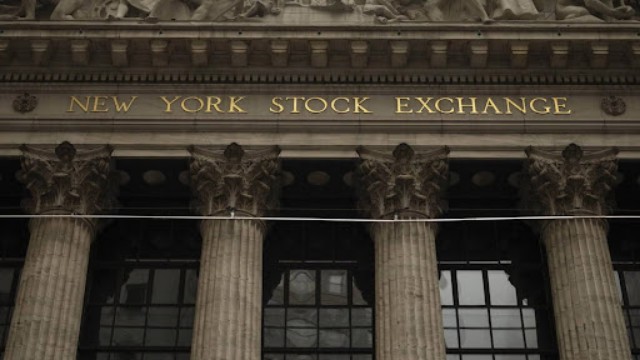
The front of the New York Stock Exchange building is pictured on Wednesday, June 18, 2025, in New York. (AP Photo/Yuki Iwamura)
Oil prices soared, and global stock markets stumbled after U.S. military action hit Iranian nuclear and military facilities, signalling a major escalation in Middle East tensions.
Over the weekend, the United States launched targeted strikes on three Iranian sites tied to its nuclear and defence programs. This comes as the latest turn in the widening conflict between Israel and Iran, which began intensifying after Israel's strike on Iran on June 13.
Following the U.S. airstrikes, Brent crude—the international oil benchmark—climbed 2.6% to reach $79 per barrel. U.S. crude matched that jump, rising to $75.76 per barrel. Investors quickly moved their money, spooked by fears of supply disruptions in one of the world’s most vital oil corridors.
The reaction hit Wall Street before the markets even opened. Futures for the S&P 500 and Dow Jones both slipped 0.4%, while the Nasdaq dropped 0.5%. U.S. Treasury yields stayed steady, showing that investors weren't yet panicking but were keeping a close eye on developments.
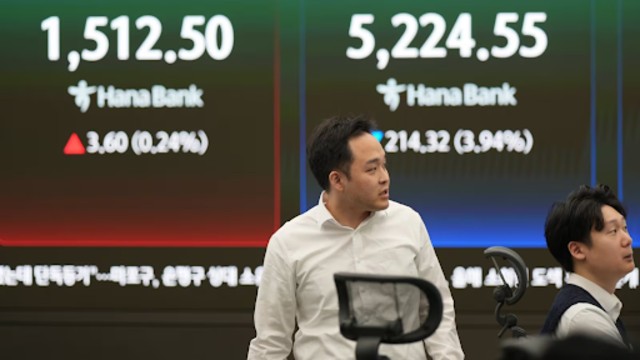
Across Asia, markets also showed signs of unease. Japan’s Nikkei 225 fell 0.6%, South Korea’s Kospi slipped 1%, and Taiwan’s Taiex dropped by 1.5%. Australia’s ASX lost 0.7%, and New Zealand’s main index slipped 0.5%. Many of these countries rely on oil that passes through the Strait of Hormuz—a narrow waterway that Iran partially controls and through which about 20% of the world’s oil flows.
Analysts say the key question now is how Iran will respond. Kristian Kerr of LPL Financial warned that much depends on whether Tehran chooses to de-escalate or retaliate.
There’s growing concern that Iran might attempt to block or disrupt traffic through the Strait of Hormuz. While such a move would be technically hard to execute, the mere threat could make shipping companies hesitant, drive up insurance costs, and require U.S. naval protection.
Tom Kloza, an oil market expert with Turner Mason & Co., believes a full blockade is unlikely. Iran depends heavily on selling oil—mostly to China—through the same channel. Cutting off that access would be self-destructive. “It’s a last-resort move,” he said, noting that oil prices could settle back down if tensions cool.
Still, not everyone is convinced that Iran will act rationally. Veteran analyst Andy Lipow warned that political emotions can override logic. If the Strait is shut down completely, Lipow estimates oil could spike to $120–130 a barrel, pushing gasoline prices in the U.S. to around $4.50 per gallon. That would strain households and complicate the Federal Reserve’s efforts to lower interest rates.
Economist Ed Yardeni remains hopeful, suggesting Iran's leaders will hold back and avoid fueling further chaos. In his words, “They aren’t crazy.”
But with the region on edge and markets reacting swiftly, one thing is clear: global investors will be watching every move.