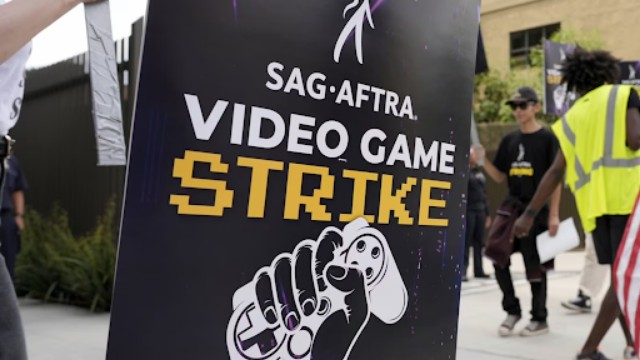
A protester carries a sign during the SAG-AFTRA video game strike outside Warner Bros. Games' office in Burbank, California (AP Photo/Chris Pizzello, File)
After nearly a year of silence, video game voice and motion capture artists may soon return to work as a new contract deal is up for vote. If union members approve it by Wednesday evening, it would bring an end to the 11-month-long strike that raised alarms about the unchecked growth of artificial intelligence (AI) in gaming.
The new contract promises higher pay, stronger rights over performers' digital likenesses, and new rules around AI usage — key wins for the union behind the strike.
Sarah Elmaleh, a seasoned voice actor and the head of the negotiating committee at SAG-AFTRA (Screen Actors Guild-American Federation of Television and Radio Artists), described the agreement as a huge relief. “It’s like a mountain lifted off our shoulders,” she said.
Why Performers Took a Stand
The strike began last July after two years of failed talks with major gaming companies. At the heart of the disagreement? The fear that AI could replace real human performers, eroding creative freedom and stealing their work without consent.
Games like “OD” and “Physint” were delayed mid-production, and Riot Games had to reuse old voice recordings in “League of Legends” due to the lack of available talent. Despite that, over 160 games signed temporary agreements during the strike, agreeing to the AI rules the union wanted — allowing some progress without fully ending the protest.
What’s in the New Deal?
If passed, the deal will:
- Raise performer wages by more than 15% right away
- Add an additional 3% raise each year for the next three years
- Require clear permission to use a performer’s voice or appearance via AI
- Mandate fair payment if a performer’s digital likeness is used
- Provide detailed usage reports to ensure transparency
These new terms would prevent game studios from using AI to replicate actors’ voices or movements without permission or proper pay — now and even after death unless specifically limited.
Duncan Crabtree-Ireland, the union’s national executive director, called the deal vital for protecting jobs and creativity in an industry where AI is rapidly growing. “This wasn’t just a labour negotiation — it was about survival,” he explained.
AI and the Future of Gaming
The contract’s AI provisions echo concerns raised in last year’s Hollywood strikes. Performers argued that AI could easily mimic voices, actions, and emotions, leaving human artists jobless and unheard.
Under the new deal, any digital replica must be authorized in writing. The time taken to create one must be paid as though it were a full performance. And performers will receive regular reports showing where and how their likenesses are used.
Elmaleh, who turned down many projects during the strike, stressed how personal this fight was. “Our work is vulnerable. It comes from imagination and emotion,” she said. “It deserves respect.”
What’s Next for the Industry?
While the agreement is a major step forward, leaders say the battle isn't over. There’s more work to be done before the contract ends in October 2028. Both union reps and developers must continue shaping how AI fits into this creative space — fairly, transparently, and with consent.
Elmaleh, who volunteered her time for the negotiations, hopes to soon return to her true passion — acting in games — knowing that her work is now better protected.
“Voice acting is part of who I am,” she said. “That’s why I fought so hard for this deal.”