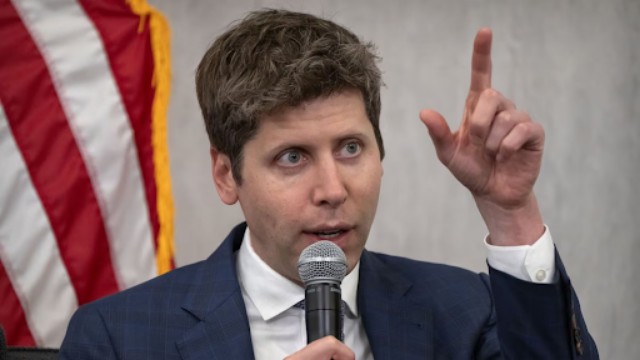
Sam Altman, CEO of OpenAI, took part in a discussion on Tuesday, July 22, 2025, during a Federal Reserve conference in Washington focused on reviewing the financial framework for major banks. (Photo: AP/Mark Schiefelbein)
OpenAI’s CEO Sam Altman raised serious concerns this week over how artificial intelligence could be used to fool banks and steal money. Speaking at a Federal Reserve event in Washington on Tuesday, Altman said that many financial institutions still rely on outdated voice recognition systems to verify their customers’ identities—a method that he believes is now dangerously easy to trick.
“What scares me the most,” Altman said, “is that some banks are still using voiceprints as a security measure.” He described this as deeply risky, adding, “AI has already outsmarted that system.”
Voiceprint technology became popular over the last ten years, especially among high-value clients. These systems usually ask customers to repeat a phrase over the phone to access their accounts. At the time, this was considered a modern and efficient way to prevent fraud.
However, that security is no longer dependable. AI can now mimic voices with incredible accuracy. With just a few seconds of recorded audio, it’s possible to create a fake voice that sounds almost identical to the real person. In the near future, even video deepfakes might be able to impersonate people with such realism that it’s nearly impossible to tell the difference.
Altman’s message to banks was clear: the threat is no longer hypothetical. AI voice cloning is here, and it’s convincing enough to trick current security systems. He urged financial leaders to stop relying on voice-based verification and instead explore more secure, modern alternatives.
During the event, Federal Reserve Vice Chair for Supervision Michelle Bowman hosted the conversation. She acknowledged Altman’s warning and expressed interest in working together to develop safer methods. “That might be something we can think about partnering on,” Bowman said, pointing to the need for collaboration between technology experts and financial regulators.
Altman’s concerns come at a time when AI-generated scams are rising worldwide. People are already being targeted through fake phone calls, where scammers use cloned voices of loved ones or officials to demand money. If banks do not act fast, the consequences could be devastating.
The takeaway from Altman’s speech is urgent: as AI tools become more advanced, traditional forms of identity verification are becoming less reliable. Financial institutions must rethink their security strategies now, or risk facing a wave of fraud unlike anything seen before.
This discussion marks an important moment, as it’s not just tech companies raising red flags—financial regulators are now actively listening and responding.