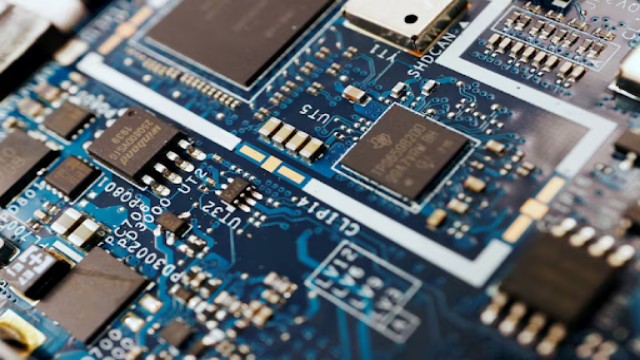
Computer circuit board with semiconductor chips, captured in this illustration image. (Photo: Florence Lo/Reuters, File)
In the next two weeks, the U.S. government will unveil the outcome of a national security investigation into imported semiconductors. Commerce Secretary Howard Lutnick confirmed the timeline on Sunday, following a key meeting between President Donald Trump and European Commission President Ursula von der Leyen.
According to Lutnick, this investigation is a major reason the European Union is eager to finalize a broader trade agreement with the U.S. The aim is to tackle all related issues in one go and avoid further economic strain on both sides.
President Trump hinted at looming tariffs targeting foreign-made chips. He emphasized that several companies — including some from Taiwan — are now planning to invest in U.S.-based chip manufacturing. Their goal is to avoid getting caught in the next round of tariff hikes.
Trump added that von der Leyen’s cooperation helped the EU sidestep some of the harsher penalties likely headed for other global suppliers.
New Trade Deal in the Works
Trump and von der Leyen also introduced a fresh trade agreement framework. As part of this deal, all EU goods entering the U.S. would face a uniform 15% tariff. This includes major categories like automobiles, which are already subject to a separate and much steeper 25% tariff.
This marks another bold move in the Trump administration’s effort to reshape global trade policy, often using tariffs as leverage.
Why the Investigation Matters
Back in April, the administration launched a formal investigation to determine whether America’s dependence on foreign semiconductors and pharmaceuticals could threaten national security. The review falls under Section 232 of the Trade Expansion Act of 1962. This same legal provision has been used in previous cases to justify tariffs on steel, aluminum, and vehicles.
With the U.S. economy relying heavily on semiconductor imports — especially from Taiwan — the findings of this probe could dramatically reshape supply chains.
The ongoing investigation might also pave the way for new duties on imported pharmaceutical products and tech components.
Tariffs on the Rise
Trump’s second term has seen a renewed wave of tariffs. Earlier this year, the U.S. imposed a 10% tariff across several sectors, with plans to significantly increase those rates starting August 1. Current and upcoming measures are based on multiple ongoing probes into other materials like copper and lumber.
The aggressive tariff strategy is intended to encourage more domestic production while reducing America’s dependence on foreign markets.
A Shift in Global Supply Chains
Semiconductors remain one of the most critical components for modern electronics. During his presidency, Joe Biden attempted to reverse U.S. chip dependency by introducing the Chips Act — a multi-billion-dollar incentive program aimed at attracting chip manufacturers to build plants on American soil.
Trump’s return to office has seen a renewed focus on reshoring production and reducing foreign reliance, with semiconductors at the center of that strategy.