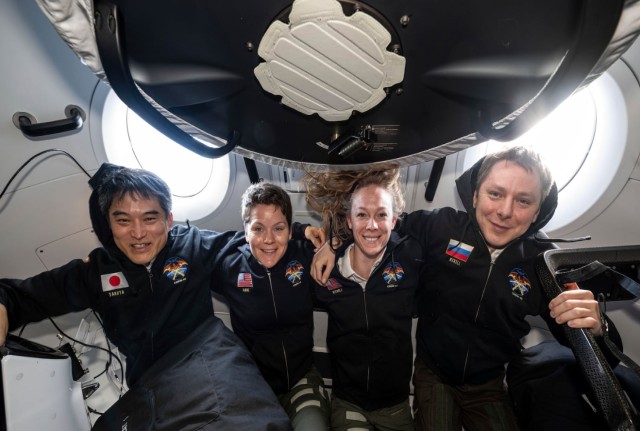
In a photo released by NASA, SpaceX Crew-10 members—Japan’s Takuya Onishi, NASA astronauts Anne McClain and Nichole Ayers, and Russian cosmonaut Kirill Peskov—pose inside the SpaceX Dragon spacecraft, which took them to the International Space Station and will bring them back to Earth.
After spending nearly five months aboard the International Space Station (ISS), four astronauts from NASA’s Crew-10 mission have left the orbiting laboratory and are on their way back to Earth. Their return marks the end of an eventful crew rotation mission filled with scientific discoveries and international teamwork.
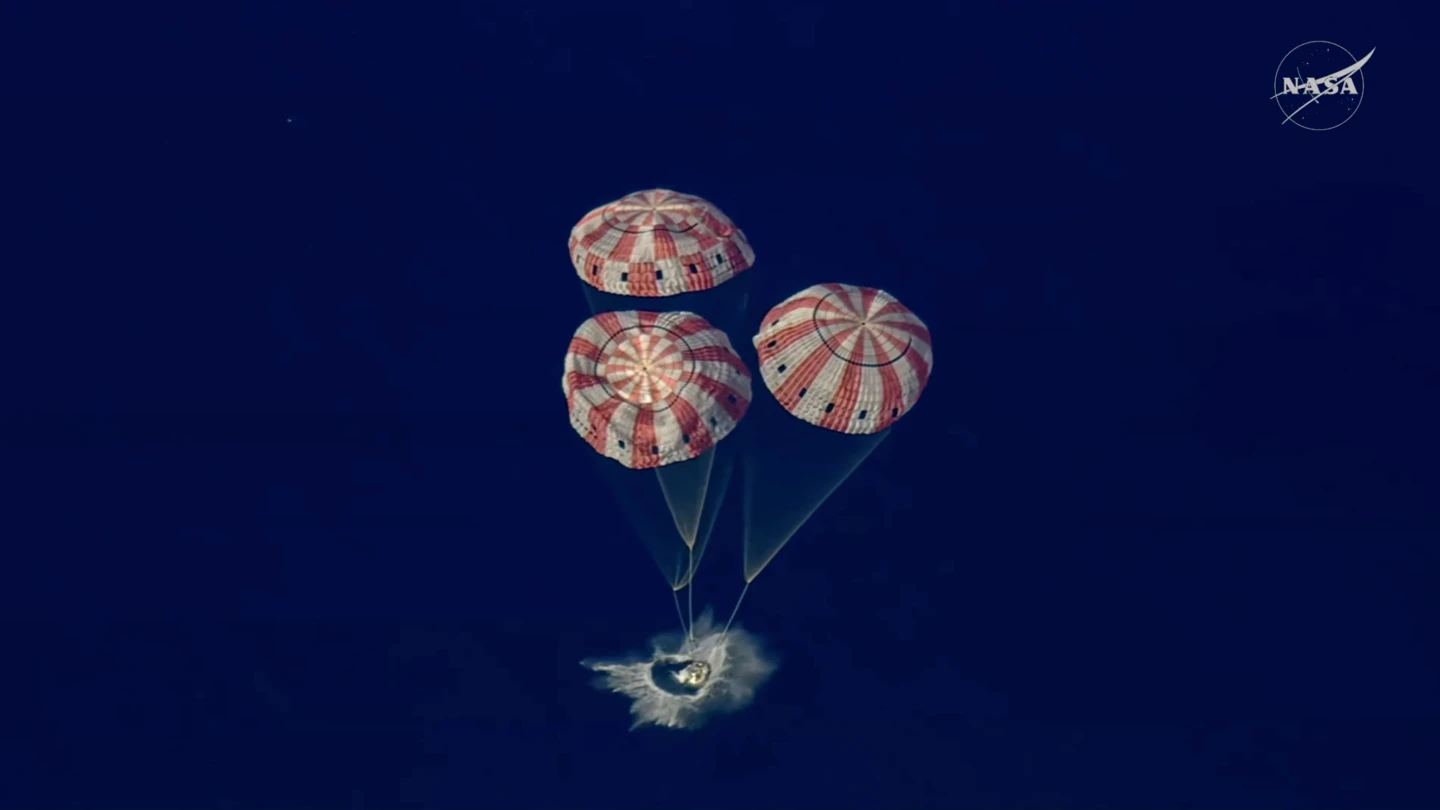
On Friday afternoon, U.S. astronauts Nichole Ayers and Anne McClain—who served as mission commander—joined Japanese astronaut Takuya Onishi and Russian cosmonaut Kirill Peskov inside SpaceX’s Dragon capsule. The spacecraft, shaped like a gumdrop, began its 17.5-hour journey to a splashdown site off the coast of California. The landing is expected around 11:33 a.m. ET on Saturday.
A Mission That Began in March
Crew-10 launched on March 14, replacing the Crew-9 astronauts, which included NASA’s Butch Wilmore and Suni Williams. Wilmore and Williams had been transported to the ISS via Boeing’s Starliner capsule—an important step for NASA’s commercial crew program.
This week, Wilmore announced his retirement after 25 years at NASA. He flew four different spacecraft in his career, spending a total of 464 days in orbit. As a key technical adviser for Boeing’s Starliner program, his work helped shape the future of commercial spaceflight. Williams continues her role at NASA as an active astronaut.
Science in Microgravity
While on board, the Crew-10 astronauts took part in over 200 experiments, focusing on research that can only be done in the weightlessness of space. NASA says they are bringing home "important and time-sensitive research" that could lead to advances in medicine, materials science, and our understanding of how humans adapt to space.
These studies ranged from biological research on how cells behave in microgravity to physics experiments exploring fluid dynamics without the influence of gravity. Every result contributes to preparations for future deep-space missions, including planned journeys to the Moon and Mars.
International Teamwork in Orbit
The mission was another example of the ISS serving as a platform for global cooperation. The presence of astronauts from the United States, Japan, and Russia demonstrated the station’s unique role as a symbol of scientific partnership despite global tensions.
Each astronaut brought their own expertise to the table—whether in engineering, piloting, or science—making the mission a success. Crew-10 not only completed their research goals but also maintained the station’s systems, supported incoming and outgoing cargo missions, and conducted maintenance work critical to the ISS’s continued operation.
Looking Ahead
Once they splash down in the Pacific Ocean, the crew will undergo medical checks before heading back to their respective agencies. The data and samples they return will be analyzed by scientists on Earth, potentially leading to new innovations.
Crew-10’s journey reminds us that every mission to the ISS is more than just a trip—it’s a bridge to the future of human space exploration.