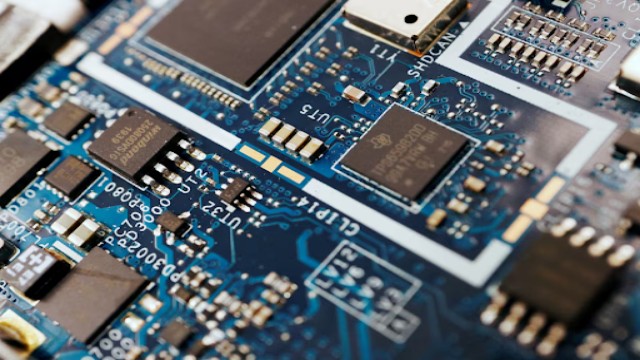
Computer circuit board with semiconductor chips, shown in an illustrative photo by Florence Lo for Reuters.
In a quiet but calculated move, U.S. authorities have been embedding location-tracking devices in certain shipments of high-end AI chips. According to sources cited by Reuters, the goal is to monitor and prevent these powerful processors from being diverted to China in violation of export restrictions.
The operation isn’t widespread—it focuses only on shipments considered “high risk” under ongoing investigations. By tracing the chips’ movements, officials hope to catch illegal re-routing and hold accountable those who profit from bypassing U.S. trade rules.
Focus on Restricted Destinations
The chips in question are used in artificial intelligence systems and can be critical for advanced computing. Washington has placed strict export controls to prevent them from reaching countries or entities that could pose national security concerns. China, in particular, is under tight restrictions for acquiring such technology.
The tracking devices are deployed to make sure the components don’t end up where they shouldn’t. If a shipment veers off its approved route, the trackers provide a trail for investigators to follow.
How the Tracking Works
The trackers are discreetly hidden inside packaging, often within AI server shipments. Industry insiders say they are small and almost impossible to detect without knowing where to look. Their covert placement ensures that those moving the shipments remain unaware they’re being monitored.
Sources revealed that servers made by Dell and Super Micro—containing chips from Nvidia and AMD—are among those being tracked. These components are crucial for AI model training and data processing, making them a prime target for black-market diversion.
Industry Awareness and Cooperation
Five people involved in the AI server supply chain confirmed they knew of such tracking devices being used. While some suppliers view the practice as a necessary safeguard against illegal sales, others worry it could create tension between manufacturers and international clients.
Still, the U.S. government appears committed to using these tools to enforce its export rules. By gathering hard evidence on illegal transfers, officials can strengthen legal cases against companies or individuals skirting the law.
Broader Implications
The tactic reflects the growing competition between Washington and Beijing over access to cutting-edge technology. With AI advancing rapidly, the race to control the most powerful chips has intensified. These chips are not just business assets—they are strategic resources, capable of influencing defence, security, and global economic power.
By quietly embedding trackers, the U.S. is signalling it will go beyond traditional paperwork checks and customs inspections to enforce its restrictions. The move could also serve as a warning to those tempted to smuggle or re-route advanced chips to restricted markets.