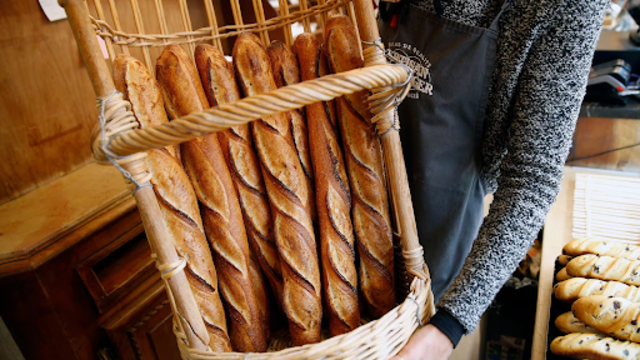
Falling bread consumption and modern baking trends are putting the baguette’s long-held place on French tables to the test. CNN
When the baguette won UNESCO heritage status in 2022, France rejoiced. In Paris, the French delegation proudly waved the golden loaves in the air, celebrating a symbol of national pride. President Emmanuel Macron called it “250 grams of magic and perfection in our daily lives.”
But even with this global honour, the future of France’s most famous bread looks uncertain. Bread consumption continues to fall, and the once-essential baguette is slowly disappearing from everyday French life.
A Nation Eating Less Bread
After World War II, the French ate about 25 ounces of bread daily. By 2015, that number had dropped to 4 ounces, and now it’s just 3.5 ounces, or roughly half a baguette a day.
A 2023 survey found that over a third of French people had cut back on bread in the last five years. Experts say younger generations are leading this change. Fast food, snacks, and global dishes like sushi and kebabs have replaced traditional meals that once relied on bread.
“Young people are losing the habit of buying a baguette every day,” said Dominique Anract, president of France’s bakery confederation. He noted that buying fresh bread daily used to be as routine as brushing one’s teeth.
The Rise of “Neo-Bakeries”
A new generation of French bakers, known as “neoboulangeries,” is also changing the country’s relationship with bread. These bakers prefer large sourdough loaves made from organic, ancient grains instead of traditional baguettes.
In Rennes, Marion Juhel made headlines when she opened a bakery that doesn’t sell baguettes at all. She believes they waste energy, spoil quickly, and contribute to food waste. Instead, she sells heavier sourdough loaves that stay fresh longer and are easier to digest.
Some customers reacted angrily to her baguette-free bakery, but Juhel stands by her choice. “We had to teach people why we do it,” she said. “For many, a bakery without baguettes is unthinkable.”
Breadmakers Reinvent the Tradition
In Paris, baker Benoît Castel also avoids baguettes. His bakery focuses on rustic sourdough loaves made with local ingredients. He even bakes a bread called “pain d’hier et de demain,” or “bread of yesterday and tomorrow,” made from leftover loaves to reduce waste.
“We’ve never eaten such good bread as we do today,” Castel said. “People eat less bread, but they eat better.”
Meanwhile, world-famous baker Éric Kayser still believes in the baguette’s future. His traditional loaves are sold in 370 bakeries worldwide, though he admits artisanal bread can be costly. While a regular baguette costs around €1, specialty loaves can reach €7.
“The baguette feeds everyone,” Kayser said. “Special breads are for a smaller group of customers.”
A Future of Change — Not Extinction
Despite declining sales, Kayser isn’t worried. “Never in a million years. People love it,” he said. The rise of baguette sandwiches has helped revive interest, and his new “baguette bar” in Paris now serves creative flavours like beet and cranberry or pistachio and white chocolate.
Anract agrees that France’s bread culture will endure, saying, “We have to adapt. Bakeries have always faced challenges, but we reinvent ourselves.”