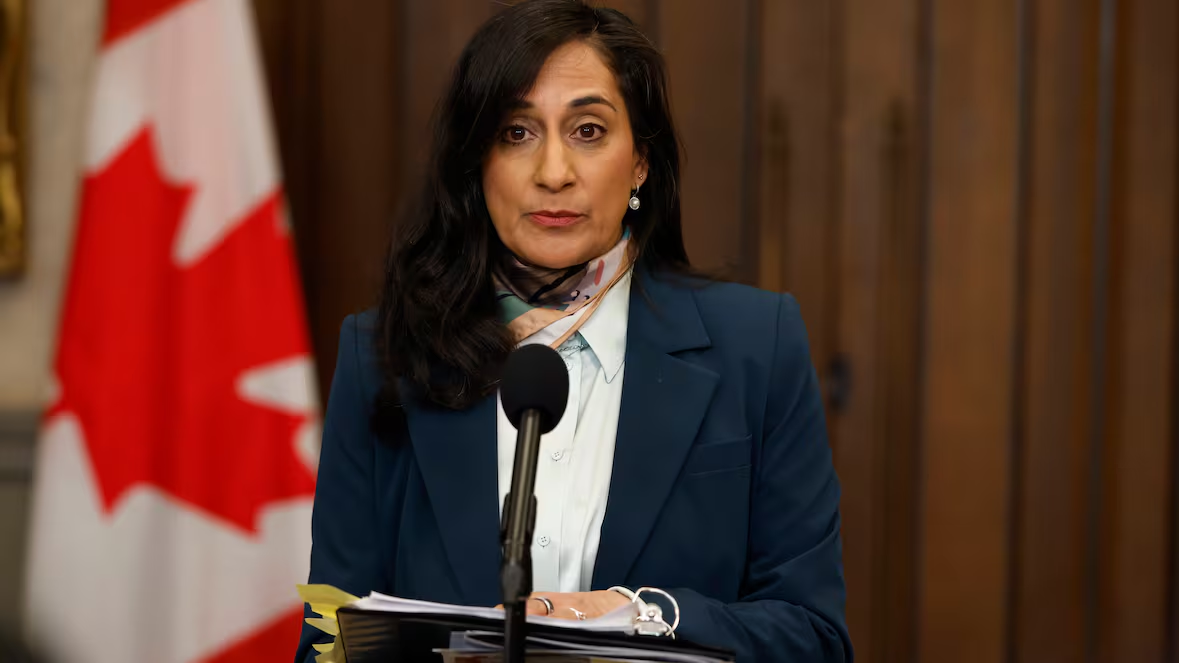
Minister of Foreign Affairs Anita Anand, seen here on March 10, says officials spoke with Israel's ambassador last week, calling for an investigation into the death of a Canadian citizen in southern Lebanaon. (PC: The Canadian Press)
Canada has formally asked Israel to investigate the killing of a Canadian citizen in southern Lebanon, adding another layer of tension to an already strained diplomatic relationship between the two countries.
Speaking ahead of a cabinet meeting, Foreign Affairs Minister Anita Anand confirmed that Canadian officials had summoned Israel’s ambassador to raise concerns and demand a thorough inquiry. She stressed that Canada is seeking a “full and transparent investigation” into the incident, underlining the seriousness with which the government is treating the matter.
Diplomatic Pressure Mounts
The Israeli ambassador to Canada, Iddo Moed, was called in last week as part of a formal diplomatic démarche, a step typically used when a government wants to register strong concern or dissatisfaction.
At the same time, Canada’s ambassador to Israel, Leslie Scanlon, engaged directly with Israeli officials. According to Canadian authorities, Israel has agreed to carry out an investigation, though no further details about the scope or timeline have been made public.
Despite these developments, Israeli authorities have not officially accepted responsibility for the incident, and responses from the embassy have so far been limited.
What Happened in Lebanon
The victim, Mohammad Hassan Haidar, was reportedly killed on April 10 in Qana, a town in southern Lebanon. According to his family, he died in a drone strike while attempting to help an injured person outside his home.
The account shared by his relatives has drawn public attention and heightened calls for clarity, especially given the lack of confirmation from Israeli forces regarding their involvement.
A Pattern of Diplomatic Friction
This is not the first time Canada has taken such action. In fact, it marks the third instance within a year that Anita Anand has summoned Iddo Moed over concerns related to Israel’s military actions.
In May 2025, Canada raised objections after Israeli forces fired shots near a diplomatic group that included Canadian representatives. Israel later stated that the group had strayed from an approved route.
Later in December, tensions resurfaced when a delegation of Canadian Members of Parliament was denied entry into the West Bank and Jerusalem. Israeli authorities cited concerns about the group’s affiliations, although similar visits had previously been allowed under comparable circumstances.
Previous Cases Raise Questions
Canada has also pressed Israel for answers in earlier incidents involving Canadian-linked casualties and infrastructure. In 2024, officials sought an explanation after a Canadian-funded water facility in Gaza was destroyed.
That same year, the Canadian government demanded clarity following the death of aid worker Jacob Flickinger in a separate strike. In that case, Israel acknowledged the incident as an error and issued a statement expressing regret.
However, details from other investigations, including the one involving the water facility, have not been publicly disclosed, leaving lingering questions about accountability and transparency.
Awaiting Answers
As Canada continues to push for a detailed investigation into Haidar’s death, the outcome may influence diplomatic relations moving forward. For now, officials are maintaining pressure, emphasizing the need for clear answers and accountability in a situation that has both political and human consequences.