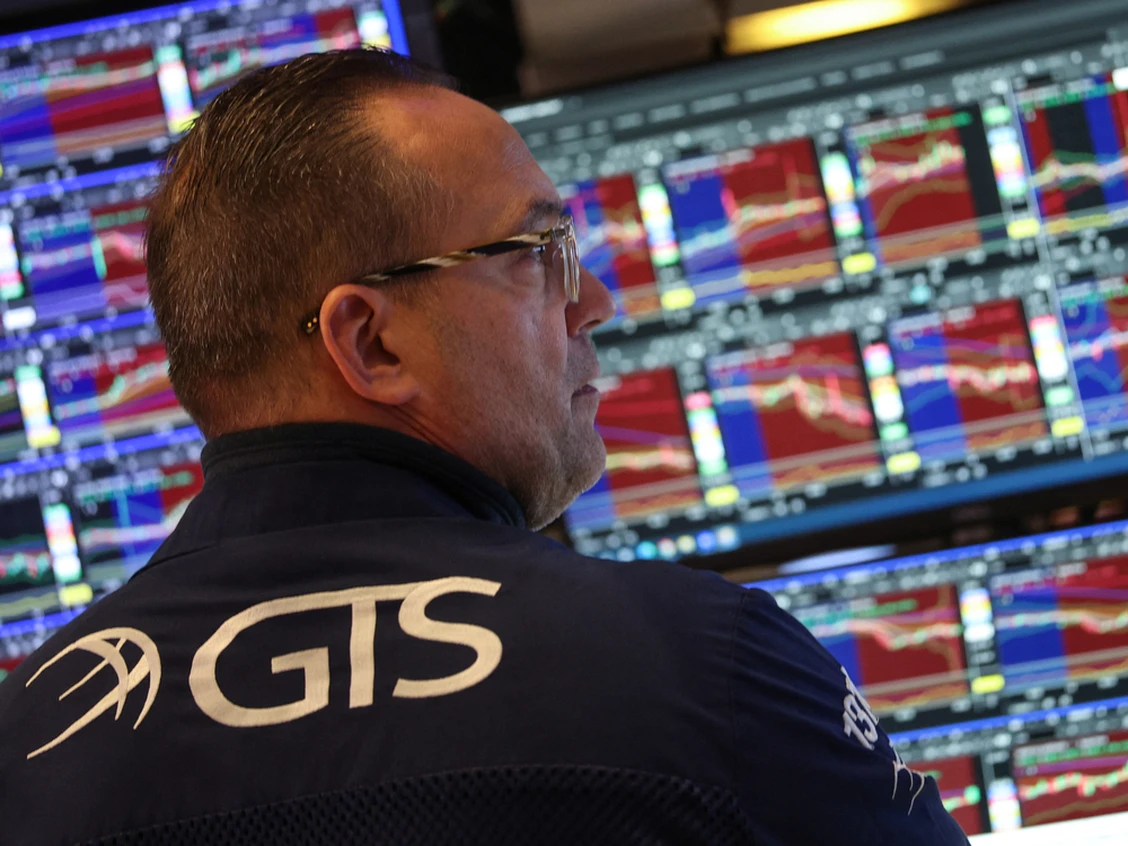
Nvidia shares slipped as investor attention shifted to China’s fast-rising AI chipmakers.
Nvidia shares edged lower on Wednesday, snapping a brief rally, as investor attention shifted toward rising competition from China’s fast-emerging AI chipmakers. The pullback comes despite Nvidia’s blockbuster earnings and its recent milestone of briefly becoming the world’s first $5 trillion company.
The market reaction reflects growing debate. Can Nvidia maintain its dominance as new challengers enter the field, and is the stock still a buy at current levels?
A red-hot debut from China shakes sentiment
The latest catalyst came from Shanghai. Chinese AI chipmaker MetaX Integrated Circuits made a stunning market debut on Tuesday, with its shares surging nearly 700 percent.
The company raised around $596 million in its initial public offering, according to Barron’s. MetaX designs chips used for AI training and inference and was founded by former employees of Advanced Micro Devices.
MetaX is part of a new wave of Chinese AI firms known as the “Little Dragons.” Another company in this group, Moore Threads, also went public recently.
While their technology still lags behind Nvidia’s most advanced chips, their rapid rise has caught investor attention.
Nvidia’s lead remains wide, analysts say
Despite the excitement around China’s chip startups, analysts argue the competitive threat may be overstated.
J.P. Morgan said concerns over Nvidia losing its dominance are premature. The firm cited Nvidia’s massive order backlog and strong customer demand. It maintained an overweight rating on the stock with a $250 price target.
Other analysts remain equally bullish. Wedbush Securities’ Daniel Ives reiterated a buy rating, pointing to Nvidia’s central role in global AI infrastructure.
Strong earnings reinforce Nvidia’s position
Nvidia’s fundamentals remain solid. In November, the company delivered a strong third-quarter performance.
Earnings came in at $1.30 per share on revenue of $57 billion. Both figures exceeded Wall Street expectations. The company also issued upbeat guidance, projecting $65 billion in current-quarter sales.
On the earnings call, CEO Jensen Huang said Nvidia expects “extraordinary returns” from its investments in OpenAI and Anthropic.
Following the results, average analyst price targets rose to $250 from $234, according to FactSet.
Open-source models and strategic responses
Nvidia is also responding strategically to competition. Earlier this week, it announced three new open-source AI models.
The move follows similar releases from Chinese rivals, including DeepSeek. That company shook the AI market earlier this year by launching a lower-cost model that challenged offerings from OpenAI.
By expanding its open-source presence, Nvidia aims to retain developer loyalty and counter rival ecosystems.
China sales face regulatory hurdles
Nvidia’s relationship with China remains complex. Reuters reported that the company may accelerate production of its H200 AI chips to meet demand from approved Chinese customers.
President Donald Trump recently said Nvidia could sell H200 chips to select Chinese firms in exchange for a 25 percent cut of sales. Any such deal would require regulatory approval and additional security reviews.
Notably, Nvidia reported zero Hopper chip sales in China during the third quarter.
Demand remains strong across product lines
CEO Jensen Huang continues to emphasize robust demand. Earlier this month, he said demand for Nvidia’s Blackwell chip was “very strong.”
Reports suggest Nvidia has asked Taiwan Semiconductor to increase wafer production. Demand for Nvidia’s next-generation Rubin chips also appears healthy.
Major technology companies continue to spend aggressively. Amazon, Microsoft, and Meta have all signaled rising capital expenditures tied to AI infrastructure.
Amazon CEO Andy Jassy recently confirmed the company’s deep reliance on Nvidia hardware.
Stock metrics show mixed signals
Institutional investors own about 41 percent of Nvidia’s outstanding shares. However, recent trading activity suggests some funds are reducing exposure.
The stock currently holds an Accumulation/Distribution Rating of D-. That points to selling pressure over the past three months.
At the same time, Nvidia boasts an Earnings Per Share Rating of 99 and a Composite Rating of 99, reflecting exceptional overall strength.
Is Nvidia a buy right now?
From a technical standpoint, Nvidia faces a near-term hurdle. The stock remains below its 50-day moving average.
To re-enter a clear buy zone, shares would need to reclaim that level with strong volume.
For now, Nvidia remains a long-term AI leader with unmatched scale and demand. Short-term volatility, however, may persist as global competition intensifies.