Left Coast Organics has pulled certain organic chia seeds from the market after identifying a possible salmonella risk, prompting a safety warning for consumers. CTV
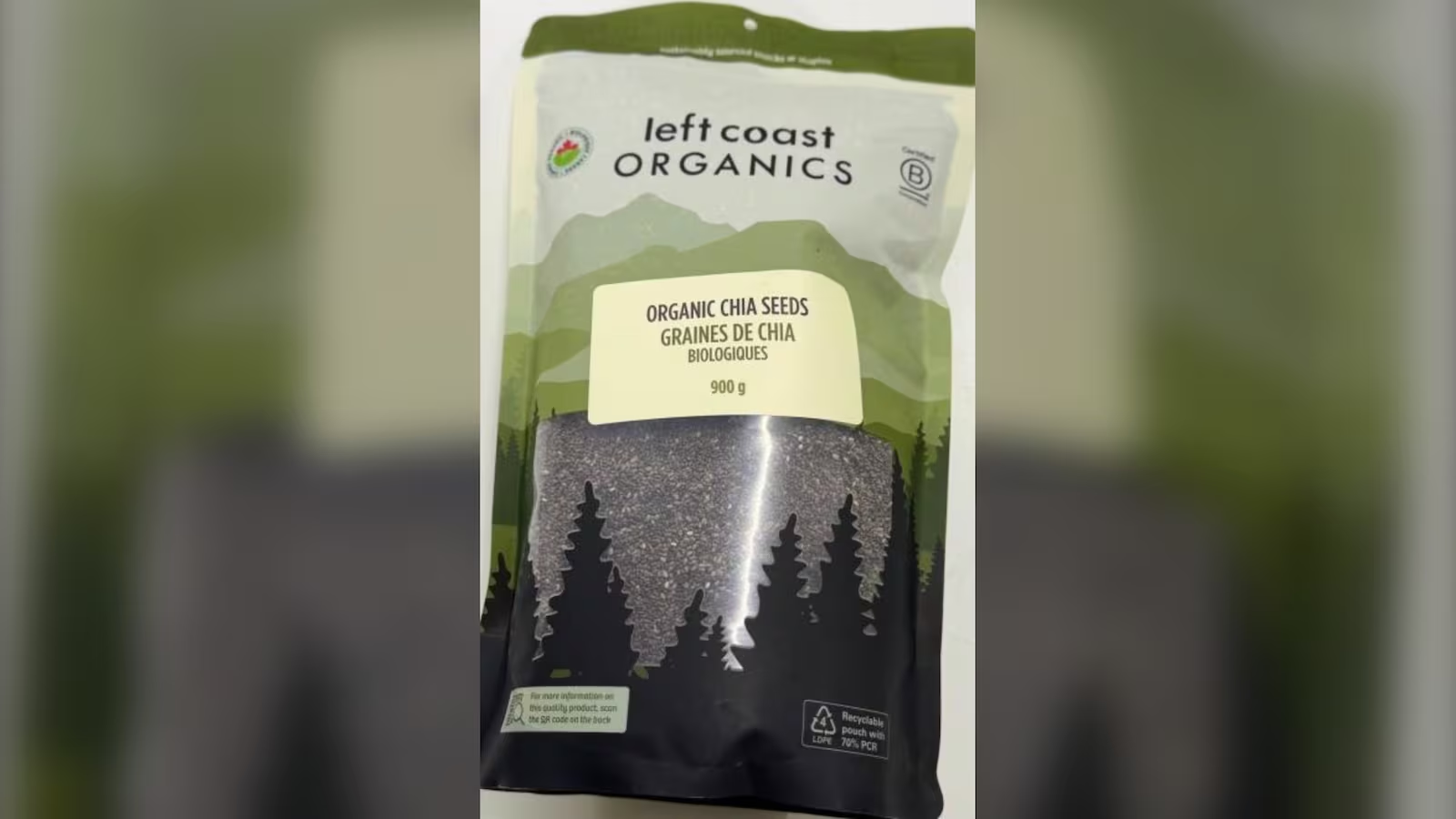
The Canadian Food Inspection Agency has issued a recall for certain organic chia seeds after finding a possible risk of salmonella contamination. The agency shared the warning to help protect consumers and prevent potential illness.
The recall affects 900-gram packages of organic chia seeds sold under the Left Coast Naturals brand. The products reached store shelves in Ontario, Alberta, British Columbia, Manitoba, and Saskatchewan.
Which products are affected
Health officials said the recalled chia seeds carry best-before dates of November 13 and November 14, 2026. The products also share the same barcode number, known as a Universal Product Code, listed as 625691 21034 9.
Anyone who bought chia seeds matching these details should check their packaging carefully. Even unopened products fall under the recall.
Recall linked to international action
The agency explained that another country started the recall process, which led Canadian officials to take action. The warning did not name the country involved.
At this time, officials have not received any reports of illness connected to the affected chia seeds in Canada.
Clear advice for consumers and retailers
The food safety agency urged people to stop using the recalled chia seeds right away. Officials advised consumers not to eat, serve, sell, or share the product. They recommended throwing the seeds out or returning them to the store for a refund.
Retailers also need to remove the recalled items from shelves to prevent further sales.
Why salmonella causes concern
Salmonella bacteria can cause serious health problems, especially for young children, pregnant women, older adults, and people with weakened immune systems. The agency warned that contaminated food may not look or smell bad, which makes it difficult to detect without testing.
Health experts listed common symptoms of infection as fever, headache, nausea, vomiting, stomach cramps, and diarrhea. In rare cases, people may face long-term health issues after infection.
Staying informed helps reduce risk
Food recalls play a key role in keeping the public safe. Officials encourage shoppers to stay alert, check product labels, and follow recall notices closely. Anyone who believes they may have become ill after eating recalled food should contact a health-care provider.