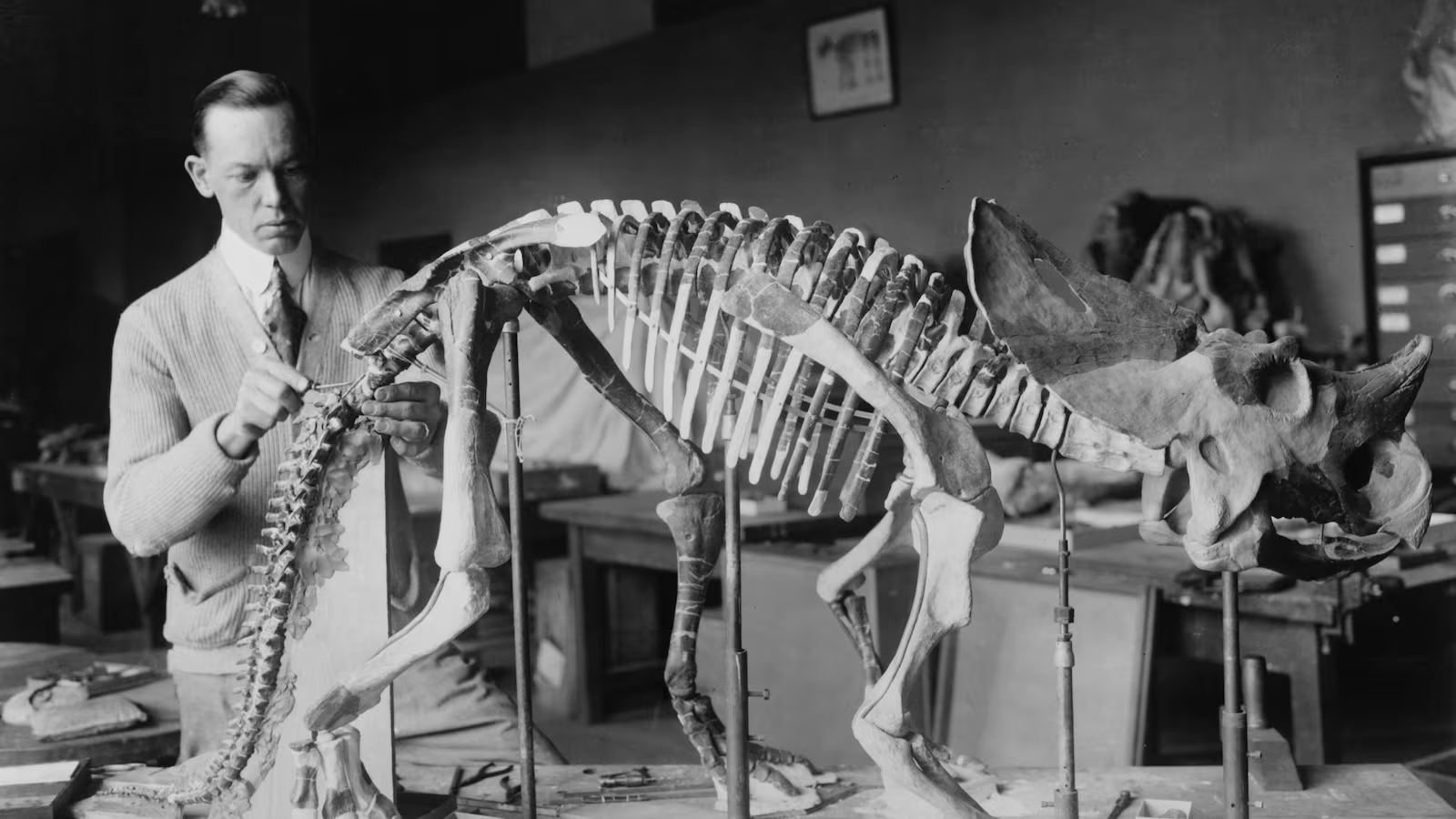
In 1921, a scientist working at the National Museum of Natural History carefully assembled the skeleton of a young dinosaur discovered in Montana. At the time, experts estimated the remains to be around seven to eight million years old. CNN
Millions of years after dinosaurs vanished, people have begun to express sadness for them in an unusual way. Across social media, users share short videos of young dinosaurs and peaceful prehistoric scenes, often paired with emotional music. Many viewers respond with heartfelt messages, imagining a world that once belonged entirely to these creatures.
Some users reflect on how strange it feels to miss animals they never lived alongside. Others write about a deep sense of loss, as if dinosaurs were more than just distant figures from history.
A Long Fascination With the Past
Humans have always felt drawn to dinosaurs. Over time, people have imagined them in many ways — as fearsome beasts, friendly companions, or even playful pets in stories for children. Films and books have kept their memory alive, helping each new generation connect with these ancient animals.
Scientists once believed dinosaurs lacked intelligence and could not adapt. Many people saw their extinction as proof that mammals, including humans, had greater ability to survive. However, new discoveries changed that view. Evidence now shows that dinosaurs lived active lives and displayed complex behaviour.
Researchers also found that a sudden asteroid impact likely caused their extinction. This idea replaced earlier beliefs that dinosaurs simply failed to evolve.
Seeing Dinosaurs in a New Light
As science reshaped our understanding, dinosaurs began to appear less like failures and more like victims of an unexpected disaster. This shift has influenced how people think about their disappearance.
Experts say this change also reflects how humans view their own future. Many people now worry about environmental changes and global challenges. By looking at the fate of dinosaurs, they see a reminder that even powerful species can disappear.
“They lasted for a long time, were hugely successful and diverse, but now (apart from the birds) are gone,” said Chris Manias, a historian of science. “They lend themselves to a sense that even the most powerful and dramatic creatures, and the most extraordinary worlds, have an ending.”
Dinosaurs in Culture and Imagination
Public interest in dinosaurs grew stronger during the 19th century, when scientists began studying fossils more closely. Early models of these creatures amazed and frightened people, placing dinosaurs firmly in popular culture.
Stories soon imagined humans living alongside them. From adventure novels to television shows, dinosaurs appeared in many forms. Later, films brought them to life in new ways, showing them as fast, intelligent, and social animals.
These portrayals changed how audiences viewed prehistoric life. Dinosaurs no longer seemed slow or simple. Instead, they appeared powerful and complex, which made their sudden extinction feel even more tragic.
A Reflection of Today’s World
Some experts believe that this wave of sympathy reveals deeper concerns. People may connect the story of dinosaurs to current global problems, including climate change and environmental damage.
“If we’re thinking about our experiences of living through a global polycrisis, then trying to have a connection with beings from untold eons ago that went through a series of great disasters throughout their history… puts our current world into perspective,” Manias said.
Others see this feeling as a quiet regret for a lost world. Dinosaurs ruled the Earth for millions of years, yet they disappeared. Humans, by comparison, have existed for a much shorter time.
Hope in Survival
Despite their extinction, dinosaurs did not vanish completely. Birds, their modern descendants, live across the planet today. This link offers a reminder that life continues, even after major changes.
“While we might think of dinosaurs as synonymous with extinction, in fact they are great survivors,” said Stephen Brusatte, a paleontology professor. “The arc of prehistory is long and bends towards survival and endurance.”