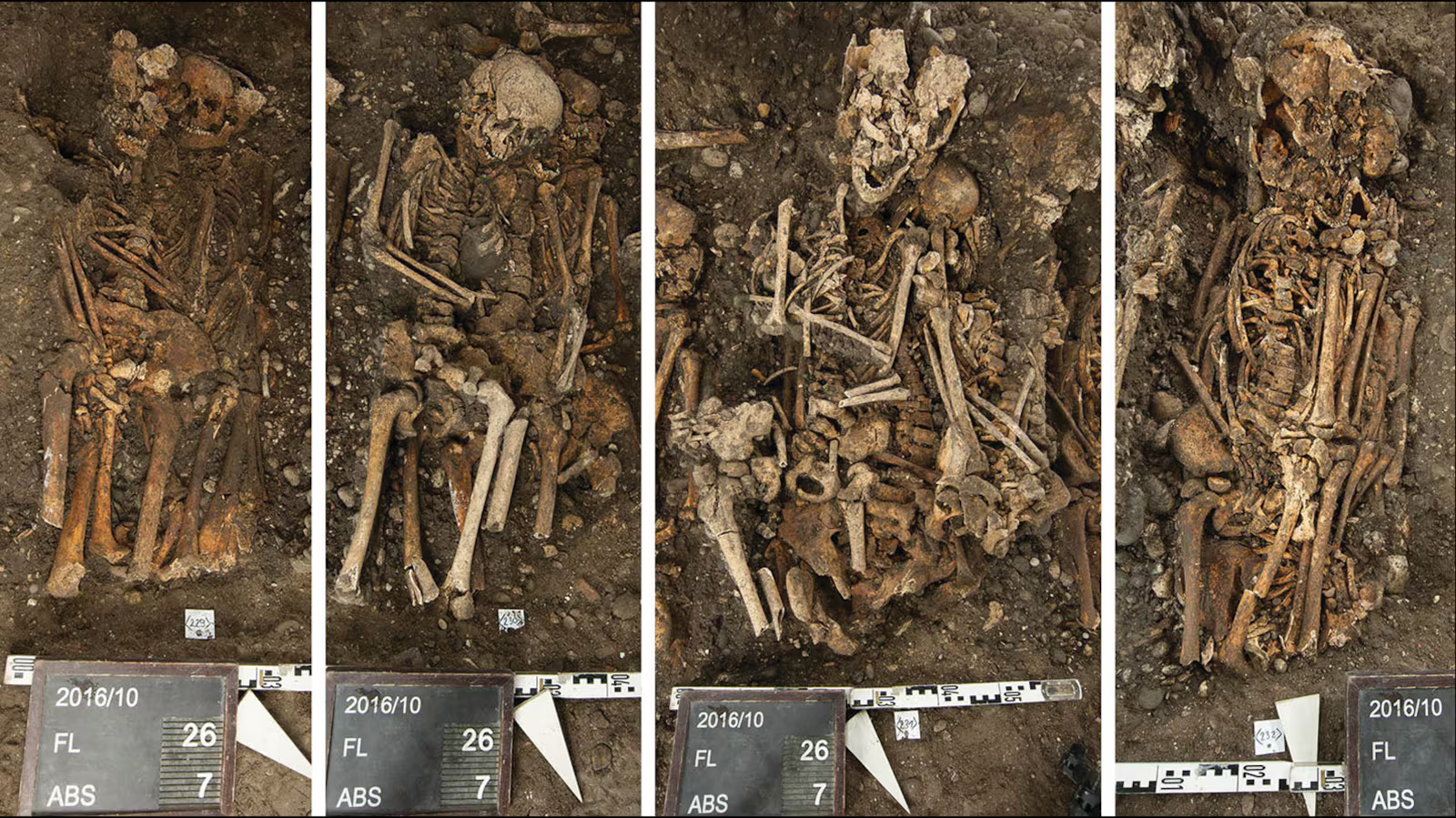
From left to right, graves 229, 230, 231, and 232 during excavation, upmost layer (Archaologische Bodenforschung Basel-Stadt; photo by Adrian Jost via CTV News)
A new study comparing victims of a 17th-century plague outbreak with modern-day COVID-19 cases has uncovered a striking pattern: social inequality has long shaped who is most vulnerable during pandemics.
Researchers examining burial sites in Basel, Switzerland, found that many of those who died during the country’s last major plague outbreak were young labourers from lower socioeconomic backgrounds. Their findings suggest that the impact of infectious diseases has consistently fallen hardest on those with the fewest resources.
What Skeletons Reveal About Survival
The research, led by University of Basel, focused on remains from a monastery-turned-hospital used during the plague outbreak between 1665 and 1670.
Analysis of 15 skeletons showed an average age of just 17.7 years at death. Many displayed signs of intense physical labour—particularly strain in the spine and shoulders—indicating they likely belonged to the working class.
Scientists also confirmed the presence of Yersinia pestis, the organism responsible for the plague, through DNA testing.
The Burden of Work and Survival
According to lead researcher Laura Rindlisbacher, the findings highlight a critical factor in pandemic vulnerability: the inability to stop working.
For individuals who rely on daily labour to meet basic needs, avoiding exposure to disease is often not an option. The study suggests that physical exhaustion, combined with limited access to care, may have reduced their ability to recover from illness.
Echoes in the COVID-19 Pandemic
The parallels to the COVID-19 era are clear. During the pandemic, many essential workers—often from lower-income groups—continued working despite higher exposure risks.
Researchers note that both historical and modern data point to the same conclusion: socioeconomic status significantly influences survival during health crises.
Factors such as access to healthcare, stable income, and social support systems can determine whether individuals receive timely treatment or are left more exposed to disease.
A Pattern Across Centuries
The study, published in the journal Antiquity, reinforces the idea that inequality is not a new phenomenon in public health.
It also highlights additional influences, including citizenship status and community support, which can affect access to care during outbreaks.
Lessons That Still Matter
While medical advancements have transformed how diseases are treated, the study underscores that social conditions remain a powerful determinant of health outcomes.
Pandemics, whether centuries ago or in recent years, tend to expose existing vulnerabilities in society. And as this research shows, those vulnerabilities have remained remarkably consistent over time.
As the world reflects on lessons from COVID-19, the findings serve as a reminder: addressing inequality is not just a social priority—it’s a public health necessity.