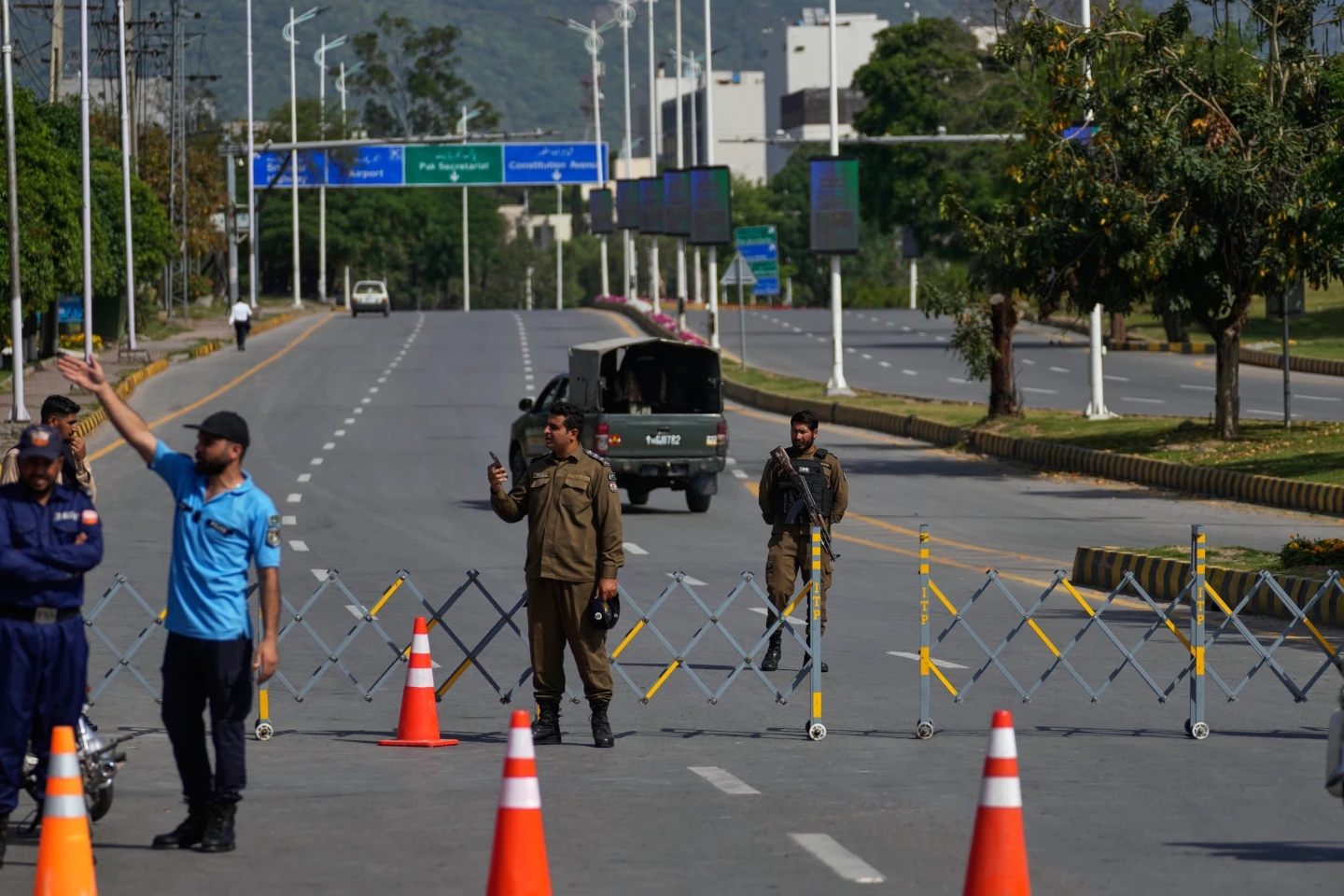
Police officers stand guard at a checkpoint ahead of the second round of negotiations between the U.S. and Iran, in Islamabad, Pakistan, Tuesday, April 21, 2026
The United States has decided to extend its ceasefire with Iran indefinitely, President Donald Trump announced Tuesday, easing concerns that hostilities could quickly resume. The truce had been set to expire the following day, but the latest move signals an effort to keep diplomacy alive despite stalled negotiations.
The ceasefire extension comes after Pakistan stepped in to encourage fresh talks between Washington and Tehran. With global markets already rattled by weeks of conflict, the announcement offered some relief to investors and governments watching the region closely.
Pakistan Emerges as Key Diplomatic Mediator
Pakistan had planned to host a second round of peace discussions and worked actively behind the scenes to bring both sides back to the table. Prime Minister Shehbaz Sharif later thanked Trump for accepting Islamabad’s request, saying the extension would create room for continued diplomacy.
However, progress remains uncertain. A planned visit to Islamabad by Vice President JD Vance was postponed, while Iran indicated it had not yet agreed to resume negotiations.
Iranian officials said no final decision had been made, citing what they described as unacceptable US actions, particularly the continued blockade of Iranian ports.
Tensions Continue Despite US-Iran Ceasefire
Although the ceasefire remains in place, both countries have continued issuing strong warnings. Trump said earlier that renewed violence could follow if no agreement was reached, while Iranian officials claimed they still hold strategic options if talks fail.
A senior commander in Iran’s Revolutionary Guard warned that any renewed war could disrupt oil production across the Middle East if neighboring states support attacks against Iran.
These statements highlight how fragile the US-Iran ceasefire remains, even as both sides publicly leave the door open for diplomacy.
Strait of Hormuz at Center of Dispute
One of the biggest obstacles in negotiations is the Strait of Hormuz, a critical shipping route through which a large share of the world’s oil and gas moves.
The United States imposed pressure measures to force Iran to end restrictions affecting the waterway. Tehran has said any serious return to talks depends on easing the blockade of its ports.
The disruption has had a direct impact on energy prices. Brent crude rose sharply during the conflict and remained elevated Tuesday, reflecting market fears over supply risks.
Before the war, shipping through the strait had operated normally. Washington has demanded a full return to unrestricted transit for commercial vessels.
US Military Actions Add Complexity
The Pentagon also confirmed that American forces boarded a tanker previously sanctioned for allegedly transporting Iranian crude oil. Officials said the operation occurred without incident in international waters.
Earlier in the week, US forces seized an Iranian container vessel, prompting Tehran to call the action piracy and a violation of the ceasefire.
Such moves have complicated diplomatic efforts, even as negotiations remain under discussion.
Wider Regional Talks Also Resume
The latest ceasefire extension comes amid broader diplomatic activity across the region. Talks between Israel and Lebanon are expected to resume in Washington this week, following the first direct contacts in decades.
Meanwhile, fighting involving Hezbollah and Israeli forces has continued along the Lebanon border, underscoring the wider instability linked to the conflict.
Diplomacy Faces Critical Test
The indefinite US-Iran ceasefire extension has created an opportunity to lower tensions, but major disagreements remain unresolved. Issues involving nuclear activity, regional influence, sanctions, and maritime access continue to divide both sides.
For now, Pakistan’s mediation has bought time. Whether that time leads to lasting peace or another escalation will depend on what happens at the negotiating table next.