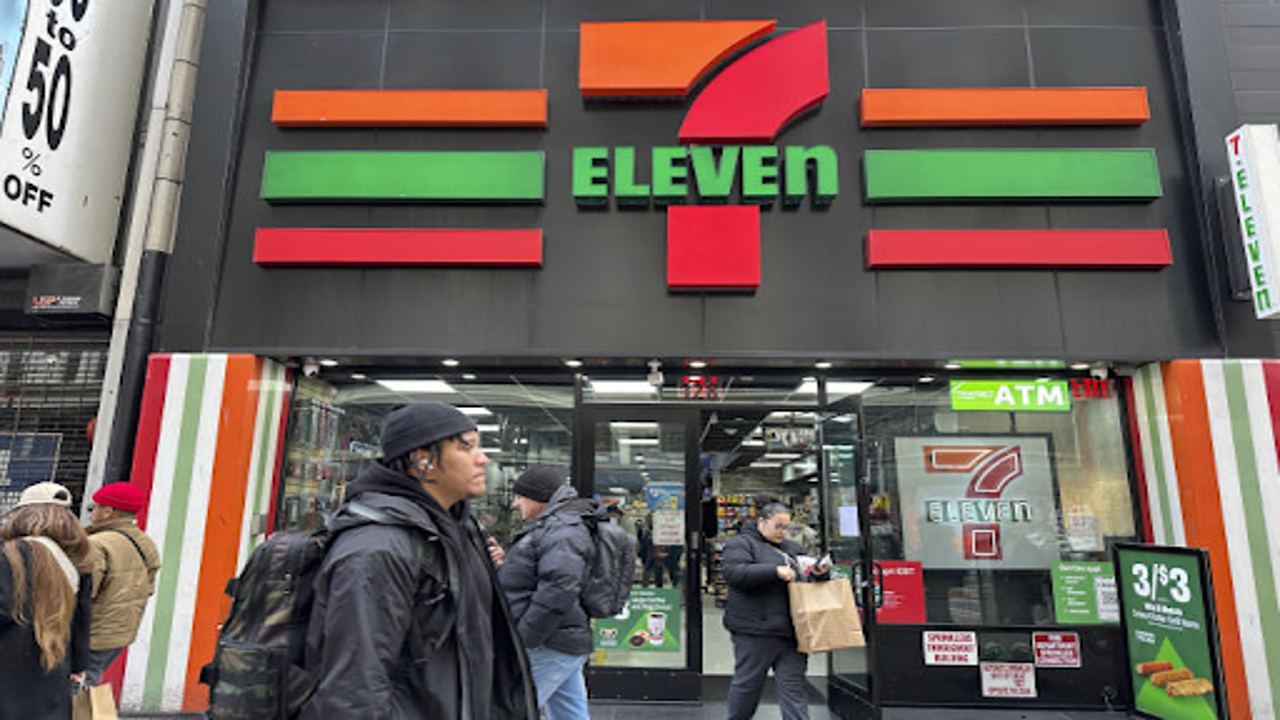
Customers browse items at a 7-Eleven in New York City on Tuesday, March 19, 2024. (AP Photo/Ted Shaffrey) (The Associated Press)
Alimentation Couche-Tard’s bold attempt to acquire Seven & I Holdings, the parent company of 7-Eleven, is raising concerns among analysts and regulators. The Quebec-based company’s pursuit of this Japanese giant could reshape the convenience store industry in North America, but it won’t come without significant hurdles. Financial experts are highlighting potential issues with both the massive debt Couche-Tard may need to incur and the equity dilution that could impact shareholders.
Seven & I Holdings operates a vast network of over 85,000 stores in 18 countries, including major markets in the United States, Japan, and Canada. Couche-Tard, with its Circle K brand, runs more than 16,700 outlets across 31 countries. If this acquisition goes through, it would create the largest convenience store chain in the United States, according to RBC Capital Markets. However, the financial details of this massive transaction have yet to be disclosed. Bloomberg reports that the deal might exceed $38.4 billion, based on the Japanese company’s market value at the time the proposal became public.
Regulatory scrutiny is almost certain, given the significant overlap between the two companies’ stores in the U.S. RBC analyst Irene Nattle noted that 31% of Couche-Tard’s Circle K locations are situated within a mile of either a 7-Eleven or Speedway store. Additionally, 19% of 7-Eleven and Speedway stores are within a one-mile radius of a Circle K. This proximity in key regions could pose anti-trust concerns, prompting regulators to potentially require the divestment of certain stores to avoid monopolistic dominance.
BMO Capital Markets analyst Tamy Chen echoes this sentiment, warning that the overlap in several U.S. states makes an anti-trust challenge likely. Any move forward with the acquisition would require navigating these regulatory hurdles carefully.
On the financial front, Chen estimates that Couche-Tard may need to take on $13 billion in debt to finance the deal, along with issuing $29 billion in new equity. This would result in a 50% dilution of existing shareholders' stakes, making the acquisition a potentially risky move. Chen emphasized that while the transaction could yield benefits for Couche-Tard, it comes with substantial financial risks, particularly the need for significant borrowing and equity issuance.
Nattle also pointed out that the deal would likely involve a large equity component from Couche-Tard, further complicating the financial landscape for the company. Couche-Tard’s stock reflected some of these concerns, closing 1.10% lower at $80.87 on Tuesday.
Despite the challenges, Couche-Tard has a history of aggressive expansion. Under the leadership of departing CEO Brian Hannasch, the company has acquired nearly 8,000 stores across multiple continents over the past decade. Speaking during the company’s earnings call in June, Hannasch emphasized that while Couche-Tard remains open to acquisitions, it will maintain a disciplined approach. He highlighted that the company has been seeing more merger and acquisition opportunities than ever, but its priority remains delivering value to shareholders.
While Couche-Tard’s proposed bid for 7-Eleven’s parent company could transform the convenience store landscape, it’s clear that significant challenges lie ahead. With regulatory scrutiny and substantial financial risks, the outcome of this potential deal remains uncertain.