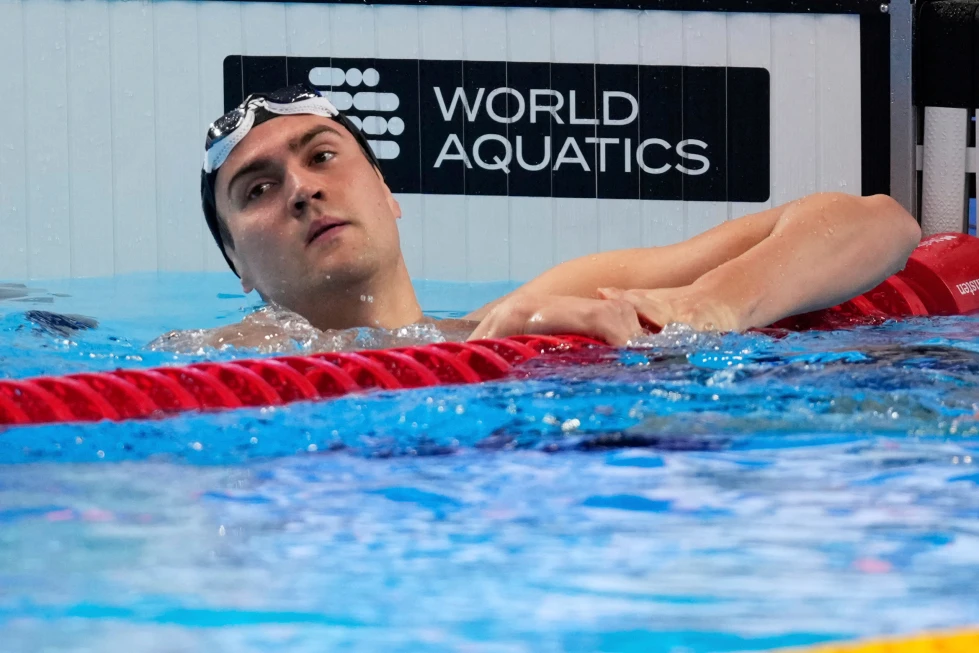
Neutral Athlete Russia, Kliment Kolesnikov reacts after winning gold medal in the men’s 50-meter backstroke final at the World Aquatics Championships in Singapore, on Aug. 3, 2025. (AP Photo)
In a move that could reshape the Olympic landscape, swimming has become the first major Olympic sport to fully reinstate Russian athletes, allowing them to compete under their national flag and anthem.
The decision by World Aquatics signals a significant shift in global sports policy ahead of the 2028 Los Angeles Olympics, and has already sparked sharp reactions from Ukraine.
A Major Policy Reversal
Since the 2022 invasion of Ukraine, Russian and Belarusian athletes had been largely excluded from international competitions or allowed to participate only as neutral competitors after strict vetting.
Now, those restrictions have been lifted. Athletes in swimming, diving, and water polo will be permitted to compete as full representatives of their countries, complete with uniforms, flags, and anthems.
World Aquatics President Husain Al Musallam emphasized that sport should remain a platform for unity, describing aquatic events as spaces for “peaceful competition” among nations.
Momentum Builds for Olympic Return
While other sports like judo and taekwondo have already taken steps toward reinstating Russian participation, swimming is the most prominent to do so—potentially influencing broader Olympic policy.
The decision could increase pressure on the International Olympic Committee to revisit its stance ahead of the 2028 Games. The IOC has so far maintained restrictions, allowing Russian athletes to compete only as neutral individuals in senior competitions.
Ukraine Pushes Back
The move has drawn strong criticism from Ukraine. Matvii Bidnyi condemned the decision, arguing that allowing Russia to return under its national symbols undermines the values of fair play and respect for life.
Ukrainian athletes have already taken action in protest. The men’s water polo team forfeited a World Cup match against a Russian side, highlighting the depth of opposition within the sporting community.
Ukraine has consistently objected to Russia’s reintegration into international sport, even boycotting recent Paralympic ceremonies over similar concerns.
Conditions Still Apply
Despite the policy shift, Russian and Belarusian athletes will still face certain requirements. World Aquatics has stated that competitors must undergo anti-doping tests and background checks before being cleared to participate.
However, details about these checks remain unclear.
Sport at a Crossroads
The decision reflects a broader debate within international sport: whether competition should remain separate from geopolitics, or reflect global realities.
Russia has welcomed the move, calling it a step toward restoring sporting ties. But critics warn it could deepen divisions rather than heal them.
As the countdown to the Los Angeles Olympics continues, swimming’s decision may prove to be a turning point—one that forces other sports and governing bodies to reconsider where they stand.