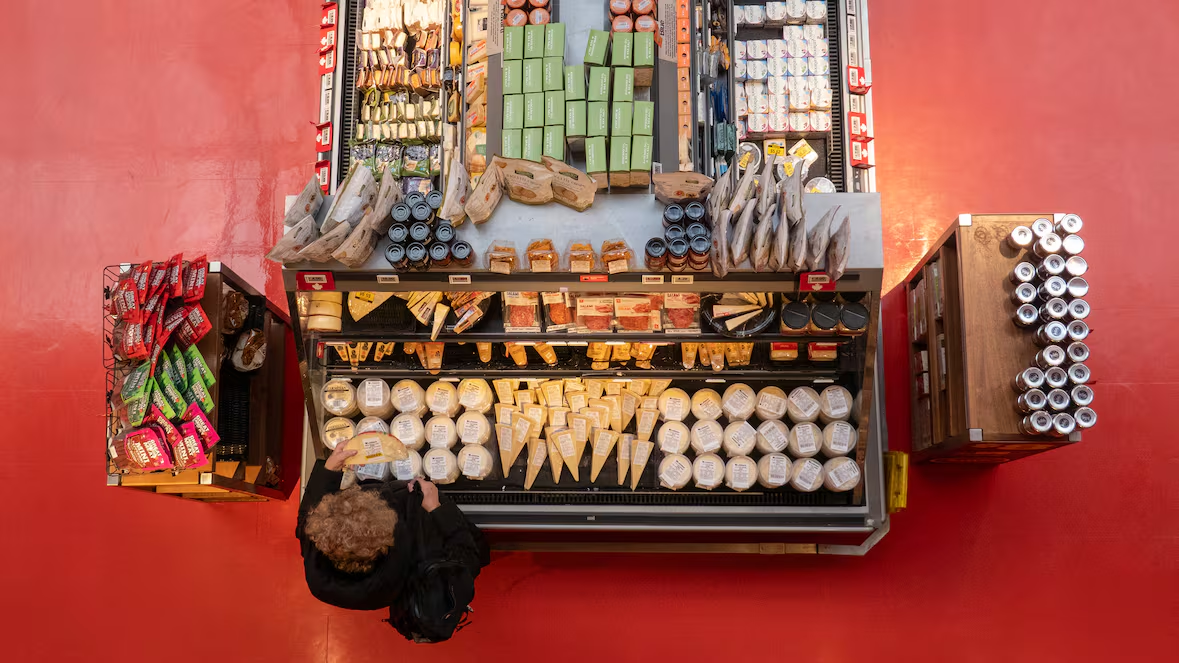
Professor Evan Fraser warns that all food prices are expected to rise significantly, with fresh products being the first to experience price increases. (CBC)
Canadians are being advised to brace for rising food prices as the ongoing conflict in the Middle East and increasing fuel costs continue to disrupt global supply chains. The war is especially affecting the price of fertilizer, a key component in farming, as it requires significant energy to produce. These disruptions are expected to lead to higher costs at grocery stores across the country.
Rising Fertilizer Prices and Impact on Farm Costs
Evan Fraser, the director of the Arrell Food Institute at the University of Guelph, explained that the Middle East conflict is pushing up the price of fertilizer. The region is responsible for producing about 20% of the world’s fertilizer, but due to the ongoing war, it has become more difficult to access. Fraser noted that fertilizer prices have increased by about 50%, which directly affects the cost of food production. "The price of fertilizer has jumped by about 50 per cent and that directly translates into higher production costs and will be handed on to consumers," Fraser said during an interview.
As the price of fertilizer rises, farmers are paying more for the necessary inputs to grow crops, which ultimately leads to higher food prices. This increase is expected to be especially noticeable with fresh produce such as lettuce, tomatoes, and apples. These products are more perishable and require less processing, meaning their prices will be the first to increase.
Energy Costs Affecting the Food System
Fraser emphasized the link between energy costs and food prices, stating, "Our food system is yoked to the energy system, and anything that happens in our energy system directly translates into higher prices for consumers at the grocery store." The energy-intensive nature of fertilizer production means that when energy prices rise, so do the costs of farming inputs, further driving up food prices. Fraser predicts that fresh food will see the earliest price hikes, which will later affect processed foods as well.
Government Support for Farmers
In response to rising costs, Ontario’s Ministry of Agriculture is working to protect farmers from the impacts of the Middle East crisis. A spokesperson for Ontario’s Minister of Agriculture, Trevor Jones, confirmed that the government has invested over $60 million since 2022 to reduce costs across the agri-food sector and strengthen the province’s food supply chain. "Through the Fertilizer Accelerating Solutions and Technology Challenge, our government invested $2 million to reduce reliance on imported fertilizers and expand made‑in‑Ontario alternatives," the spokesperson said. Additionally, the Ontario Risk Management Program (RMP) is being enhanced to help farmers cope with market challenges. The ministry announced an increase in funding for the RMP, which will rise from $150 million to $250 million by 2027.
Rising Fuel Prices Adding to the Burden
As if food prices weren't enough, gas prices in Ontario have also seen a significant increase. According to Patrick De Haan, head of petroleum at GasBuddy, fuel prices have risen by 31% since the start of the war, with prices jumping by 38 cents per litre compared to a month ago. De Haan warned that prices might continue to rise, potentially reaching $1.65 per litre. "The average rate now, provincially, is about $1.62," he said. However, if the situation in the Middle East improves, prices may begin to decrease.
Tips for Drivers to Save on Fuel
To help cope with the rising gas prices, De Haan suggests that drivers adjust their habits to increase fuel efficiency. "Drivers that are able to improve their driving behavior may certainly yield more fuel efficiency — things like reducing your speed, using cruise control, trying not to accelerate significantly or hard can certainly increase the amount of distance per tank," he said. De Haan also recommends using apps like GasBuddy and Google Maps to find the best gas prices in real time, which can help motorists save hundreds of dollars a year.